Answering the needs of mobile mechanics, fleet technicians, and off-road enthusiasts, this article highlights five truck-mounted air compressor generator combos that balance power, portability, and reliability. These setups are best for service fleets, RVers, and remote job sites where dependable air supply and generator capability matter. The selections emphasize versatility, ease of installation, and practical performance in real-world driving and on-site work.
| Product | Best For | Key Benefit |
|---|---|---|
| JC AIR 30 Gallon Truck Mount Air Compressor | Service fleets, field repair techs | High CFM and PSI with a Honda engine |
| maXpeedingrods Wireless On Board System | Drivers who want app control | Bluetooth app presets and flexible install |
| RETRUE Onboard Air Compressor System | Airbag suspension users | Dual control and fast inflation |
| Quincy 60-Gallon Vertical | Workshop on wheels | Solid capacity and reliability |
| Kohree 12V Dual Cylinder | Budget mobile inflators | Fast tire inflation on the go |
JC AIR 30 Gallon Truck Mount Air Compressor

Reference features: Honda GX390 13HP engine with electric start; delivers up to 24 CFM at 175 PSI; 30-gallon ASME tank designed for mounting in a pickup or service truck. This setup suits mobile service fleets and field repair technicians who need robust air power on-site. Best for heavy-duty pneumatic tools, tire service equipment, and demanding air applications. A caution: select mounting that accommodates engine access for maintenance and fuel sourcing in remote locations.
maXpeedingrods Wireless On Board Air Compressor System

Reference features: Bluetooth-enabled wireless control via mobile app and remote, pre-assembled into one bracket for vertical or horizontal installation, three programmable presets. This is best for drivers who want easy, on-device tuning and a simplified install. Choose this if you value remote convenience and quick ride adjustments; avoid if you require an integrated air tank with higher storage capacity for continuous use.
RETRUE Onboard Air Compressor System
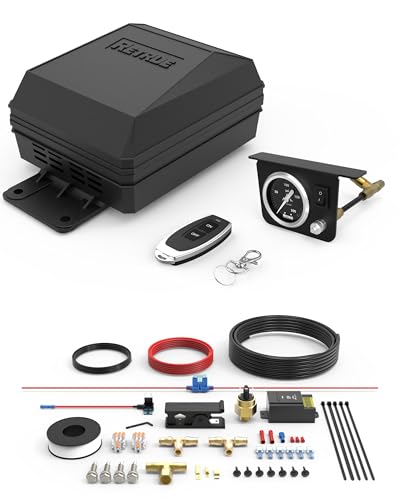
Reference features: Dual control options with in-cab and remote wireless control; low pressure sensor for real-time monitoring; 100 PSI inflation capability with rapid fill times. Best for airbag suspension users who need reliable performance and on-the-road adjustment. Limitation: installation may involve electrical wiring and space planning to fit within the vehicle’s interior wiring and control panels.
Quincy Single-Stage Air Compressor

Reference features: 3.5 HP, 60-gallon vertical tank, 12.4 CFM at 100 PSI; 145 PSI max; 230V single-phase. Best for mobile garages and fleet setups that require a durable, large-capacity air source in a vertical footprint. Better for stationary but transportable applications. A limitation: heavier unit may require more mounting effort and vehicle payload considerations.
Kohree 12V Dual Cylinder Inflator

Reference features: 12V dual-cylinder design, 150 PSI max, 12.35 ft³/min flow; portable and fast for off-road tires. Best for quick inflation on the go and budget-minded users. Limitation: 12V systems rely on vehicle power; may not sustain continuous heavy use without a larger auxiliary power source.
Vixen Horns Onboard Air Compressor

Reference features: 200 PSI compressor, 1.7 CFM, ¼” NPT hose; thermal overload protection and a strong leader hose with check valve. Best for high-demand applications like air tools, suspension, and quick inflation tasks on trucks and trains. A caution: ensure hose routing avoids heat sources and sharp edges to extend life.
Vixen Air Suspension Kit

Reference features: 5-gallon tank, dual 200 PSI compressors, complete accessory pack; designed for high-demand air ride, load leveling, and bags. Best for trailers, heavy loads, and vehicles requiring stable stance. Limitation: compact tank size may require more frequent compressions for long-term sustained use.
Buying Guide
Key purchase considerations for truck-mounted air compressor generator combos include power needs, tank capacity, mounting and space, and control options.
- Power and airflow: Match CFM and PSI to the tools and tasks you intend to run. Higher CFM supports air tools and continuous usage, while PSI affects tool compatibility and inflation speed.
- Tank size and mounting: A larger tank stores more compressed air for surges; ensure the mounting area in your truck or service body can accommodate a vertical or horizontal configuration without interfering with doors or safety equipment.
- Power source and controls: Consider gasoline engines for field work or 12V/dual-control systems for on-road convenience. Wireless remotes and app controls add flexibility but check compatibility with your vehicle’s electronics.
- Installation complexity: Some kits require drilling or wiring; assess your DIY capability or plan for professional installation to avoid leaks and electrical issues.
- Reliability and maintenance: Look for reputable brands, ease of service, and availability of spare parts. Provisions like thermal protection help extend life under heavy use.
Frequently Asked Questions
- What is a truck-mounted air compressor generator combo best used for?
Answer: It is ideal for mobile service fleets, field repair work, off-road enthusiasts, and RV setups that need reliable air power and on-board energy in one integrated system. - How much air do I need for typical tools?
Answer: Tools like impact wrenches and grinders often require 20–30+ CFM at higher PSI; plan for higher CFM if you frequently use heavy air tools. - Which mounting orientation is preferred?
Answer: Vertical or horizontal mounts are both common; choose orientation based on space, accessibility for maintenance, and vehicle design. - Do wireless controls improve on-site work?
Answer: Yes, they allow adjustments without returning to the compressor, which can improve efficiency on uneven terrain or crowded jobsites. - Is a larger tank always better?
Answer: Not always. A larger tank supports peak usage but increases install weight and may require more space; balance tank size with your typical duty cycle. - What maintenance is essential?
Answer: Regularly check oil (for gas-powered units), belts, hoses, filters, and ensure fittings are tight to prevent leaks and maintain performance.
Add a Comment