Direct answer: these stainless steel sanitary tubes are ideal for clean, sanitary transport of fluids and gases in food, beverage, dairy, and pharmaceutical settings. The best options vary by connection size, length, and finish. The top picks below suit different buyers—from hobbyists seeking short spool tubes to manufacturers needing long, high-precision lengths. The table summarizes key choices to compare side-by-side.
Summary of Selected Products
| Product | Connection | Length / OD | Best For |
|---|---|---|---|
| DERNORD Sanitary Spool Tube (12″ / 305mm) | Tri-clamp 1.5″ | 12″ length, 1.5″ OD | Short runs; chloride environments; general packing lines |
| DERNORD Sanitary Spool Tube (4″ / 102mm) | Tri-clamp 1.5″ | 4″ length, 1.5″ OD | Compact modules; small-batch systems |
| DERNORD Sanitary Spool Tube (24″ / 610mm) | Tri-clamp 4″ | 24″ length, 4″ OD | Medium-scale transfer lines; high-flow needs |
| Beduan Sanitary Tri Clamp Tube (2″ spool) | Tri-clamp 2″ | 2″ length; 2″ OD | Short, sturdy, larger-diameter spools |
| Otoolling Sanitary Spool Tube (24″ clamp) | 2″ clamp; 64 mm ferrule | 24″ length; 2″ OD | Food/pharma-grade finishing; vacuum sealing |
DERNORD Sanitary Spool Tube 12″ with Clamp Ends

Features: Stainless steel 304 seamless round tubing; Tri-clamp 1.5″ fittings; ferrule OD 50.5mm; length 12″ (305mm). Best for compact cleanlines and chloride environments. Suitable for transporting fluids and gases in sanitary systems. Caution: verify gasket compatibility with 1.5″ Tri-clamp interfaces to ensure a proper seal.
DERNORD Sanitary Spool Tube 4″ with Clamp Ends

Features: Stainless steel 304 seamless round tubing; Tri-clamp 1.5″ connections; 50.5mm ferrule; 4″ length. Best for short, dense piping segments where space is limited. Limitations: shorter length may require additional fittings for longer runs; ensure precise alignment for a leak-free seal.
DERNORD Sanitary Spool Tube 24″ with 4″ Ferrule

Features: 304 seamless tube; Tri-clamp 4″ fittings; ferrule OD 119mm; 24″ length. Best for higher-flow transfer lines and longer runs in clean environments. Caution: verify compatibility with existing 4″ clamp systems and flange spacings in your facility.
Verocious 1″ OD Stainless Steel Tubing

Features: 316/316L stainless welded tubing; 3A polish; 20Ra max ID, 32Ra max OD sanitary finish. Best for sanitary systems requiring a highly polished surface for easy cleaning and corrosion resistance. Better for projects demanding superior interior smoothness; limitation: higher cost due to 316L grade.
Beduan Sanitary Spool Tube 2″

Features: Sanitary spool tube length 2″; OD 2″ with 64mm ferrule. Best for mid-sized piping segments requiring reliable Tri-clamp compatibility. Caution: verify the tolerance on ferrule flange to avoid leaks when assembling different brands.
Otoolling 2 Pack 24″ Spool Tube
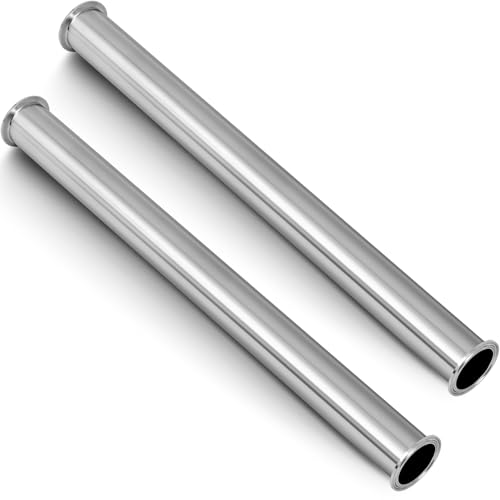
Features: SUS304 stainless steel; mirror-polished interior Ra < 0.8μm; 2″ clamp with 64mm ferrule; 24″ length; vacuum-grade sealing capability. Best for food, pharmaceutical, and cleanroom environments that require easy cleaning and sterile conditions. Limitation: ensure gasket compatibility for vacuum sealing and check tolerance for long assemblies.
Buying Guide: Stainless Steel Sanitary Tubes
What matters most: size, finish, and compatibility
Choose tubes with Tri-clamp fittings that match your system’s clamp size. Common options include 1.5″ and 4″ connections. The ferrule diameter should align with your flange or ferrule expectations to avoid misfit joints. Finish matters: internal polish (Ra) affects cleanability and cleaning speed. For pharmaceutical and food processing, aim for smoother interiors (Ra < 1.0 μm).
Material and environment considerations
304 stainless steel is standard for general sanitary use and chloride environments. For higher corrosion resistance and sterilization cycles, 316/316L is preferred. Consider whether the application involves aggressive cleaning chemicals or high-temperature cycles when selecting material grade.
Length vs. modular needs
Short spool tubes (4″ to 12″) are ideal for compact modules and testing setups. Longer lengths (24″ and up) enable fewer joints and lower leak points in larger transfer lines. Plan the layout to minimize dead zones and ensure proper flow and cleaning access.
Finish quality and cleaning considerations
Internal surface roughness (Ra) impacts sanitation. Mirror-polished interiors reduce bacterial buildup and simplify cleaning. Ensure welds are smooth and fully penetrated to avoid crevices. In regulated environments, confirm that the product meets relevant sanitary finishes and piping standards.
Installation and maintenance notes
Use compatible gaskets and clamps for reliable seals. Check alignment between spool tubes and clamps to prevent misalignment that can cause leaks. Regular inspection of ferrules and clamp connections helps maintain sanitary integrity over time.
FAQ
- What is a sanitary spool tube used for? It provides a clean, sealed section of tubing between clamps, enabling easy assembly and disassembly for cleaning and maintenance in sanitary systems.
- Which material is best for harsh cleaning cycles? 316/316L stainless steel offers higher corrosion resistance and is preferred in aggressive cleaning environments.
- Should I choose 1.5″ or 4″ connections? Choose 1.5″ for compact systems and 4″ for higher flow and fewer fittings in larger setups. Align with your existing clamp standard.
- How important is finish quality? Very important for sanitation. Higher polish (lower Ra) reduces bacterial adhesion and eases cleaning, especially in pharma and food sectors.
- Can I use these tubes with different brands of clamps? Compatibility varies; ensure gasket and flange tolerances match. Mismatched brands can cause leaks or poor seals.
- Are longer tubes always better? Longer tubes reduce the number of joints but can be harder to install and clean. Plan around system layout and cleaning access.
Add a Comment