Answering the need for high-purity water in lab settings, these five options deliver consistent, low-ionic, or Type II deionized water suitable for experiments, reagent prep, and equipment protection. Best for research labs, electronics cleanrooms, cosmetic formulation, and general lab workflows that demand mineral-free water. The top picks are chosen for purity, reliability, and practical use in small to medium-scale labs.
| Product | Brand | Water Type / Purity | Best For |
|---|---|---|---|
| MAXTITE Type II Deionized Water | MAXTITE | ASTM/ACS Type II Deionized Water | Researchers needing ASTM/ACS-certified lab water |
| Lab Ultra Pure Water Machine, 10L/H | Hanchen | 5-stage RO, ultra-pure water | Small labs needing auto-control and conductivity display |
| Lab Ultra Water Purification System, 15L/H | Hanchen | 5-stage RO, ultra-pure water | Medium-scale lab workflows |
| Lab Ultra Pure Water Machine, 20L/H | Hanchen | 5-stage RO, ultra-pure water | Higher-volume lab use |
| SimpleNature Type II Deionized Water, 1 Gal | SimpleNature | Deionized, Type II | General lab testing and reagent prep |
MAXTITE Type II Deionized Water – 1 Gallon

Features highlight ASTM D1193-24 compliance and ACS certification, indicating high-purity lab water suitable for precise experiments, electronics cleaning, and cosmetic formulation.
Best for laboratories requiring standardized Type II purity and reliable material compatibility. This option is especially suitable for research protocols where ionic content must be minimized to protect assay outcomes.
Caution: Confirm compatibility with specialized glassware and reagents to avoid trace contamination in highly sensitive procedures.
Hanchen Lab Ultra Pure Water Machine – 10L/H
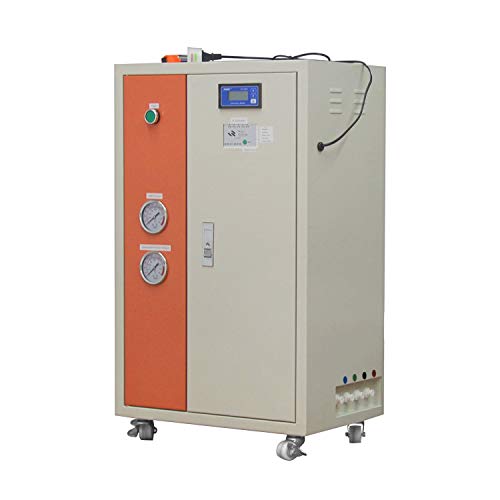
Five-stage filtration (PP, activated carbon, softening, RO membrane) yields high-resistivity water up to 10-18.2 MΩ·cm, with automatic process control and conductivity display.
Best for small laboratories needing automated, near-sterile water generation with low-noise operation. Suitable for reagent prep and sensitive experiments requiring low ionic content.
Caution: Higher-volume needs may require the 15L/H or 20L/H models to avoid downtime during peak usage.
Hanchen Lab Ultra Water Purification System – 15L/H
Equipped with a five-stage filter path, this system delivers ultra-pure water with stable performance and low noise operation.
Best for laboratories that require continuous, consistent production of high-purity water for experiments and solution prep.
Caution: Ensure power and space for ongoing operation, as it includes automated controls and switches for water shortage or flushing.
Hanchen Lab Ultra Pure Water Machine – 20L/H

Five-stage RO filtration produces ultra-pure water with high resistivity, suitable for larger or busier labs needing steady output.
Best for high-demand labs needing reliable water quality with clear conductivity monitoring and automated shutdown features.
Caution: Check footprint and electrical requirements to fit the lab’s installation space and power supply.
SimpleNature Type II Deionized Water – 1 Gallon

High-purity Type II water with low conductivity for laboratory procedures and reagent preparation.
Best for general lab testing and workflows where clear, mineral-free water improves result reliability.
Caution: Suitable for small workflows; may not meet peak purity needs in highly specialized tests.
Buying Guide
- Purity level: Type II deionized water is common for many labs; Type I offers the highest purity for ultra-sensitive applications. Choose based on your assay requirements.
- Output capacity: Consider daily volume needs. If your lab runs heavy solution prep, pick 15–20 L/H or higher models to avoid shortages.
- Filtration path: Five-stage RO systems balance cost and purity. Additional stages or pre/post treatment can improve stability for demanding tasks.
- Automation and controls: Conductivity displays and automatic shutdown features help maintain consistency and protect equipment.
- Space and power: Verify installation space, electrical requirements, and noise levels for your lab environment.
- Application fit: For electronics cleaning, cosmetic formulation, and reagent prep, align product type with the specific impurity profile required by your protocol.
Frequently Asked Questions
- What is the difference between Type I and Type II deionized water? Type I offers the highest purity with very low ionic content; Type II is suitable for many routine lab tasks requiring low but adequate purity.
- Is deionized water safe for all lab experiments? Deionized water is suitable for many procedures, but some sensitive biochemical assays may require ultrapure Type I water.
- Do these systems require maintenance? Yes, regular filter changes and membrane checks are essential to maintain purity and performance.
- Can these units be used for cosmetic formulation? Yes, high-purity water supports formulation stability and product quality in cosmetic applications.
- Will higher output models save time? In busy labs, higher flow models reduce downtime and ensure a steady supply for continuous work.
- What should I consider when choosing? Consider intended use, required purity, daily water demand, available space, and maintenance capability.
Add a Comment