Choosing the right industrial roof exhaust fan can improve indoor air quality, remove heat, smoke, and odors, and help maintain comfortable environments in schools, hospitals, restaurants, and warehouses. This guide highlights five top options and explains how to compare performance, build quality, and installation requirements to fit a range of commercial needs.
Summary of Selected Products
| Product | Brand | CFM | ||
|---|---|---|---|---|
| Direct Drive Centrifugal Downblast Roof Mounted Exhaust Fan | CAPTIVE-AIRE | 300 | 0.060 HP, 115V | Downblast |
| Restaurant Canopy Hood Grease Rated Exhaust Fan (Upblast) | FICBXRA | 800 | 1/6 HP, 110V | Upblast |
| Restaurant Canopy Hood Grease Rated Exhaust Fan (Upblast) | CAPTIVE-AIRE | 1500-2200 | 0.75 HP, 115V | Upblast |
| Roof Ventilator Restaurant Hood Grease Rated Exhaust Fan | HYITCL | 5000 | 1.5 HP, 110V | Upblast |
| Direct Drive Axial Downblast Exhaust Fan | FICBXRA | 500 | 1/30 HP, 115V | Axial/Downblast |
CAPTIVE-AIRE Direct Drive Centrifugal Downblast Exhaust Fan

This high-speed direct-drive centrifugal downblast exhaust fan is designed for dependable, continuous operation in facilities such as hospitals, schools, and office buildings. It features a 9″ wheel, 19″ x 19″ fan base, and a 0.060 HP 115V single-phase motor. The model includes a birdscreen and a disconnect switch for safety and ease of maintenance, and it weighs 39 pounds with a rated airflow of 300 CFM. Its compact footprint makes it suitable for spaces with limited roof clearance.
FICBXRA Restaurant Canopy Hood Exhaust Fan (Upblast)
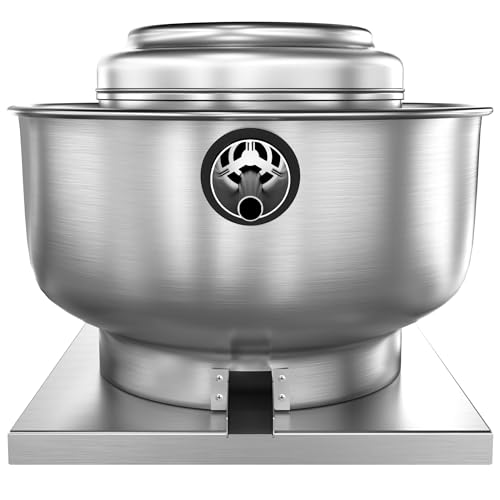
This high-speed centrifugal upblast exhaust fan is optimized for grease- and general ventilation in restaurant canopies. It delivers up to 800 CFM with a 1/6 HP 110V/220V single-phase motor. The unit is ETL certified for reliable quality, and its upblast configuration helps direct exhaust away from venting surfaces, reducing grease buildup on rooftops and nearby equipment.
Restaurant Canopy Hood Grease Rated Exhaust Fan (Upblast) DU85HFA
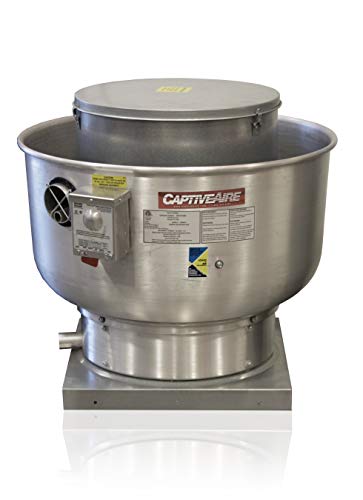
This high-speed upblast exhaust fan targets heavy grease and general ventilation in restaurant environments. With a base dimension of 24 3/4″ x 24 3/4″ and airflow ranging from 1500 to 2200 CFM, it runs on a 0.75 HP 115V single-phase motor. The unit includes a grease cup, down spout, and hinge kit, and is UL-rated for restaurant-duty use, delivering robust performance in busy kitchen areas.
HYITCL Roof Ventilator Upblast Exhaust Fan
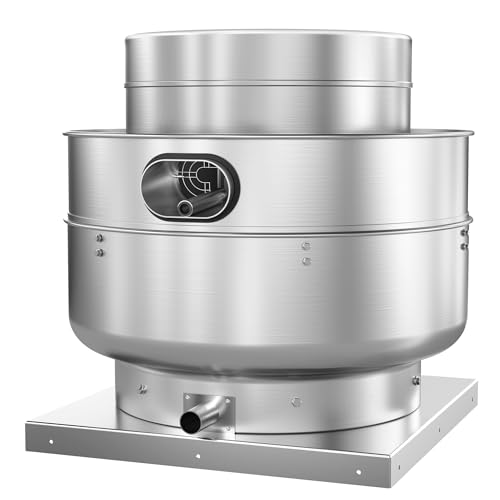
Designed for industrial, institutional, and commercial kitchen applications, this 5000 CFM upblast exhaust fan uses a 1.5 HP 110V single-phase motor. The aluminum alloy construction offers corrosion resistance and easier cleaning, making it suitable for harsh kitchen environments where durable, high-volume exhaust is needed.
FICBXRA Direct Drive Axial Downblast Exhaust Fan

This direct-drive axial exhaust fan combines a spun aluminum hood and weather-protective skirt with a steel-hub-driven blade assembly. It includes a built-in bird screen to prevent debris from entering the discharge path, supporting safe, obstruction-free operation in commercial roofs and industrial sites requiring reliable roof venting at up to 500 CFM.
FICBXRA Canopy Hood Exhaust Fan For Food Trucks
This grease-rated, high-speed upblast exhaust fan is designed for food trucks and other mobile or compact spaces. It delivers 1900-2600 CFM with a 0.5 HP 110V single-phase motor and carries UL705 and ETL ratings. The fan combines robust airflow with a compact, truck-ready footprint for rooftop installations where space is at a premium.
Buying Guide: Key Purchase Considerations
- Airflow requirements (CFM): Assess peak and average exhaust needs based on room size, equipment, and heat-generating processes. Higher CFM models move more air but may require larger ductwork and stronger roof anchors.
- Drive type: Direct-drive units tend to be more compact and reliable for smaller spaces, while belt-driven or axial configurations can handle higher CFM with different noise profiles and service needs.
- Upblast vs. downblast: Upblast fans expel air upward, often used with canopy hoods and grease-rated applications. Downblast fans push air downward; they’re common where discharge near the roof is less of a concern and where horizontal space is limited.
- Grease and corrosion resistance: In kitchens and canopies, look for ETL/UL certifications and materials like aluminum or corrosion-resistant coatings to handle grease and humidity.
- Electrical requirements: Match motor voltage and horsepower to the building’s electrical system. Check single-phase motors for typical commercial power supplies (110V-115V) and ensure proper disconnects and wiring.
- Durability and maintenance: Consider built-in bird screens, grease cups, removable blades, and ease of access for cleaning and servicing. Durable bearings and weatherproof housings extend service life in rooftop environments.
- Certification and compliance: UL or ETL listings indicate compliance with safety and performance standards critical for commercial kitchens and public buildings.
- Installation compatibility: Confirm roof curb size, mounting footprint, and compatibility with existing ductwork and electrical panels. Some models include installation kits or adapters for common roof curbs.
- Noise considerations: High-CFM fans can be louder. Evaluate acceptable sound levels for occupied spaces and consider vibration isolation where needed.
This selection covers a range of common applications—from compact downblast units suitable for schools and offices to heavy-duty upblast fans designed for restaurant canopies and grease-laden environments. When choosing, balance airflow needs with installation constraints, maintenance practicality, and safety certifications to ensure long-term performance.
Add a Comment