When shopping for a 6000-watt dual-fuel generator, you want reliable power, easy start options, and fuel flexibility. These models are suitable for home backup, RV camping, and job-site use. This guide highlights five strong choices, explaining who they’re best for and why they stand out. It also includes a practical buying guide and a brief FAQ to help you pick with confidence.
| Product | ||
|---|---|---|
| Pulsar 6000 Watt Portable Inverter Generator | Gas: 6000 peak / 5400 running; Propane: 5400 peak / 4600 running | RV use, camping, and quiet home backup |
| WEN 6800-Watt Dual Fuel DF680iX | Gas: 6800 surge / 5100 rated; Propane: 6000 surge / 4500 rated | Electric vehicle backup and low-power Level 2 charging support |
| WEN 5,600-Watt Dual Fuel DF5600X | Gas: 5600 surge / 4500 rated; Propane: 5000 surge / 4050 rated | Compact, portable backup with CO shutdown safety |
| Westinghouse 6500 Watt Dual Fuel | Gasoline: 6500 peak / 5300 running; Propane: 5800 peak / 4800 running | Home backup with transfer switch readiness and multiple outlets |
| PowerSmart 7000-Watt Open Frame Inverter | Gas: 7000 surge / 6000 running; Propane: 6000 surge / 5000 running | Open-frame versatility for home and RV with clean power |
Pulsar 6000 Watt Portable Inverter Generator
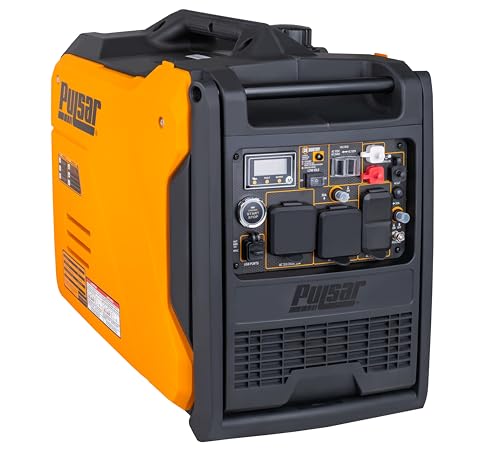
This 6000-watt dual-fuel generator is designed for reliable mobile power with an emphasis on electronics-friendly output. Gasoline offers strong peak performance, while propane extends run-time with cleaner combustion. The unit supports RV and camping needs and includes a CO sensor for safety. Best for users who want versatile fuel options and a compact, quiet footprint.
- Best for: RVs and portable job sites needing stable, clean power
- Why selected: Dual-fuel capability, remote start, and CO safety features
- Caution: Remote start requires a ready 12V battery; ensure battery maintenance before use
WEN 6800-Watt Dual Fuel DF680iX

The DF680iX provides a robust 6800 surge watts on gasoline and 6000 surge watts on propane, with lower running watts suited for Level 2 EV charging via a bonded-neutral 240V configuration. It also features the WEN Watchdog CO Shutdown Sensor for automatic shutoff during dangerous CO levels. This model is best for households needing higher surge capacity and vehicle charging support without swapping fuel types frequently.
- Best for: Electric vehicle backup and higher surge needs
- Why selected: Higher gasoline surge, dual-fuel flexibility, and CO safety
- Caution: Propane run-time at high loads may be shorter than gasoline
WEN 5,600-Watt Dual Fuel DF5600X

The DF5600X balances portability and power, delivering solid performance for medium-sized homes and RV setups. It includes an electric start and CO watchdog sensor for safety. Best for buyers wanting a compact dual-fuel unit with straightforward startup and reliable daily use.
- Best for: Small homes, RVs, and as a backup during outages
- Why selected: Electric start, dual-fuel flexibility, CO safety
- Caution: Propane efficiency can vary with load; plan fuel stores accordingly
Westinghouse 6500 Watt Dual Fuel
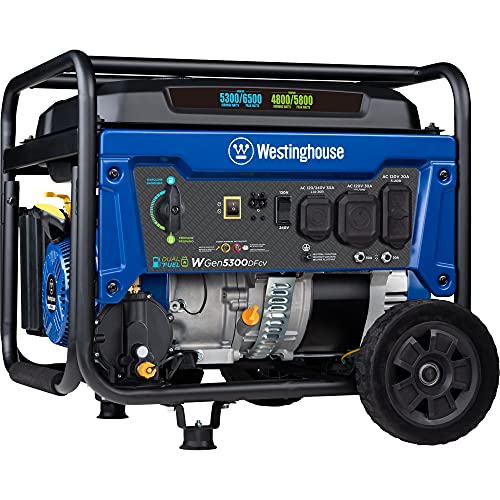
This model emphasizes long run times with a sizable fuel tank and multiple outlets for whole-house capability. It is transfer switch ready, supports RV use, and includes a CO sensor for safety. Best for users seeking a ready-to-grow backup power solution with various receptacles and easy integration with a home transfer switch.
- Best for: Homes with possible outages and RV users needing versatility
- Why selected: Transfer switch readiness and multiple outlets
- Caution: Heavier unit; consider transport and storage needs
PowerSmart 7000-Watt Open Frame Inverter

This open-frame inverter blends high wattage with clean power suitable for sensitive electronics thanks to a pure sine wave output. It supports both 120V and 240V operation, making it versatile for home backup and RV use. Best for robust power needs where quiet, stable output matters and a transfer-switch-ready setup is desired.
- Best for: Homes needing reliable high-wattage inverter power
- Why selected: Clean power (<3% THD), dual voltage, and 6-hour runtime at 50% load
- Caution: Open-frame design may be less portable than compact units
Buying Guide: Key Considerations for 6000-Watt Dual Fuel Generators
Fuel flexibility, starting method, noise, and safety features top the list when choosing a 6000-watt dual-fuel generator. Consider how and where you’ll use the unit to balance power needs with portability and cost.
- Fuel choice: Dual-fuel units let you switch between gasoline and propane. Gasoline generally provides higher surge capacity, while propane can extend run time and offer easier storage. Determine which fuel you’ll rely on most during outages.
- Starting method: Electric start is convenient, but ensure a reliable battery and backup recoil start as a fallback. Remote start adds convenience for remote activation.
- Power quality: Inverter generators deliver cleaner power with low THD, making them safer for sensitive electronics. If you need to run laptops or CPAP machines, prioritize inverter technology.
- Safety features: Look for CO sensors and automatic shutoff, especially for indoor or semi-enclosed use. A bonded-neutral 240V option can support EV charging in some models.
- Transfer switch readiness: If you plan to power a whole-house setup, choose a unit that is transfer switch ready or pair it with a compatible transfer switch.
- Portability: Weigh the unit and consider wheels or handles for easier transport, especially for larger frames like 6–7 kW models.
Frequently Asked Questions
- What is the difference between surge watts and running watts? – Surge watts measure the immediate power available when starting a load, while running watts indicate continuous power during normal operation.
- Are dual-fuel generators easier to store fuel for? – Propane stores longer and is less prone to gum buildup, but gasoline can deliver higher surge power; plan fuel storage accordingly.
- Is inverter power necessary for sensitive electronics? – Yes, inverter-generated power is cleaner with lower total harmonic distortion, reducing risk to electronics.
- Can these generators run a whole-house backup? – Some models are transfer switch ready and designed for whole-house backup, but installation often requires a dedicated transfer switch and professional wiring.
- What maintenance should be performed regularly? – Check oil levels, fuel quality, spark plugs, and air filters. Follow manufacturer-specific intervals for oil changes and service.
- Which model is best for EV charging support? – Models with higher surge capacity and 240V bonding features (or explicit EV charging support) are preferable for Level 2 charging scenarios.
Add a Comment