< article >
Yes—110V arc welders are suitable for light fabrication, repairs, and hobbyist metalwork. This guide highlights five 110V/dual-voltage machines well suited for beginners to mid-level welders, with clear reasons for each pick, who they’re best for, and practical limitations. The selections emphasize portability, ease of use, and versatile output for welding mild steel, cast iron, and similar metals. Use the product blurbs to compare arc stability, hot-start features, and control interfaces at a glance.
| Product | Best For | Power Range | Notes |
|---|---|---|---|
| HONE Stick Welder | DIYers needing digital control | 110V/220V, 120A-140A | Solid duty cycle, good for E6010/6013/7018 |
| ARCCAPTAIN Stick Welder | Beginner to hobbyist outdoor work | 110V/220V, 200A | Large LED display, synergic control |
| Hpoouo 200A Mini Welder | Compact setups and quick fixes | 110V, 20-200A | Very small and light; includes rods |
| Eioehtl 250A Dual Voltage Welder | Professional-style portable option | 110V/220V, 250A | True power, large display |
| YESWELDER 135A MIG/Stick | Versatile flux-core and stick work | 110V | Three-in-one with LED readout |
HONE 110V/220V ARC Welder With Digital Display
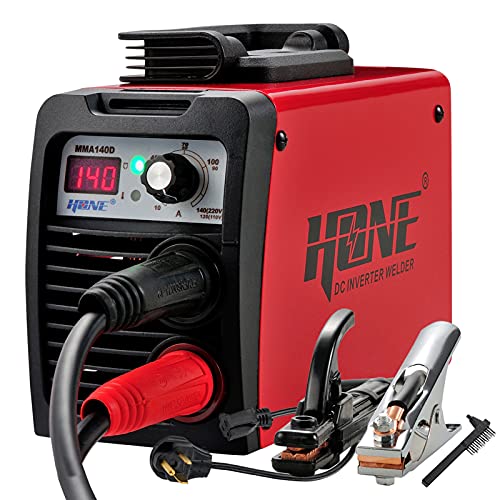
The HONE welder supports 110V and 220V inputs with a digital LCD display and IGBT inverter technology. It offers a duty cycle upgrade for 110V at 120A and 220V at 140A, improving arc stability for cleaner beads. Best for hobbyists working with thin-to-mid-thickness steel and common rods like E6013, E7018, and E6011. A caution: ensure proper air cooling and avoid continuous heavy use on the lowest voltage setting to prevent overheating.
Who it’s best for: DIYers who want a versatile machine for home workshops and occasional site work, with a stable arc at medium currents. Why selected: strong electronic control, hot start, arc force, and anti-stick features aid beginners learning welding basics.
Caution: verify power source compatibility and avoid running on long continuous sessions at the maximum current without breaks.
ARCCAPTAIN 200A MMA Welder With Large LED Display
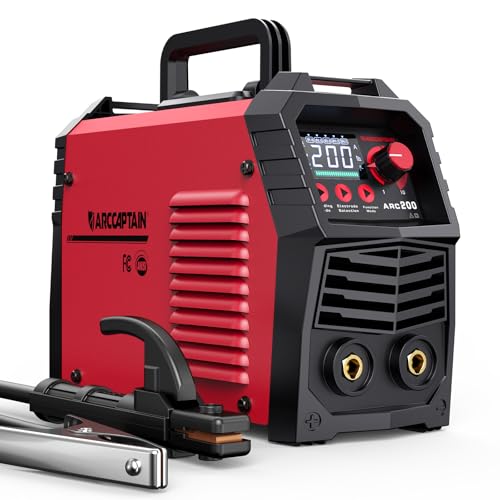
ARCCAPTAIN offers 110V/220V dual-voltage operation with a synergy feature that automatically matches current and voltage when you select a rod diameter. The digital control system and IGBT inverter enable stable arcs and easier learning for beginners while remaining useful for professionals. It weighs light enough for transport and outdoor maintenance. A limitation: ensure the screen is powered down only after the fan stops for safe operation.
Who it’s best for: newcomers who want a guided welding experience and better control over arc behavior. Why selected: intuitive LED display, synergic control, and portability suit home repairs and craft projects.
Caution: avoid powering on while the system is still cooling after use or while the fan is running to prevent data/display issues.
Hpoouo 200A Mini Welder, 110V

Hpoouo’s 110V welder is a compact, portable unit with 20-200A adjustment and bundled rods. It emphasizes an advanced IGBT inverter control, delivering smooth arcs and deep penetration for 1/16″-1/8″ rods. Best for quick, lightweight repairs and hobby projects where gear must travel easily. Limitation: its small size may limit continuous heavy-duty use on thicker metals.
Who it’s best for: hobbyists and DIYers needing a portable, user-friendly machine. Why selected: highly portable form factor paired with robust arc control and hot-start features.
Caution: check rod compatibility and maintain proper ventilation to prevent overheating in tight spaces.
YESWELDER 135A 3‑In‑1 MIG/Stick/Lift TIG Welder
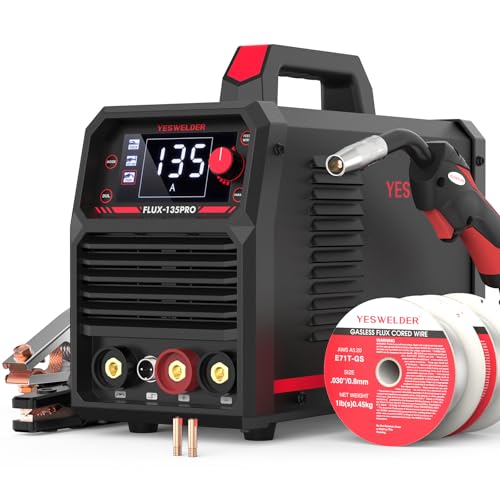
This 135A multiform welder operates on 110V and offers flux-core MIG, stick, and lift TIG (with an additional torch). It is suited for light-to-moderate metal projects and thin sheets. The unit includes a flux-core wire option and a user-friendly LED display for straightforward operation. A limitation: lower maximum amperage compared to dedicated stick welders, so thicker metal work requires lighter gauge and patience.
Who it’s best for: beginners and DIYers who want one machine for multiple weld types. Why selected: versatile process options and a compact 110V design suitable for simple projects and learning curves.
YESWELDER 205A Stick Welder With Dual Voltage

YESWELDER’s 205A model delivers strong arc performance with hot start and arc force, compatible with common 6010/6011/6013/7018 rods, and supports both 110V and 220V. It provides a large LED display and portability for home DIY, farm maintenance, and shop projects. A caution: a higher current setting will require adequate power supply and cooling to prevent stalling or overheating during extended use.
Who it’s best for: serious hobbyists and light fabrication requiring more amperage and dual-voltage flexibility. Why selected: higher current capability, robust arc control, and a readable display improve reliability in varied welding tasks.
SOARFLY 250A Dual-Voltage ARC Welder
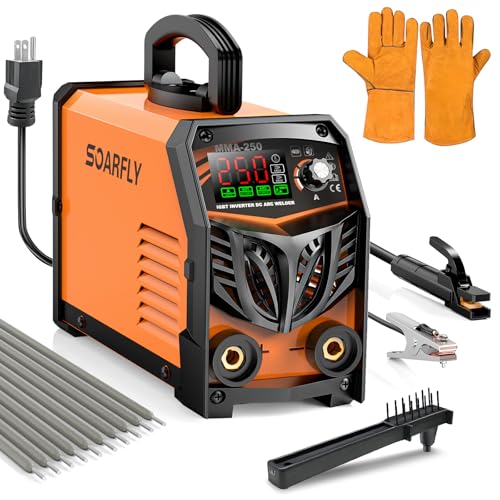
SOARFLY provides 110V/220V dual-voltage operation with a high 250A output for thickened metal work and longer weld runs. It is well-suited for maintenance, fabrication, and home repair projects where higher amperage is beneficial. A limitation: 220V operation may require an adapter not included in the kit and a stable power source to reach full output.
Who it’s best for: users needing robust performance for heavier gauge material in a portable package. Why selected: strong current capabilities, large LED display for real-time monitoring, and dual-voltage versatility enhance project flexibility.
Buying Guide: How To Choose The Right 110V Arc Welder
What power does your workspace have? If you mainly work from a home garage, a 110V or dual-voltage welder that can switch to 220V for heavier tasks is ideal. Look for a device with a clear display, intuitive controls, and stable arc start for easier learning. Consider the thickness of metal you expect to weld: lighter gauge favors lower amperage units; thicker or thicker-walled parts benefit from higher current without sacrificing control.
Do you need multi-process capability? If you plan to do MIG or TIG tasks in addition to stick welding, a 3-in-1 or 2-in-1 machine could save space and time. If your main job is basic sheet metal or repairs, a dedicated stick welder with good hot-start is often best for bead quality and weld consistency.
Portability matters. Mini welders are convenient but may trade off max current and duty cycle. Heavier units with robust handles are better for shop use or on-site repairs where mobility is still important. Check included accessories: clamps, rods, gloves, and a welding helmet can add significant value to a bundle.
Duty cycle and cooling are critical. A higher duty cycle at your target current means longer welds without overheating. Ibgt inverter designs improve reliability and arc stability but require proper ventilation and a stable power source to perform optimally.
FAQ
- What thickness can a 110V arc welder handle? It varies by model; many 110V units weld up to 1/8 inch (3.2 mm) to 3/16 inch (4.8 mm) in short runs, depending on current settings and rod type.
- Is dual voltage necessary? Not always, but it provides more flexibility for different projects and power sources—handy for garages with 110V outlets and job sites that supply 220V.
- What is arc stability and why is it important? Arc stability refers to a steady welding arc with minimal fluctuations, which yields better bead quality, penetration, and easier arc starting—especially for beginners.
- Do I need extra accessories? Many kits include rods, clamps, and gloves, but you may want to add a welding helmet and protective gear based on your workshop setup.
- How do I choose between MIG, TIG, or stick? For home repairs on steel and iron, stick welding is common and robust. MIG is easier for beginners and quicker for thin metals. TIG is precise but more equipment-intensive and often not necessary for simple DIY tasks.
- What safety considerations matter? Always wear appropriate PPE, ensure proper ventilation, keep flammables away from the work area, and follow electrical safety practices for outdoor or indoor use.
Add a Comment