Looking to reduce sawdust in your shop efficiently? This guide highlights top woodshop dust collection systems that suit different shop sizes and tool setups. Best picks are listed with clear use cases—the right choice depends on your airflow needs, space, and whether you want a standalone unit, a cyclone separator, or a compact wall-mount option. Ideal buyers include hobbyists seeking easy mobility, small shops needing compact systems, and enthusiasts wanting higher CFM and better separation.
Quick product overview
- WEN DC1300: High CFM with mobile base, best for mid-sized shops needing dual-tool capability.
- DEWALT DXVCS002: Efficient cyclone separator for vacuum-based cleanup, ideal for dedicated dust-control stations.
- Dustopper PRO: Low-profile cyclone separator focused on maximizing dust separation to save filters.
- WEN DC3474: Induction-motor collector with wall-mount option, suited for compact spaces.
- Mullet High-Speed Cyclone: Pre-separator that protects vacuums and keeps suction strong in hobby shops.
| Product | Best For | Key Benefit |
|---|---|---|
| WEN DC1300 | Mid-sized shops with multiple tools | High airflow (1300 CFM) and dual inlets |
| DEWALT DXVCS002 | Dust-separator-centric setups | High-efficiency cyclone with versatile ports |
| Dustopper PRO | Budget-friendly, high-separation needs | Enhanced separation reduces filter costs |
| WEN DC3474 | Small to medium spaces | Wall-mount option and decent airflow |
| Mullet Cyclone | Pre-separator for vac-based systems | Keeps vacs clean with strong pre-separation |
WEN DC1300 1,300 CFM Dust Collector

The WEN DC1300 is designed for mid-sized shops requiring strong airflow. It features up to 1,300 CFM and dual 4-inch inlets, allowing two tools to operate simultaneously. The vertical 50-gallon collection bag provides ample dust storage. Best for woodworkers who need robust airflow without frequent bag emptying. Limitations include bulkier footprint and assembly requirements for mobile base compatibility. This unit suits hobbyists with multiple tools who prioritize high air movement over compactness.
WEN 3410 Remote-Controlled Air Filtration System
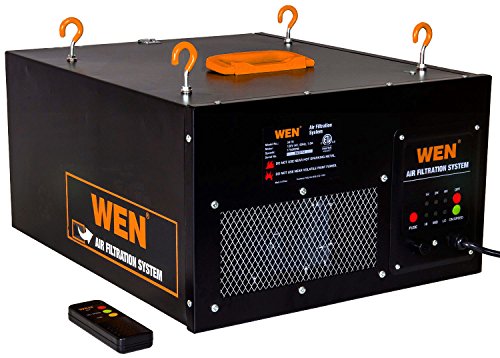
This unit provides portable air filtration with multiple speed options (300/350/400 CFM) and a light footprint. It includes a 1-micron filter and a 5-micron pre-filter. It’s best for small shops seeking intermittent airflow control or for rooms up to around 400 sq ft. It is a better fit for dedicated air filtration rather than a full shop dust-collection system, and noise can be a consideration at higher settings.
WEN Woodworking Dust Collector, 5.7-Amp with 12-Gallon Bag
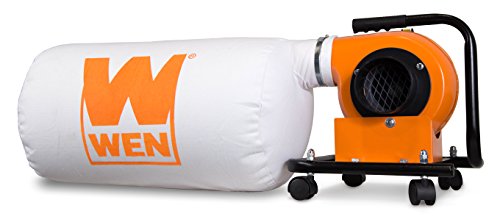
This compact dust collector uses a 5.7-amp motor and a 12-gallon bag, mounted on a mobile base. The 4-inch dust port supports common woodworking tools. Best for small shops or bench-top setups where mobility and space efficiency are priorities. A potential limitation is lower airflow compared to larger units, which may require closer tool connections or a supplemental filtration strategy.
WEN Woodworking Dust Collector, 7.4-Amp DC3474

Powered by a 7.4-amp induction motor, the DC3474 delivers up to 600 CFM with a 15-gallon bag and mobility via a sturdy base. It can be wall-mounted, which makes it a strong choice for space-constrained shops that still need reliable dust capture. Choose this if you want a balance of power and space-saving installation. Limitation: induction motors can be bulkier than some brush motors, and wall-mount feasibility depends on shop layout.
Dustopper PRO Low-Profile Dust Separator

The Dustopper PRO is a low-profile cyclonic separator designed to maximize dust separation and reduce filter and bag costs. It features a high-flow 90-degree sweep elbow setup and fits standard 5-gallon buckets. Best for users who want to pre-separate dust before the vacuum or dust extractor. Limitation: it relies on a separate vacuum or dust collector for final collection, and effectiveness depends on compatibility with your vacuum system.
Mullet High-Speed Cyclone Dust Collector
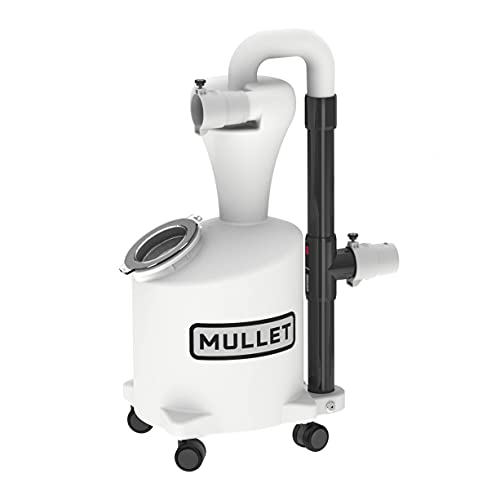
The Mullet cyclone claims a fast spinning airstream to improve dust capture and reduce clogs. It emphasizes pre-separation and a rigid, cut-to-fit PVC connection for airtight operation. Best for hobbyists seeking a straightforward cyclone approach with strong suction and easy integration into existing shop vac or dust-extractor setups. Limitation: may require custom fittings for perfect compatibility with certain vacuums or ducts.
Buying Guide: Key Considerations for Woodshop Dust Collection
- Shop size and layout: Measure space and determine whether mobility or wall-mounting is essential.
- Airflow needs: Calculate target CFM based on tool usage and ducting; higher CFM is often better for larger shops.
- Separation vs. filtration: Cyclone separators reduce filter loading; consider whether you need a pre-separator or a full-filtration setup.
- Port sizing and compatibility: Check dust port diameters (commonly 4 inches) and compatibility with your tools and hoses.
- Mobility vs. stability: Mobile bases are convenient; wall-mounts save space, but require secure mounting.
- Noise and energy use: Induction motors tend to be quiet but heavier; brush motors can be lighter but noisier.
Frequently Asked Questions
- What is the main advantage of a cyclone separator?
It pre-cleans dust to extend filter life and reduce maintenance by capturing heavier particles before they reach the filter. - Do I need a separate air filtration system in addition to a dust collector?
It depends on room size and dust generation. A dedicated air filtration unit helps improve overall air quality in larger or open spaces. - What should I consider when choosing between wall-mount and mobile units?
Wall-mount saves floor space and is great for fixed setups; mobile units offer flexibility for tasks across different areas. - How important is CFM versus bag capacity?
CFM determines airflow efficiency; bag capacity affects how often you must empty collection bags. - Can I use a Dustopper PRO with a standard shop vacuum?
Yes, it’s designed to optimize dust separation before the vacuum, reducing filter load and improving suction longevity. - Is a higher amp motor always better?
Higher amperage generally increases airflow, but consider efficiency, noise, and the overall system design for your shop.
Add a Comment