When choosing a wood splitter with a conveyor, the goal is to maximize efficiency while keeping safety and ease of use in mind. These machines are best for homeowners, small farms, or micro-businesses that regularly process firewood and need a steady feed system to minimize manual labor. The top picks here emphasize integrated conveyors to streamline the workflow—from log intake to split wood ready for stacking. Each entry outlines who benefits most, key strengths, and any practical limitations to consider before purchasing.
Product Comparison Table
| Product | Log Capacity / Conveyor | Best For | Why It Stands Out |
|---|---|---|---|
| 45T Firewood Processor with 3M Conveyor | 3M Conveyor, 19.6″ max cut | Home and small farm users needing consistent feed | Strong 20HP engine and long conveyor for continuous processing |
| MechMaxx Honda 389cc 20-ton With Conveyor | 24″ x 15″ log capacity | Mid-sized operations and serious homeowners | Balanced power and versatile splitting, good for various log sizes |
| 27T Firewood Processor With 3M Conveyor | 20″ chainsaw; 17.32″ max log cut | Home users and small businesses needing reliable flow | Full hydraulic control with 3M conveyor for steady intake |
| MechMaxx ZONSEN 459cc With Conveyor | 24″ x 15″ log capacity | Homes and small shops processing mixed hardwoods | Durable build and versatile modes with continuous feed |
| YIHUITONG 35T Skid Steer Firewood Processor Attachment | Skid-steer compatible; conveyor-adjacent workflow | Contractors and operators with skid-steer access | Compact, adaptable, can integrate with existing equipment |
45T Firewood Processor With 3M Conveyor

Brand: YIHUITONG
Key features: A powerful 20HP GX630 gas engine powers a split capable of handling logs up to 50 cm (19.6 inches) in diameter. Equipped with a 25” chainsaw for quick cutting and a 3-meter conveyor belt with a 2.55-meter height for efficient log feeding into the cutting chamber.
Best for: Home users and small farms that need high throughput and a direct feed system to minimize manual handling. The long conveyor enables smoother operation when feeding a steady stream of logs.
Why selected: This model combines robust power with a practical conveyor that reduces hand-off time between cutting and splitting, improving overall productivity in everyday wood processing scenarios.
Limitations: Gas engines require regular maintenance and fuel management; ensure your workspace has adequate ventilation and safe storage for fuel.
MechMaxx Honda 389cc 12hp Firewood Log Splitter Processor With Conveyor

Brand: MechMaxx
Key features: This HLS20 model includes a conveyor, a 20-ton splitting force, a 24″ x 15″ log capacity, and an 18″ chainsaw. It emphasizes a versatile, high-efficiency wood-processing system designed for both home use and small commercial tasks.
Best for: Users who need a reliable, all-in-one machine for medium-to-large logs and who value an integrated conveyor to reduce manual loading.
Why selected: The combination design supports switching between splitting modes, which helps optimize throughput across varying log types and moisture levels.
Limitations: As with any larger unit, space and safety clearances are important; ensure proper installation and operator training for safe use.
27T Firewood Processor With Conveyor

Brand: YIHUITONG
Key features: A 27-ton splitting force with a 17.32″ max log cutting capacity and a 20″ chainsaw, plus a 3M conveyor for continuous processing and a full hydraulic control panel for straightforward operation.
Best for: Home-based operations and small businesses that require coordinated cutting, splitting, and feeding in a single unit.
Why selected: The hydraulic control and coordinated conveyor help streamline tasks, reducing operator fatigue on longer sessions.
Limitations: The log capacity is balanced for typical firewood rounds; extraordinarily large or dense logs may require pre-cutting.
MechMaxx ZONSEN 459cc 15hp Electric & Recoil Start Engine With Conveyor
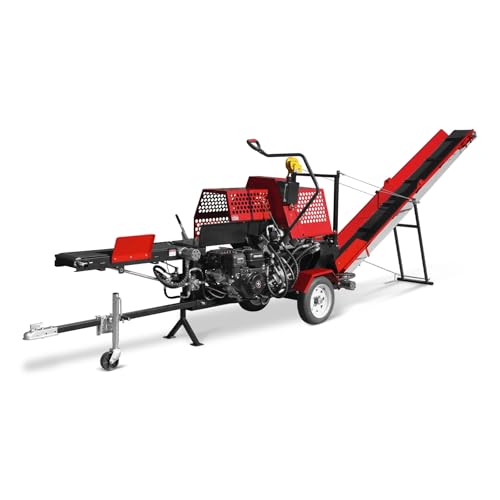
Brand: MechMaxx
Key features: A 459cc engine and 20-ton splitting force, with a 24″ x 15″ log capacity and an 18″ chainsaw. The conveyor integration supports continuous operation and efficient log handling.
Best for: Users who need a robust, mid-sized log splitter with dependable conveyor-assisted workflow for mixed hardwoods and softwoods.
Why selected: The system emphasizes consistent splitting performance with a durable frame and hydraulic reliability, suited to longer processing sessions.
Limitations: As with other powered machines, operator safety and maintenance schedules are essential for long-term reliability.
Buying Guide
What to look for in a wood splitter with conveyor
- Conveyor length and height: Longer conveyors reduce manual handling; ensure height matches your typical log sizes and workspace.
- Power and capacity: Choose horsepower and tonnage that match the log diameter you process most often.
- Hydraulic controls: Look for intuitive control panels with easy emergency shutoffs for safety and productivity.
- Portability vs. permanence: Gas-powered units offer mobility; trailer-or skid-steer-compatible designs suit operators with dedicated workspaces.
- Maintenance requirements: Gas engines or electric systems require routine checks; verify fuel storage and maintenance access in your shop.
Best-use scenarios
- Home and small farm: Prioritize units with reliable conveyor feed and straightforward controls for regular, smaller batches.
- Small business or contractor: Look for higher tonnage, larger log capacity, and durable construction to handle longer workdays.
- Safety-first setups: Ensure side guards, emergency stops, and stable bases are included in the design and installation.
How to compare models quickly
- Conveyor length and height versus your log sizes.
- Engine type (gas vs electric) and availability of spare parts.
- Overall footprint and whether it fits your workspace and transport needs.
- Accessibility of maintenance and replacement components (filters, hydraulic oil, belts).
FAQ
- What is a practical log diameter to consider with a conveyor splitter? Answer: Choose a model rated for the typical maximum log diameter you process, often between 15″ and 19.6″ for residential machines.
- Are conveyor-equipped splitters harder to maintain? Answer: They can be more complex, but modern designs emphasize safety and simpler operation with integrated controls.
- Is a gas-powered conveyor splitter better than electric for a farm setting? Answer: Gas engines offer mobility and powerful operation, while electric units may have lower running costs and less noise for shop environments.
- Do these machines require special training? Answer: Yes, operators should understand safety features, hydraulic controls, and proper material handling to prevent injuries.
- Can I convert a non-conveyor splitter to add a conveyor? Answer: It’s generally not recommended; conveyors are integrated into the machine’s hydraulic and frame design for safety and efficiency.
- What maintenance schedule is typical for these machines? Answer: Regular inspection of hydraulic hoses, engine fluids, belts, and safety features is standard; refer to the manufacturer’s guidelines for specifics.
Add a Comment