When choosing a wood dust extraction system, pick options that match your shop size, tooling, and workflow. This guide highlights five top products that cover portable vacuums, wall-mounts, and larger central collectors. Ideal buyers include hobbyists needing simple setups, small shops expanding to multiple tools, and makers seeking powerful central dust collection. Below is a quick comparison table to help you decide before reading detailed sections.
| Product | Best For | Key Benefit |
|---|---|---|
| Mullet High-Speed Cyclone Dust Collector | Small shops with a shop vac | Parabolic cyclone for stronger suction and cleaner vac filters |
| WEN DC1300 1,300 CFM | Medium workshops needing flexible tool connections | Dual 4″ inlets for two tools, large 50-gallon bag |
| Dust Right Wall Mount Dust Collector | Space-conscious shops | 650 CFM, compact vertical design, upgradeable |
| Oasis DC5000 Heavy Duty 5 HP | Larger, multi-tool setups | High airflow with three 4″ inlets, 2760 CFM |
| 3M Xtract Portable Dust Extractor | Portable, versatile dust removal | HEPA filtration and compatibility with handheld tools |
Mullet High-Speed Cyclone Dust Collector
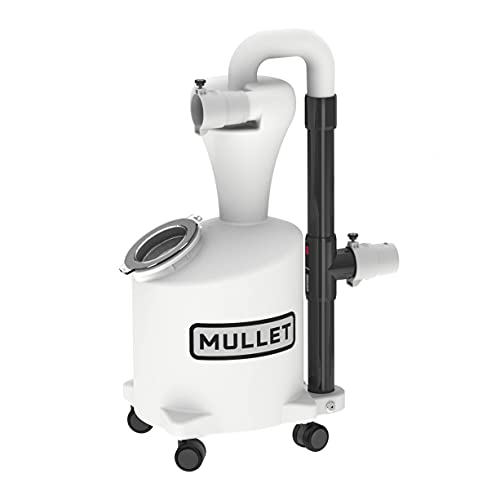
The Mullet cyclone aims at hobbyists and small shops using a shop vac as the main dust outlet. It pre-separates over 99% of debris before air reaches the filter, helping maintain strong suction and a cleaner vac canister. The parabolic design speeds airflow, increasing dust capture efficiency versus traditional straight-wall cyclones. A rigid, cut-to-fit PVC connection creates an airtight link to the vac, reducing emissions and filter loading. This unit is best for users who want an affordable, fast upgrade to their existing vac system without a full standalone dust collector.
Who it’s best for: small shops or hobbyists needing easier maintenance and increased life from their shop vac. Why selected: it delivers noticeably cleaner air and less frequent filter changes thanks to pre-separation and airtight connections.
Caution: designed to work with compatible shop vacs; verify hose and inlet compatibility with your current setup to avoid gaps or leaks.
WEN DC1300 1,300 CFM Dust Collector

The WEN DC1300 provides a mid-sized solution for workshops that run multiple tools simultaneously. With a 1,300 CFM rating and dual 4-inch inlets, it supports multi-tool setups while collecting up to 50 gallons of debris in the collection bag. The unit is compact enough for many garages yet capable of moving substantial air to keep dust under control during sanding and planing. It’s a practical choice where space is not unlimited but airflow is a priority.
Who it’s best for: woodworkers who often run two tools at once in a medium-sized shop. Why selected: solid air movement and a generous collection bag reduce frequent emptying and downtime.
Caution: operate with properly sealed ducting to maximize efficiency, as gaps can reduce suction and increase airborne dust.
Dust Right Wall Mount Dust Collector

The Dust Right wall-mount offers space-saving dust control with 650 CFM of suction. It is designed to support multiple tools in a busy shop while keeping the floor clear. The vertical design helps organize a system layout and reduces clutter. Cleaning is straightforward with a removable bag that can be upgraded to a finer canister for more precise dust filtration. This model suits woodworkers who need an expandable, compact system with straightforward maintenance.
Who it’s best for: those with limited floor space who want a scalable, easy-to-maintain dust collection setup. Why selected: space efficiency and upgrade options provide practical long-term value.
Caution: the basic filtration is 30 microns; consider upgrading to a finer filter if you work with very fine dust, such as sanding and finishing.
Oasis DC5000 Heavy Duty 5 HP Dust Collector

The Oasis DC5000 is aimed at larger shops that run multiple machines at once. Powered by a 5 HP motor and a 22-V-18A amp draw, it supports three or more tools with a maximum inlet of 6 inches. It delivers up to 2760 CFM with a robust 12-inch balanced steel radial impeller. A true central dust collection solution, it is designed to manage heavy-duty workloads and larger volumes of wood chips and dust. This model is best for serious woodshops and small manufacturing spaces that require high airflow and durable construction.
Who it’s best for: workshops with frequent multi-tool operation and a need for strong continuous airflow. Why selected: high CFM, multiple tool connections, and a heavy-duty build support demanding environments.
Caution: larger footprint and power requirements mean it’s best suited for dedicated spaces with appropriate electrical supply and duct routing.
3M Xtract Portable Dust Extractor

The 3M Xtract portable unit provides a compact, mobile solution for shops needing quick dust extraction near work surfaces. It includes a 9-gallon canister, HEPA filters, and a conductive hose, making it well-suited for pairing with Sanders and other hand tools. The system supports industrial-grade cleaning without interrupting workflow, thanks to a compact form factor and robust filtration. It’s a good fit for small spaces where mobility and fine filtration are priorities.
Who it’s best for: users seeking a portable, high-efficiency extractor for hand tools and frequent sanders. Why selected: strong filtration performance in a small footprint with easy maneuverability.
Caution: for very dusty heavier sanding tasks, verify filter replacement schedules and bag compatibility to maintain suction.
Buying Guide: Key Considerations For Wood Dust Extraction
- Shop size and layout: For compact spaces, wall-mount or portable units maximize floor area. For larger shops, central or multi-inlet collectors deliver consistent airflow across machines.
- Airflow and capacity: Measured in CFM, higher numbers move more air but may require more power and ducting complexity. Choose a model that matches your number of tools and typical sanding/planing workload.
- Filtration quality: Micron rating and filter type determine how much fine dust is captured. Finers filters reduce airborne particles but may require more maintenance.
- Inlet sizing and ducting: 4″ inlets are common and work well for most tools. Larger inlets improve performance for heavy-duty applications but require more robust ductwork.
- Maintenance and disposables: Consider bag size, filter availability, and ease of cleaning. Systems that simplify emptying and cleaning save time and maintain suction.
- Noise and space impact: Central systems may be louder and bulkier; portable units can be quieter but less powerful in some configurations.
- Upgrade paths: Some options support upgrading filters or adding canisters for finer filtration. Plan for future expansion when choosing.
Frequently Asked Questions
- What is the most important feature in a wood dust extraction system?
The most important feature is effective filtration paired with sufficient airflow to keep dust from spreading and to protect tool performance. - Should I choose a portable or central dust collector for a small shop?
Portable units are quick to deploy and ideal for limited spaces; central or multi-inlet systems are better when you run multiple tools simultaneously. - Can I mix different brands of hoses and fittings?
Compatibility matters for airtight seals; choose components with standard sizes (commonly 4″ or 2.5″ adapters) and verify fit before buying. - How often should filters be replaced or cleaned?
Replace or clean according to usage; avoid letting vacuumed dust saturate filters to maintain suction. - What is the advantage of a pre-separator like a cyclone?
Pre-separators reduce debris load on the main filter, extending life and maintaining suction efficiency. - Is higher CFM always better?
Higher CFM improves air movement but requires appropriate ducting and can increase power needs; choose an appropriate balance for your shop size.
Add a Comment