If you need to protect your shop vacuum from clogs and boost suction, a dust collector or cyclone separator is the right upgrade. These systems capture dust before it reaches the vacuum, helping keep filters clean and extending tool life. This guide highlights five top options, explaining who each is best for and why. It covers hobbyists, DIYers, and professional setups alike, with practical buying considerations and a concise comparison table.
Product snapshot: The table below compares five popular wet/dry vac dust collectors or cyclone separators. It highlights who each product suits, notable strengths, and any potential limitations to consider when choosing the right fit for your workshop.
| Product | Best For | Key Benefit | Potential Limitation |
|---|---|---|---|
| The Dustopper PRO | Shop owners needing high separation efficiency | Low-profile design with high flow and cost-saving filter life | May require compatible bucket setup |
| Oneida Dust Deputy Low-Pro Plus | DIYers and portable shop setups | Over 99% dust capture and high airflow | Best used with standard 5-gallon buckets |
| DEWALT DXVCS001 | Pro/workshop users needing strong suction | 99.5% debris capture for extended filter life | DIY assembly options may vary by setup |
| CRAFTSMAN CMXEVBE17250 | Home users needing simple, portable solution | Lightweight and easy to move | Smaller volume may limit heavy-duty tasks |
| Bosch VAC090AH | Compact spaces with robust performance | High airflow and compatible with tool-activated vacuums | May be overkill for tiny spaces |
Dustopper PRO Low-Profile Dust Separator

The Dustopper PRO is a low-profile cyclone designed to maximize separation efficiency in shop vacuums. It targets users who want to minimize filter wear and bag replacements by pre-separating dust before it enters the vacuum. Best for workshops with 5-gallon bucket setups and users who prioritize predictable maintenance cost savings. It emphasizes engineered separation over raw CFM to reduce eddy currents that slow dust capture. A caution: ensure compatibility with your bucket and hose arrangement to avoid leaks or fit issues.
Oneida Dust Deputy Low-Pro Plus Cyclone Kit
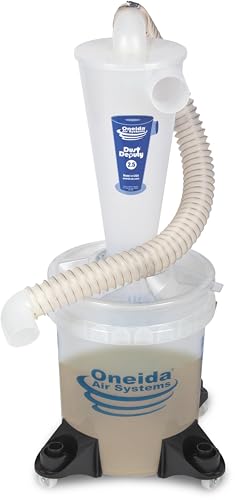
Oneida’s Dust Deputy Low-Pro Plus Kit combines a cyclone with a flexible 4-caster base and a 5-gallon bucket. It captures over 99% of dust before it enters the vacuum and offers a neutral-vane design to improve separation efficiency by about 20%. It’s suited for woodworking, drywall cleanup, and general shop tasks. The kit includes attachment hardware and hoses, but users should confirm compatibility with their existing vacuum and bucket system. Not ideal if you need a built-in fixed mount for a permanent setup.
DEWALT Dust Separator DXVCS001

DEWALT’s DXVCS001 dust separator is designed to deliver up to 99.5% debris capture prior to reaching the vacuum filter. It strengthens suction power by creating a turbine-like flow in the separator cone, making it suitable for a range of materials including drywall dust, wood chips, and concrete dust. It is compatible with several 1-7/8″ or 2-1/2″ ports, and includes components to customize the setup. Choose this if you need high efficiency and a broad material range, but plan for a possible DIY or assembly step to fit your specific vacuum model.
CRAFTSMAN CMXEVBE17250 Wet/Dry Vac

The Craftsman CMXEVBE17250 provides a compact, portable option for home use. It’s best for small messes in homes, garages, cars, and vehicles, with a focus on easy storage and mobility. This model is suitable for light-duty tasks where a larger system is unnecessary. A limitation to consider is volume capacity and suction, which may not meet heavier professional cleanup needs.
DEWALT DXVCS002 6-Gallon Separator

DEWALT’s 6-gallon separator (DXVCS002) emphasizes high efficiency with a 99.5% capture rate and a sturdy four-caster base for mobility. It’s compatible with various evacuation ports and supports a wide range of materials. It’s well-suited for users who want to combine ease of movement with strong debris separation for longer vacuum life. A practical note: larger capacity helps with longer projects but increases footprint in smaller workshops.
Buying Guide: Key Purchase Considerations
What size shop and what vacuum are you protecting? Choose a dust collector that matches your vacuum’s port sizes and your typical material mix. If you primarily handle fine wood dust, prioritize high separation efficiency and low maintenance costs. For larger studios or garages, higher CFM and durable bases improve performance and mobility. Consider whether you want a standalone cyclone or a kit that converts an existing vacuum into a cyclone system. Portability vs. stability should align with your workspace layout.
What setup fits your space? Low-profile designs save space and can fit beneath benches, while larger units may require dedicated storage. If you frequently move between projects, a kit with wheels and quick-connect hoses offers the most flexibility. For permanent setups, a robust base and secure mounting reduce tipping and vibrations.
Maintenance and consumables: Do you need minimized filter replacements? Cyclone separators pre-capture dust to extend filter life. Check compatibility with your current filters, bags, and buckets, and consider ease of cleaning and disposing of dust collected in the bucket or canister.
Material compatibility: Ensure the unit handles drywall dust, wood chips, concrete dust, and other debris common to your shop. Some models are optimized for drywall and wood, while others advertise broader debris support. If you work with metal shavings or fine powders, confirm the device’s suitability and the presence of appropriate gaskets and seals.
FAQ
- What is a dust deputy or cyclone separator? It’s a device mounted to a shop vacuum that spins dust-laden air to separate heavier debris from the airstream before it reaches the filter.
- Why would I add a dust collector to my wet/dry vac? To reduce filter clogs, extend vac life, and maintain suction by pre-capturing dust and debris.
- Is a bigger unit always better for my shop? Not necessarily. Larger units may improve durability and capacity but require more space; select based on your workspace and typical tasks.
- Can these work with any vacuum? Most are designed to be compatible with common shop vac ports, but confirm port size and mounting compatibility with your specific model.
- Do cyclone separators affect suction power? They can optimize airflow by separating dust early, which can keep suction steadier and protect the vacuum filter from clogging.
- Which is the best for hobbyist use? A compact, portable kit with easy setup, such as the Dust Deputy Low-Pro Plus or Craftsman compact vac, suits home projects well.
Add a Comment