If you need a reliable water aspirator vacuum pump, you’re looking for a device that uses water pressure to create vacuum for filtration, distillation, and simple lab evacuations. These pumps vary by material, compatibility with water systems, and noise level. This guide highlights five suitable options and explains who each is best for, along with practical buying considerations. The top picks target hobbyists, educational labs, and professional settings where simple, cost-effective vacuum is sufficient.
Summary table of selected products:
| Product | Best For | Notes |
|---|---|---|
| Deschem Stainless Steel Water Aspirator Pump | Durable, corrosion-resistant setups | Stainless steel construction; 98mm length |
| SP Bel-Art Vacuum Aspirator Pump | Educational and general lab use | HDPE body; quick-disconnect hose |
| INTBUYING 110V Water Jet Aspirator | Dual-use vacuum and cooling for reactors | 15L tank; dual taps for efficiency |
| Dinglab Stainless Steel Aspirator Pump | Rugged lab setups | Stainless steel, backflow prevention |
| Filter Vacuum Pump by LabEdit | Filtration/distillation, quick setup | Multipurpose, USA-market suited |
Deschem Stainless Steel Water Aspirator Pump
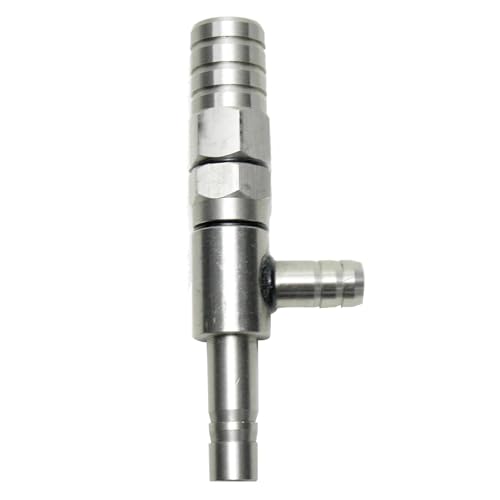
This stainless steel aspirator pump is designed for corrosion resistance and stable operation in lab filtration tasks. It features a total length of about 98 mm and a water inlet with a 16 mm outer diameter. The stainless steel build makes it suitable for routine lab use where chemical compatibility and durability matter. Best for compact bench setups requiring a sturdy, simple vacuum source that can withstand ongoing water flow.
Best for: small to mid-size labs needing a durable, corrosion-resistant water aspirator. Choose this if you value stainless steel construction and compact form factor.
Caution: Ensure the inlet/outlet connections match your system’s tubing to avoid leaks. Data notes do not specify a built-in backflow prevention feature.
SP Bel-Art Vacuum Aspirator Pump

This Bel-Art model uses high-density polyethylene, operating with water pressure above 11 psi. It includes an integral check valve to resist corrosive filtrates and fumes and accepts 6.4–9.5 mm I.D. tubing via a quick-disconnect hose fitting. Best for educational labs or workflows where aspects like chemical resistance and flexibility matter, and quick setup is valued.
Best for: classrooms and general labs seeking a lightweight, easy-to-connect aspirator. Better for low-maintenance filtration tasks.
Limitation: Not designed for high-vacuum applications; its strength lies in simple filtration rather than deep vacuum needs.
Humboldt Vacuum Hydro Aspirator Filter Pump

Made from aluminium, this model is positioned for lab vacuum tasks with hydro aspirator capabilities. It is designed to handle explosions-proof environments and features a 16 mm water inlet. Best for labs needing a robust, metal-bodied aspirator capable of steady performance in standard filtration workflows.
Best for: labs requiring a lightweight aluminium option with reliable performance for routine vacuum filtrations. Beware: it may not be ideal for high-vacuum needs or demanding corrosive liquids.
INTBUYING 110V Water Jet Aspirator
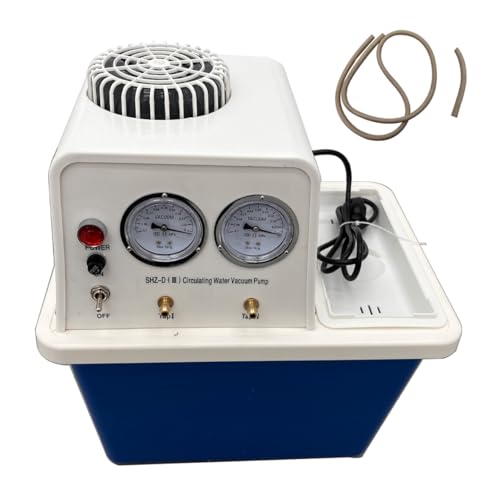
This 110V model combines vacuum and cooling functions, featuring a 15L removable water tank. It supports dual taps to adapt to different workflows, and uses anti-corrosion copper components for longer life. Best for complex setups with reactors or rotary evaporators where both vacuum and cooling are needed from one device.
Best for: higher-demand applications that require a larger water reservoir and flexible water flow control. Limitation: may be heavier and more complex than basic aspirators, requiring careful setup.
Deschem Glass Water Aspirator Pump

Glass construction offers chemical resistance and visibility for filtration processes. It uses G3.3 borosilicate glass with a relatively high annealing point. Best for glassware-compatible setups where you want to observe flow and ensure clean filtration in a corrosion-resistant glass body.
Best for: labs prioritizing glass equipment compatibility and easy observation of filtration. Caution: Glass components can be brittle if mishandled or dropped.
Dinglab Stainless Steel Aspirator Pump

This stainless steel pump supports operation under both high and low water pressures. It includes a ball-type positive action valve to prevent backflow when pressure drops. It has a 98 mm length, 16 mm water inlet, 10 mm outlet, and 10 mm vacuum ports. Best for durable, versatile use in varied lab setups.
Best for: users needing backflow protection and broad compatibility with standard lab hoses. Limitation: datasheet notes emphasize non-disassembly for some parts; user should follow safe handling guidelines.
Filter Vacuum Pump by LabEdit

Designed for filtration and distillation apparatus, this pump helps lower pressure quickly for liquid processing. It is a compact option suitable for USA markets with several tubing sizes included. Best for quick setup in filtration tasks where moderate vacuum suffices.
Best for: educational labs and light filtration tasks requiring a ready-to-use unit with flexible tubing options. Caution: it does not support extremely high-vacuum demands.
Buying Guide
What should you consider when choosing a water aspirator vacuum pump?
- Material: Stainless steel or aluminium bodies resist corrosion; glass bodies offer visibility and chemical compatibility in specific setups.
- Vacuum level: Water aspirators typically provide moderate vacuum; assess whether you need deeper vacuum for your process.
- Water connections: Inlet and outlet diameters (common 16 mm or 10 mm) determine compatibility with existing tubing.
- Backflow protection: Pumps with check valves help prevent water from flowing back into your system during pressure drops.
- Noise and maintenance: Some units include noise-reducing features; consider ease of cleaning and replacement parts.
- Dual-use capability: If you require both vacuum and cooling, models with integrated cooling or dual taps can save space and simplify workflows.
FAQ
- What is a water aspirator vacuum pump best for? – It suits filtration, distillation, and basic vacuum tasks in educational and small lab settings where moderate vacuum suffices.
- Do these pumps require electricity? – Some models run on standard mains power (e.g., 110V) and others are manual or water-pressure driven; check your model’s specifications.
- Is backflow prevention important? – Yes, backflow prevention protects your equipment from water damage and contamination, especially at pressure changes.
- Can I use any tubing with these pumps? – Tubing compatibility varies by inlet/outlet size; ensure you select tubing within the supported range (commonly 6.4–9.5 mm I.D.).
- Are glass-bodied pumps fragile? – Glass bodies offer observation advantages but require careful handling to avoid breakage.
- Will a water aspirator work for high-vacuum needs? – No, these devices are intended for moderate vacuum applications, not high-vacuum or precision vacuum systems.
Add a Comment