Answering the best way to locate hidden gas leaks starts with a reliable detector. This guide highlights five top options designed to sniff combustible gases in tight spaces, including homes, RVs, and industrial settings. Each product is chosen for a distinct use case—from compact pocket tools to longer-reach probes—so you can match the detector to your typical inspection scenarios. The buyers here include DIY homeowners, emergency responders, HVAC contractors, and safety-conscious renters seeking rapid alerts and clear readings.
Summary of selected products:
- KLEIN TOOLS ET120 Gas Leak Detector — best for versatile detection with strong visual/audible alerts.
- TOPTES PT520A Natural Gas Detector — best for reaching hard-to-access spots with a flexible 17-inch gooseneck.
- TOPTES PT-356 Rechargeable Detector — best for color display with trend history and dual modes.
- TOPTES PT-830S Rechargeable Detector — best for precise readings with a long 14-inch probe and TFT display.
- TOPTES PT199 Portable Detector — best for quick, ready-to-use checks with simple operation.
Klein Tools ET120 Gas Leak Detector

The Klein Tools ET120 is a combustible gas leak tester with an 18-inch gooseneck and a wide 50–10,000 ppm detection range. This model offers adjustable sensitivity, with High (50–1,000 ppm) and Low (1,000–10,000 ppm) settings, making it suitable for both quick spot checks and detailed scans in tight spaces. Visual alerts are provided by five red LEDs, complemented by an 85 dB audible alert that intensifies as gas concentration rises. Best for contractors or serious DIYers who need a flexible, visible alert system and a longer reach for inaccessible areas.
Who it’s best for: professionals performing routine inspections in tight spaces, and homeowners performing periodic safety checks in basements or utility rooms. Why chosen: strong range, adjustable sensitivity, and multi-sensory alerts for reliable detection in varied environments. Caution: not designed to identify precise leak sources without follow-up confirmation in some complex layouts.
TOPTES PT520A Natural Gas Detector

The PT520A from TOPTES features a 17-inch gooseneck that enables easier access to pipes, basements, and other hard-to-reach spots. It detects methane, propane, natural gas, LPG, butane, and more within a 50–10,000 ppm range. Alarm behavior includes 7 colored bars and a 75 dB alarm that intensifies with concentration. Best for: users who routinely inspect vents, storage areas, or near appliances where extended reach matters. Caution: sensitivity is tuned for a broad range; for ultra-precise readings in critical facilities, calibrations or corroborating methods may be advisable.
TOPTES PT-356 Rechargeable Natural Gas Detector

The PT-356 offers active rapid detection with an integrated sampling fan that speeds up response to gas leaks. It detects 0–10,000 ppm and supports multiple gases including methane, propane, butane, and LPG. A full-color display provides real-time PPM values and a historical trend graph for the past minute. It also includes a triple-alarm system (visual, audible, and vibration) and a one-button mute function. Best for: users who require quick data visualization and robust alerting in dynamic environments. Caution: the device’s fan-based sampling consumes more power and may require frequent charging on extended fieldwork.
TOPTES PT-830S Rechargeable Gas Detector

The PT-830S combines precision with a 14.5-inch flexible probe and a TFT color display. It supports a range of 0–10,000 ppm and offers customizable high/low alarm thresholds for methane, propane, and other gases. A quick mute function helps reduce noise during ongoing surveys. Best for: professionals needing high-contrast readings and easy interpretation in bright or challenging lighting. Caution: advanced features require user familiarity to optimize alarm threshold settings.
TOPTES PT199 Natural Gas Leak Detector
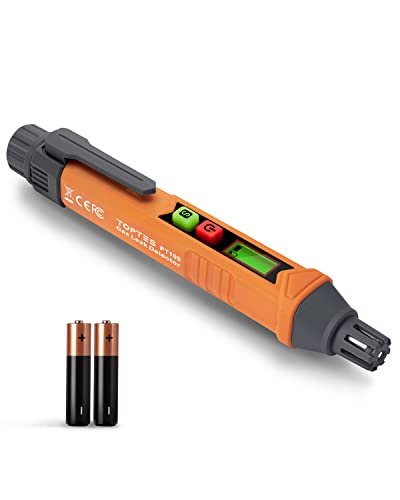
The PT199 is a portable, easy-to-use detector with audible and visual alarms that trigger within 0.5 seconds of detecting gas. It includes two AAA batteries and has a 30-second warm-up. The LCD screen turns red as gas levels rise, and a low-battery indicator appears below 2.4V. Best for: quick spot checks in homes or on trucks where speed and simplicity matter. Caution: battery life and warm-up time should be considered for ongoing field use.
UEi CD100A Combustible Gas Leak Detector

The UEi CD100A provides comprehensive detection for acetone, ammonia, butane, methane, natural gas, LPG, Jet fuel, and more. It features a long 18-inch flexible gooseneck and a tip light to illuminate leaks in dark areas. Best for: HVAC technicians and multi-task inspectors who need broad gas coverage and tight-space access. Caution: feature set is broad, so users should familiarize themselves with the gooseneck control to prevent misreads in cluttered spaces.
PQWT Underground Water Leak Detector PQ125A
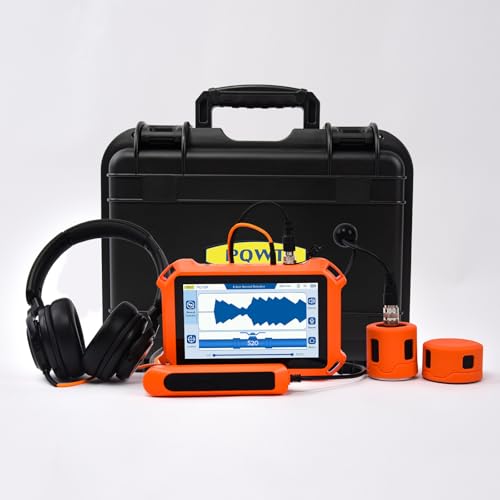
While primarily a water leak detector, the PQ125A includes a touchscreen interface and a dual-mode detection approach that helps pinpoint leaks in pipes and walls. It uses dual sensors for enhanced detection in various environments. Best for: professionals involved in water system diagnostics who also need an understanding of surrounding conditions that could influence gas readings. Limitation: primarily designed for water leaks; gas detection capabilities are not its core strength.
Forensics FD Gas Leak Detector

The Forensics FD detector lists a range of gases including methane, propane, butane, and various combustibles. It emphasizes durability with a robust ABS housing and includes a color display to show readings. Best for: field technicians needing rugged equipment capable of handling rough environments and a broad gas detection spectrum. Caution: the Japanese-sensor calibration claim should be interpreted with standard maintenance practices for consistency.
Buying Guide: Key Considerations for Choosing an Underground Gas Leak Detector
- Detection range and gas types: Choose a model that covers the gases you expect to encounter and offers a range comfortable for your typical leaks (e.g., 50–10,000 ppm).
- Probe length and reach: Longer goosenecks help access tight spaces, service panels, and basements; balance reach with hand comfort and maneuverability.
- Display clarity and alarms: Color displays, bar indicators, and multi-sensory alarms (visual, audible, vibrating) help in noisy environments or dim spaces.
- Power and portability: Rechargeable units are convenient for frequent field work, while battery-powered or plug-in hybrids suit varying workloads.
- Response speed and sensitivity: Faster response is crucial for safety; adjustable sensitivity lets you tailor readings to different environments.
- Durability and safety features: Look for rugged housings, certifications, and ease of use in tight spaces; consider devices with mute options for non-emergency situations.
Frequently Asked Questions
- What is the typical range you should expect from a gas leak detector? Answer: Most handheld detectors cover 50–10,000 ppm for methane and similar gases, with some models offering broader or narrower ranges depending on gas type and sensitivity settings.
- Which detector is best for accessing tight spaces? Answer: Models with long goosenecks (around 17–18 inches or more) are designed specifically to reach confined areas, corners, and behind appliances.
- Do I need a detector with a color display? Answer: A color display helps interpret real-time readings and trends quickly, especially when monitoring multiple leaks or varying gas concentrations.
- Should I choose a detector with audible alarms only or multi-sensory alarms? Answer: Multi-sensory alarms (visual, audible, and vibration) improve safety in loud or dark environments where one alert type may be missed.
- Is automatic shutoff common in these detectors? Answer: Most portable detectors do not include automatic shutoff; they provide alerts and readings so you can take manual actions to mitigate leaks.
- How important is a warm-up time? Answer: A shorter warm-up time helps start readings quickly, which is critical in emergency scenarios or when inspecting multiple zones rapidly.
Add a Comment