Answering the demand for reliable plastic bonding, ultrasonic plastic welding machines enable fast, clean joins without adhesives. This guide highlights five solid choices for hobbyists, small workshops, and industrial users. Each option suits different material types, power needs, and workflow preferences. Use this overview to compare durability, head configurations, and ease of use so you can pick the right welder for ABS, PP, PE, PC, and more.
| Product | Best For | Key Strength | Approximate Power |
|---|---|---|---|
| Versatile home and light professional use | 28KHz, portable | 700W | |
| Projects with multiple welding heads | 10 welding heads | 700W | |
| High-speed production | 1200W, 35KHz | 1200W | |
| Budget-conscious, customization | Custom horns, free horn option | 500W | |
| Professional multi-use with LCD | 10 heads, LCD | 700W |
TBVECHI Ultrasonic Plastic Welder

Best for: DIY enthusiasts and light industrial tasks. This 28KHz, 700W handheld welder is designed for ABS, PS, PC, PP, and PE. It uses a compact design with a folding, industry-grade cable, making it suitable for maneuvering around smaller parts and tight workspaces. The unit converts high-frequency electrical energy into mechanical vibration to melt and fuse plastic joint faces, enabling rapid, precise welds. It’s a strong pick when you need portable, reliable spot welding on common thermoplastics.
Why selected: It combines portability with sufficient power for frequent small-scale welds and repairs. Its focused welding frequency supports clean joints with minimal material distortion. A potential limitation is its compact form, which may be less ideal for very thick or large panels.
Caution: Ensure correct frequency and hold times for your material; improper settings can degrade weld strength.
Gosangom 700W Ultrasonic Welding Machine
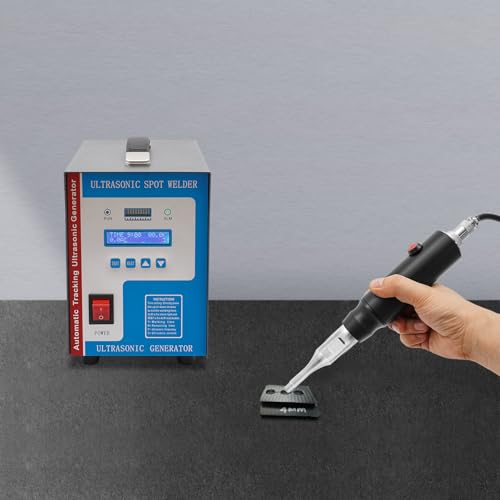
Best for: Projects requiring multiple welding heads and versatility. This 700W unit supports 2–12 mm (0.08–0.47 in) plastic thickness and ships with 10 different welding heads. The robust metal construction with a protective finish aims for longevity in both DIY and professional settings. It’s especially useful when different joint profiles and thicknesses are common in your workflow.
Why selected: The variety of heads offers quick adaptation to varying parts without swapping machines. A limitation is the potential need for head-specific calibrations to achieve optimal weld strength across different plastics.
Caution: Check material compatibility and head selection before welding to avoid poor joints on unfamiliar plastics.
BAOSHISHAN Ultrasonic Spot Welder (Customized)
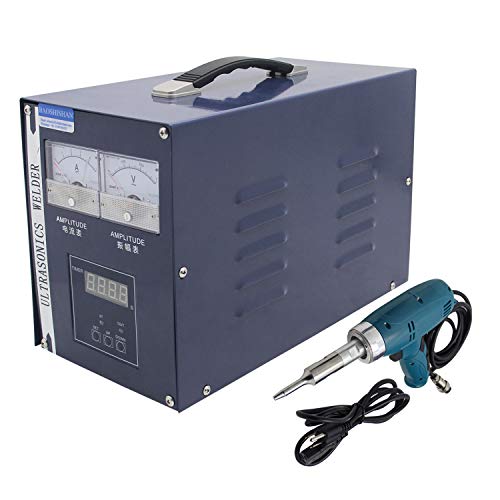
Best for: Buyers who want a customizable welding solution. This 500W–800W unit supports 28KHz and offers four modes (500W, 600W, 700W, 800W). It emphasizes customization by allowing you to specify material and welding head preferences at order, making it suitable for varied applications such as egg belt conveyors, farm conveyors, or collecting surfaces where precise, repeatable spots are needed.
Why selected: Customization helps tailor weld characteristics to specific plastics and thicknesses. A limitation is the ordering process; you must communicate material and head details to ensure proper setup before manufacturing.
Caution: Verify head compatibility with your target materials to avoid suboptimal welds.
ANXYYDS Ultrasonic Spot Welder
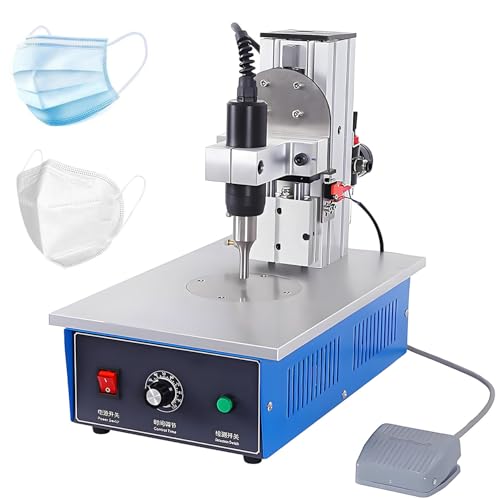
Best for: High-speed production environments. This 1200W, 35KHz welder is designed for rapid cycles, capable of completing 0.4–8 seconds per weld. It’s well-suited for non-woven fabrics, thermoplastics, and nylon applications, delivering throughput up to 400–600 pieces per hour. It reduces labor and adhesive costs by forming bonds solely through ultrasonic vibration.
Why selected: The high wattage and fast cycle times make it ideal for manufacturing tasks requiring consistent, repeatable joints. A limitation is the higher power and frequency may demand careful machine setup and safety measures for continuous operation.
Caution: Ensure proper ventilation and operator safety when operating at higher horsepower and frequency settings.
MIOUYTRT Ultrasonic Welder Kit

Best for: Professionals seeking precision and flexibility. This 700W handheld welder includes 10 interchangeable heads and an LCD display for real-time monitoring of frequency, current, time, and power. Its microcomputer-controlled 28KHz operation supports precise welds across textiles, electronics housings, and auto parts. The cooling and durable metal construction help sustain longer sessions.
Why selected: The LCD feedback and intelligent tracking improve consistency and troubleshooting. A potential limitation is the need to manage multiple heads, which may require organization and time to select the optimal head per task.
Caution: Calibrate frequency and amperage for each material to avoid weak welds or material damage.
Buying Guide: Key Purchase Considerations
- Material compatibility: Most ultrasonic welders work with ABS, PS, PC, PP, PE, and similar thermoplastics. Confirm listed plastics and thickness ranges for your use case.
- Power and frequency: Higher wattage generally supports faster cycles and thicker materials. Frequency (commonly 28KHz or 35KHz) influences weld quality and joint sharpness.
- Head configurations: Interchangeable or multiple welding heads enable handling different joint geometries and thicknesses. Decide based on your typical projects.
- Portability vs. throughput: Handheld units are portable for small jobs; higher-end systems with multiple heads suit production lines and frequent repetitive tasks.
- Control interface: LCD displays and microcontroller-based controls improve repeatability and ease of operation. Look for safeguards like overheat protection.
- Customization options: Some models offer customizable horns or order-specific configurations, which can benefit specialized applications but may require lead time.
Frequently Asked Questions
- What materials can an ultrasonic plastic welder join? – Common plastics include ABS, PS, PC, PP, and PE. Check the device’s material compatibility for your exact plastics.
- How fast are ultrasonic welds? – Cycle times vary by power and material; typical small welds can take under a second, while thicker joints may require longer cycles.
- Do I need safety gear? – Yes. Use eye protection and ventilation as some plastics may emit fumes during welding. Follow device safety guidelines.
- Is a higher frequency always better? – Not necessarily. 28KHz vs 35KHz affects weld behavior; choose based on material type and joint design.
- Can I customize horns or heads? – Some brands offer free or paid horn customization for specific applications; plan for lead time if you need this.
- Which model is best for beginners? – A portable 700W handheld unit with straightforward controls is typically easier to learn and manage for entry-level users.
Note: This article presents a selection of five ultrasonic plastic welders chosen for relevance to common plastics and practical workflows. Always verify current product specifications and their compatibility with your exact material and thickness before purchasing.
Add a Comment