When selecting a two-stage vacuum pump vane, you want reliable depth, solid pumping speed, and compatibility with common refrigerants. This guide highlights top two-stage vane pumps, clarifying who each product is best for and why. It targets HVAC technicians, car repair enthusiasts, and professionals seeking efficient vacuuming with reduced oil mist and manageable noise. The overview table below previews five suitable options, helping you compare capabilities at a glance.
| Product | Best For | Key Benefit |
|---|---|---|
| Orion Motor Tech 14.4 CFM 2 Stage Vacuum Pump | Professional HVAC techs needing fast evacuations | High flow, deep vacuum to 1.5 microns |
| VIVOHOME 110V 1/2 HP 5 CFM Dual Stage Vacuum Pump | Mid-size systems and mobile setups | Compact, versatile refrigerant compatibility |
| VEVOR Vacuum Pump 7 CFM 3/4 HP | Automotive A/C maintenance and resin degassing | Durable build with solid vacuum and ports |
| Orion Motor Tech 2 Stage Vacuum Pump 9 CFM | Deep evacuations for older refrigerants | Strong motor, 1.5 micron vacuum |
| VEVOR 5 CFM 2 Stage Vacuum Pump | Budget-focused setups needing reliable two-stage performance | Two-stage with enhanced cooling and oil system |
Orion Motor Tech 14.4 CFM 2 Stage Vacuum Pump
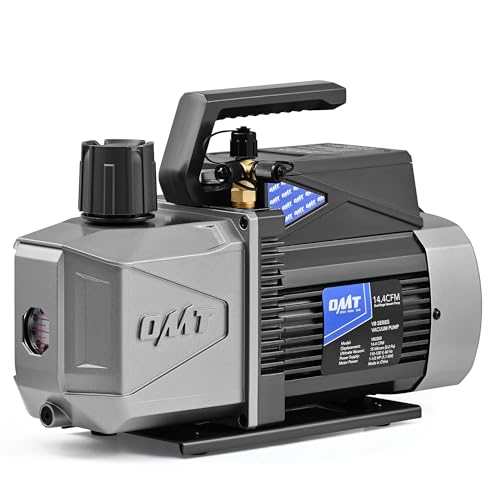
Best for high-demand HVAC work, this two-stage pump pulls a deep vacuum quickly. It runs on a 1.5 hp motor and delivers 14.4 CFM, with a capability to reach 1.5 microns. The design emphasizes oil mist reduction via an oil mist-free cap on the oil fill/exhaust, contributing to a cleaner workspace and easier maintenance. It operates at or below 70 dB for quieter use, making it a strong choice where noise is a consideration.
Who it’s best for: technicians handling R134a, R410A, R22, and related refrigerants in commercial or residential HVAC tasks, where speed and deep vacuum matter.
Why chosen: The combination of high pumping speed, deep vacuum, and cleaner exhaust supports efficient service workflows and faster turnaround for complex evacuations.
Caution: The unit’s higher noise ceiling, while still moderate, may be noticeable in small or quiet spaces.
VIVOHOME 110V 1/2 HP 5 CFM Dual Stage Pump
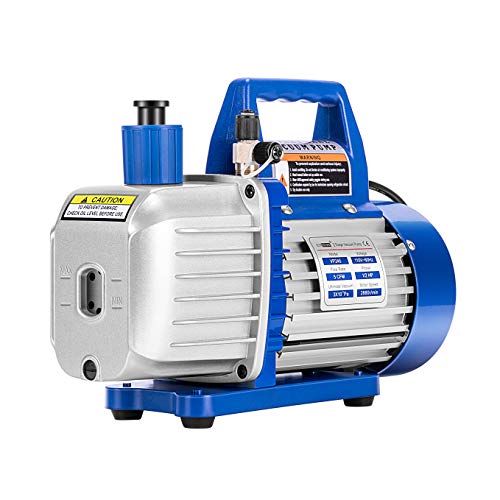
Designed for versatility, this pump operates at 1/2 HP with a maximum 5 CFM flow and achieves an ultimate vacuum of 0.3 Pa in about three minutes. It includes protection features to guard against overload and phase loss, which helps maintain stable operation during a typical duty cycle. The unit supports multiple refrigerants, including R134a, R12, R22, R502, and adaptation for R410a with an included or compatible adapter, with 1/4-inch SAE and 1/2-inch Acme connections.
Who it’s best for: contractors or DIYers performing mid-size A/C maintenance where portability matters and 5 CFM is sufficient.
Why chosen: Its compact design and protective features offer dependable performance for routine evacuations without overkill.
Caution: R410a compatibility may require an adapter not included in the kit, so check your setup before purchasing.
VEVOR Vacuum Pump 7 CFM 3/4 HP
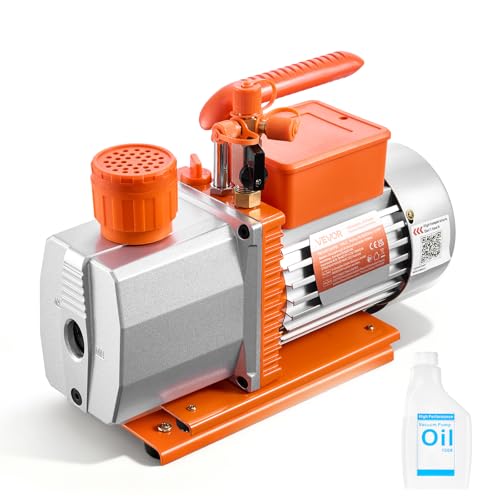
With a 3/4 HP motor and 7 CFM flow, this two-stage pump targets reliable, deep evacuations for HVAC maintenance. It reaches around 0.3 Pa, suitable for automotive A/C and smaller HVAC tasks. The pump uses a four-pole motor for steady operation and includes ports for 1/4-inch SAE, 1/2-inch ACME, and 3/8-inch SAE fittings, offering flexible connections.
Best for: professionals who service multiple refrigerant systems (R134a, R22, R410a, R1234YF, R32) and need dependable performance with robust cooling and noise management.
Why chosen: Durable housing and cooling features help sustain performance during longer work sessions.
Caution: The unit’s noise level remains a consideration in quiet shop environments, though it stays within typical HVAC pump ranges.
Orion Motor Tech 2 Stage Vacuum Pump 9 CFM

This 3/4 hp two-stage pump emphasizes strong torque and deep evacuation, capable of reaching 1.5 microns for precise servicing of systems using R12, R22, R134a, R410a, and R1234yf. It combines a 9 CFM flow with a copper motor for efficient performance, while a dedicated exhaust cap reduces noise and filters exhaust to keep work areas more comfortable.
Who it’s for: technicians handling older and newer refrigerants who require a deep vacuum in moderate-to-large systems.
Why chosen: The balance of 9 CFM for speed and 1.5 micron depth supports faster turnarounds on complex evacuations.
Caution: Deep vacuums can sometimes reveal system leaks more than shallow evacuations; ensure system seals are checked post-evacuation.
VEVOR 5 CFM 2 Stage Pump

Targeting budget-conscious buyers, this 5 CFM, 2-stage pump emphasizes heat management and oil control. It uses a two-stage design for thorough evacuations and offers multiple inlet configurations (1/4″ SAE, 3/8″ SAE, 1/2″ ACME) to fit a variety of hoses. It also features an anti-backflow inlet design and an oil fume discharge filter to reduce emissions and odors.
Who it’s for: hobbyists and professionals who need reliable two-stage performance without premium pricing.
Why chosen: The oil management features help extend the pump’s life and maintain cleaner operations.
Caution: Ultimate vacuum capability (noted as 20 microns in some marketing) may be lower than higher-end models, so confirm the required vacuum depth for your tasks.
Buying Guide: Two-Stage Vacuum Pump Vanes
What matters most: vacuum depth vs. pumping speed
Two-stage pumps deliver deeper vacuums (lower micron numbers) at faster rates than single-stage units. If you regularly evacuate automotive A/C systems or large HVAC units, prioritize pumps with 1.5–3.0 micron capabilities and 7–14 CFM flow. For small systems, 5 CFM with good depth may be sufficient.
Oil management and noise
Oil mist suppression and exhaust filtration improve air quality and reduce workspace viscosity. Look for models with oil mist caps and exhaust filters. Noise levels under 70 dB are generally comfortable for most shops, but consider sound-sensitive environments.
Compatibility and ports
Common refrigerants include R134a, R22, R410a, and R1234YF. Ensure the pump offers compatible ports (1/4″ SAE, 1/2″ ACME, etc.) or adapters. If you work on both automotive and home HVAC, a broader set of fittings adds flexibility.
Durability and duty cycle
Two-stage pumps with cast-iron or reinforced aluminum housings and copper motors tend to last longer under continuous use. A higher-duty cycle (time between rest periods) supports extended service sessions without overheating.
Price vs. value
High-end models emphasize speed and micron depth, while budget options emphasize value for less demanding tasks. Align your choice with typical workloads, system sizes, and the required vacuum depth.
Frequently asked questions
- What is two-stage vacuum pumping? It uses two stages to remove air more quickly and achieve deeper vacuums than single-stage pumps.
- Which refrigerants should I consider? Most two-stage pumps support R134a, R22, and R410a; check the product’s compatibility notes for others like R1234YF or R32.
- How deep a vacuum do I need? For most automotive A/C tasks, 1–3 microns is common; for some repairs, deeper vacuums around 0.2–1 micron may be preferred.
- Can I use any oil with these pumps? Most use a specific vacuum pump oil type; using the recommended oil helps maintain performance and longevity.
- Is noise a concern? Yes, especially in small shops. Look for models with noise-reduction features and a low dB rating.
- Do I need adapters? Some pumps require adapters to fit certain hoses; verify included fittings and compatibility before purchase.
Add a Comment