Looking for a tractor attachment that clears brush and overgrowth efficiently? This guide highlights five reliable brush cutters designed for common tractors, with clear notes on who they’re best for and why they stand out. Each product is chosen for compatibility, cutting power, and durability, helping buyers compare quickly.
| Product | Best For |
|---|---|
| BILT HARD 4 FT 3 Point PTO Rotary Brush Cutter | Small- to mid-size tractors (15–45 HP), field and pasture clearance |
| Ag-Rite 72 Inch Brush Hog | Medium to large tractors (22–50 HP), heavy dense brush |
| Titan Attachments 5 FT PRO Series Rotary Cutter | Cat 1 tractors, large areas and tall vegetation |
| Landhonor Lawn Mower 42″ Brush Cutter | Skid steer-based setups, precise trimming and pruning |
| WIKIBB Brush Hog Cutter Blades Replacement | Maintenance and blade replacement for compatible mowers |
BILT HARD 4 Ft 3 Point PTO Rotary Brush Cutter
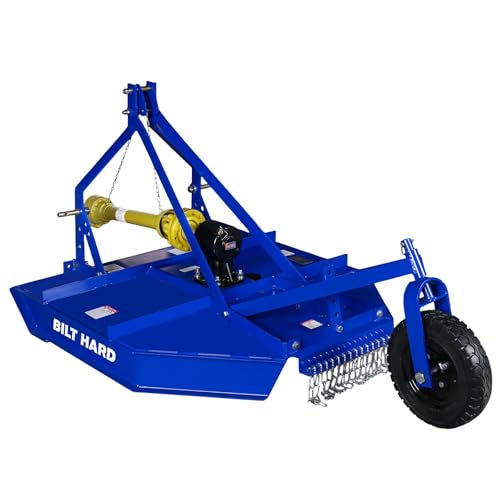
Best for small to mid-size tractors needing reliable field clearing. This model uses a Category 1 3-point hitch with a 540 RPM PTO shaft and a slip-clutch to protect the driveline during heavy loads. The adjustable cutting height (1.5″ to 10″) via a solid rubber tail wheel helps tailor cuts to varied terrain and vegetation, making it suitable for pastures, fence lines, and light to moderate brush.
Why selected: It combines an accessible cutting capacity with adjustable height and a protective slip-clutch system, reducing downtime and stress on the tractor. Best for buyers who want straightforward setup and mid-range performance.
Limitations: Cutting capacity tops out around 1″ diameter; deeper clearing may require heavier-duty models when encountering thick brush or obstacles.
Ag-Rite 72 Inch Brush Hog Rotary Cutter

Best for heavier brush tasks on larger tractors. This cutter features a thick .19-inch (6-gauge) steel deck and a 2-inch cutting capacity with heat-treated blades. It’s designed for 22–50 HP tractors with Cat 1 or Cat 2 three-point hitches and offers slip-clutch protection to minimize shock loads from rocks or stumps.
Why selected: Superior deck thickness and a wide cutting width enable efficient clearing of dense brush. Best for users needing durable construction and higher operating width per pass.
Limitations: Larger width may require better mounting stability and careful alignment on smaller tractors with limited rear clearance.
Titan Attachments 5 Ft PRO Series Rotary Cutter

Best for extensive properties and heavy vegetation on Cat 1 tractors. The 5-foot PRO Series cutter features a cast iron gearbox and a slip-clutch PTO shaft. Its heat-treated, replaceable blades have a 2″ cutting capacity and are designed for long service life in demanding field work.
Why selected: Combines large coverage with a robust drivetrain, making it ideal for farmers and land managers clearing expansive plots or dealing with tough brush. Choose this if you prioritize durability and wide-cut efficiency.
Limitations: Heavier unit may require more powerful ballast and a stable mounting setup on lighter tractors.
Landhonor 42″ Brush Cutter Skid Steer Attachment

Best for skid steer setups and precise trimming tasks around properties, trees, and gardens. This 42-inch cutter attaches via hydraulic power with a 90° swing and 125° head curl, allowing flexible angles for complex trimming work. It uses two AR400-grade blades for efficient cuts up to 5 inches in diameter in some configurations.
Why selected: Designed for hydraulic-powered machines, it offers versatile positioning and strong cutting capability for landscaping, right-of-way maintenance, and flexible pruning. Best for users with skid steers seeking precision and hydraulic compatibility.
Limitations: Not a traditional tractor PTO unit; requires a compatible hydraulic system and machine type to operate effectively.
WIKIBB Brush Hog Replacement Blades

Best for blade maintenance and extending the life of existing brush cutters. These replacement blades are spring steel with a black powder-coated surface, sized at 14 inches (350 mm) long with a 30 mm center hole. Includes two blades per pack for compatible mower heads.
Why selected: Practical for buyers who already own a brush cutter and want durable, cost-effective blades. Helps maintain cutting efficiency and reduce downtime due to dull blades.
Limitations: Compatibility depends on your specific mower head model and blade mounting pattern; verify compatibility before purchase.
Buying Guide: Key Purchase Considerations
- Tractor horsepower and hitch type: Ensure the cutter matches your tractor’s HP and uses Cat 1 or Cat 2 three-point hitch as required. PTO shaft compatibility and slip-clutch protection are critical to avoid driveline damage.
- Cutting width and height: Narrow cutters are easier to maneuver in tight spaces; larger cutters increase efficiency on open land but require stronger tractors and more storage space.
- Deck or blade durability: Heavy-gauge steel decks and heat-treated blades extend service life, especially when clearing dense brush. Consider the desired cutting diameter (e.g., up to 1″ or 2″) for your vegetation.
- Hydraulic versus PTO power: PTO-driven cutters are common for tractors; hydraulic-powered attachments suit skid steers or excavator-based setups and offer flexible positioning but require compatible hydraulic systems.
- Durability features: Look for slip-clutch PTO shafts, robust gearboxes, and replaceable blades. These reduce downtime and maintenance costs in rugged terrain.
- Deck protection and safety: Shock-absorbing protection and proper guards help prevent damage from stumps and rocks. Follow manufacturer safety instructions for operation and maintenance.
Frequently Asked Questions
- What size tractor do I need for a 5 ft rotary cutter? — A 5 ft cutter typically suits Cat 1 tractors around 20–60 HP, depending on the model and load conditions.
- What is a slip-clutch PTO shaft? — It is a protective device that disengages when the mower experiences overload, protecting the tractor and cutter gears.
- Is a hydraulic attachment better than a PTO-driven one? — Hydraulics offer more maneuverability on loaders or skid steers, while PTO cutters are simpler for standard tractors and often lighter weight.
- How do I choose the correct cutting width? — Consider field size and turning radius. Wider cutters cover more area but require more powerful tractors and stockier setup.
- Can I use blades from one brand on a different mower head? — Blade compatibility depends on blade size, hole pattern, and mounting design; verify with the manufacturer before mixing parts.
- What maintenance is required for brush cutters? — Regularly inspect the blades, tighten hardware, lubricate moving points, and replace worn components to maintain cutting efficiency and safety.
Add a Comment