When choosing a T-slot milling cutter, the right balance of cutter material, flute design, and shank size matters. This guide highlights five top options that address common needs: durability for hard metals, efficient chip removal, and reliable clamping compatibility. Ideal buyers include shop owners needing versatile carbide cutters for stainless steel and aluminum, hobbyists working with copper or cast iron, and contractors seeking long-lasting tools for repeated jobs.
Below is a quick, reference table of the selected products to help you compare core specs at a glance. Each entry includes the cutting diameter, depth, shank size, flute count, and primary material focus to aid quick decision-making.
| Product | Cutting Dia / Depth | Shank | Flutes | Primary Use |
|---|---|---|---|---|
| uxcell T-Slot Milling Cutters (6 Flutes, 25x6mm) | 25mm / 6mm | 12mm | 6 | Stainless/Cast Iron, Aluminum |
| NACX HSS-AL T Slot End Mill | 16mm / 3mm | 6mm | 6 | HSS, Light Metals |
| SG Store 6 Flute T-Slot Cutter (25x3mm) | 25mm / 3mm | 12mm | 6 | Steel, Aluminum, Wood |
| uxcell T-Slot Milling Cutters (3 Flutes, 25x3mm) | 25mm / 3mm | 12mm | 6 | Stainless/Copper/Aluminum |
| HARFINGTON T Slot End Mill (4 Flutes, 4x1mm) | 4mm / 1mm | 4mm | 4 | Stainless/ Alloy |
uxcell T-Slot Milling Cutters, 6mm Depth, 25mm Cutting

This cutter features a 25mm cutting diameter, 6mm cutting depth, and a 12mm shank with six carbide-tipped flutes. The tungsten carbide tip provides high hardness, wear resistance, and robust cutting strength, enabling faster speeds on a variety of materials including stainless steel, copper, aluminum, and tool steels. The edge is designed to resist breakage, and welding between the cutter head and body enhances durability. It is best for customers needing a versatile, durable cutter for T-slotting and straight-slot work in moderate to heavy machining scenarios.
Best for: Shops needing a carbide-tipped option with strong wear resistance for stainless steel and aluminum, with reliable clamping and stable cutting. Limitation: The 6-flute arrangement can be more sensitive to chatter on very hard or highly vibration-prone setups; use proper feeds and speeds. Choose this if you require a universal T-slot tool with broad material compatibility.
NACX HSS-AL T Slot End Mill Milling Cutter

Made from high-speed steel with an aluminum index, this 16mm diameter cutter has a 3mm cutting depth and a total length of 62mm. It uses six flutes to provide sharp, wear-resistant performance and produces smooth surfaces with reduced burrs. The HSSAL composition is noted for wear resistance and ease of use with softer metals or alloys. This is a solid choice for hobbyists or small shops focusing on budget-friendly, dependable T-slot cutting for light to medium-duty projects.
Best for: Budget-conscious buyers and tasks involving aluminum or mild steel where comfortable cutting with durable, sharp edges is necessary. Limitation: HSSAL tools are generally not as hard or as wear-resistant as carbide for heavy production or hard metals. Choose this if you prioritize cost-effectiveness and easy sharpening.
SG Store 6 Flute T-Slot Milling Cutter 25x3mm

The SG Store cutter features a cemented carbide cutting head with a 25x3mm head and 12mm handle diameter, total length 90mm. It is designed for compatibility with various machine tools, delivering high accuracy and strong adaptability for metal and wood processing. Its cemented carbide composition provides excellent wear and impact resistance for long-term high-strength use, suited for industrial and DIY environments where reliable performance matters.
Best for: Projects requiring carbide wear resistance and compatibility with multiple machines. Limitation: The longer length requires careful clamping to avoid deflection. Choose this if you need a robust, long-lasting carbide option for mixed-material work.
uxcell T-Slot Milling Cutters, 3mm Depth 16mm Dia
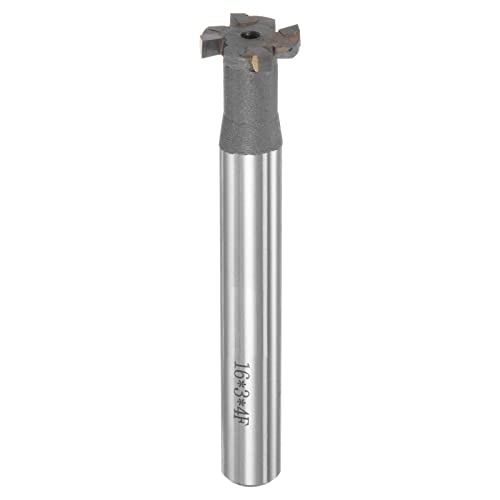
This 16mm cutting diameter cutter has a 3mm cutting depth and a 10mm shank. With six carbide-tipped flutes, it emphasizes fast cutting speed and strong wear resistance, suitable for T-slotting, straight-slotting, and keyway work on stainless steel, copper, aluminum, and more. The edge is sharp and durable, and the head-body connection uses a high-frequency welded process for stability.
Best for: Delicate to mid-range slotting tasks in smaller machines where a compact, tough carbide cutter adds control. Limitation: The 16mm diameter may not clear larger slots efficiently in some setups. Choose this if you need a compact, carbide-tip option with stable performance.
HARFINGTON T Slot End Mill Milling Cutter 4 Flutes

The HARFINGTON cutter features a 4mm cutting diameter and 1mm cutting depth, with a 4mm shank and 50mm total length, 4 flutes, and a carbide-based solid design with a titanium coating. The hard substrate provides high hardness (HRC92), plus improved wear resistance and corrosion resistance due to the titanium coating. It aims to deliver smooth cutting and longevity at higher speeds, with a secure high-frequency weld connection for durability.
Best for: Users needing a tough, titanium-coated carbide cutter for short-slot keyways and fine-scale milling in stainless or alloy steels. Limitation: Smaller cutting size may limit material removal rate in heavy-duty tasks. Choose this if precision and tool life under higher speeds matter most.
HiSnug T Slot Milling Cutters

HiSnug offers a 10mm cutting diameter with a 3mm depth and a 6-flute, carbide-tipped design. This tool emphasizes toughness and wear resistance with a carbide-tipped edge and a high-speed steel core. It uses high-frequency welding to secure the blade to the body, extending tool life and maintaining precision through repeated use. The cutter is suitable for precise keyway and slotting tasks across metal and certain composites.
Best for: Users needing a larger-diameter T-slot cutter with strong wear resistance and long life in repeated-use scenarios. Limitation: The 10mm diameter can be less versatile for very small slots; choose this for larger groove work and durability needs.
uxcell T-Slot Milling Cutters, 3mm Depth, 16mm Dia
The 16mm cutting diameter, 3mm depth, and 10mm shank make this a compact option with six carbide-tipped flutes. It shares the same tungsten carbide benefits—toughness, high hardness, wear resistance, and stable cutting. It’s suitable for T-slotting, straight-slotting, and keyway tasks in a variety of metals including stainless steel and aluminum.
Best for: Small to mid-size projects requiring a compact cutter with reliable carbide performance. Limitation: Smaller cutting depth may slow material removal for deeper slots; pick this for precision and control in light-duty work.
Buying Guide: Key Purchase Considerations
- Material compatibility: Carbide-tipped cutters excel with hard metals; HSS-AL is a budget-friendly option for softer alloys.
- Flute design: More flutes can improve finish, but may reduce chip clearance in softer materials; fewer flutes may cut more aggressively but with a rougher finish.
- Shank diameter: Match to your machine’s collet or chuck capacity. A larger shank offers stiffness but requires appropriate tooling holders.
- Cutting depth and diameter: Ensure the cutter can reach the depth you need without excessive tool deflection. Consider the balance between diameter and depth for stability.
- Coating and welding: Titanium coatings and high-frequency welding between head and body enhance wear resistance and tool life, especially at higher speeds.
- Application range: Choose cutters with proven performance on stainless steel, aluminum, copper, tool steel, or cast iron to align with your typical projects.
Frequently Asked Questions
- What is a T-slot milling cutter used for?
– It is used to machine T-slots, straight slots, side grooves, and keyways in various materials, enabling mounting and stop-block integration in fixtures and jigs. - Which material is best for long-term durability?
– Carbide-tipped cutters offer higher hardness and wear resistance, suitable for repeated use on hard metals; HSS alternatives are more economical for softer tasks. - How many flutes should I choose?
– More flutes provide a smoother finish but require better chip clearance; fewer flutes cut more aggressively and are better for metals with higher ductility. - Is a larger cutting diameter always better?
– Not always. Larger diameters offer greater stiffness and reach larger slots but can be less maneuverable in tight spaces. Match to your workpiece size and machine capabilities. - Do I need a coating on carbide cutters?
– Coatings (like titanium) improve wear resistance and reduce friction, beneficial for high-speed machining and challenging materials. - How do I prevent tool breakage?
– Use correct feeds and speeds for the material, secure clamping, and avoid aggressive plunge cuts that exceed the cutter’s design limits.
Add a Comment