If you need a sump pump with an automatic float switch to manage basement floods, pool covers, ponds, or garden drainage, these five models offer strong flow, dependable auto operation, and clear suitability for different tasks. The best pick depends on your water volume, debris level, and space in your sump pit. The top choices below cover clean and dirty water tasks, including heavy-duty stainless options and compact, portable designs for tight pits.
Summary table of selected products:
- FluentPower 3/4 HP Submersible: Best overall for mid-sized drains and easy portability
FluentPower 3/4 HP Submersible With Float Switch
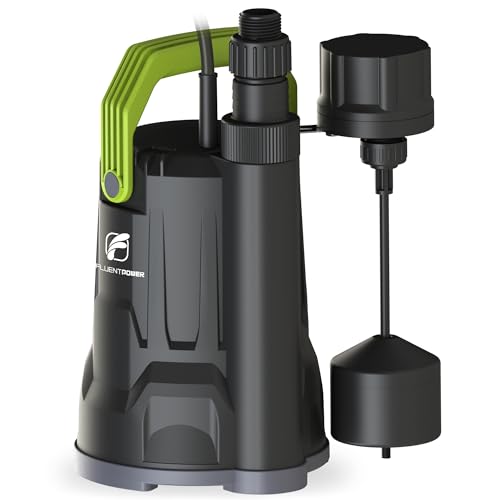
Key features: 3/4 HP motor delivers up to 3,000 GPH with 1-1/4″ discharge; lift height up to 26 feet; 16.4 ft power cord; includes adapters, check valve, and rope; automatic operation via vertical float switch with on/off at 5.5 and 1.6 inches respectively. Submersible to 8 ft depth. Handles up to 1/5″ solids for pools, ponds, basements, and hot tubs.
Best for: Homes needing a mid-range, auto-start pump with easy portability and a compact footprint. Suitable for basements, small pools, and garden ponds where vertical lift is modest but flow needs are substantial.
Caution: The 8 ft submersion limit means it should not be used in deeper water without verifying pit depth and clearance.
FLUENTPOWER 1/2HP Submersible Sump Pump, 2500GPH

Key features: 1/2 HP motor with up to 2,500 GPH across 1-1/2″ discharge; vertical lift up to 26′; automatic auto/manual modes via integrated float; includes 16.4 ft cord and debris-friendly bottom grid; suitable for clean to slightly dirty water.
Best for: Budget-conscious setups with moderate drainage needs, especially where a longer run or manual override is helpful for occasional low-water scenarios.
Limitation: Auto mode relies on a fairly specific water level (4″ start, 2″ stop); ensure your space matches these levels for reliable cycling.
PANRANO Submersible 1HP Sump Pump With Float Switch

Key features: 1 HP motor delivering up to 4,000 GPH; auto on/off via float (4″ on, 2″ off), manual mode option by locking float; 5 ft head height and 1/5″ debris filtration in the bottom to handle cleaner water with some solids; designed for pools, ponds, basements, and general drainage.
Best for: Quick drainage tasks where high flow is needed and where the water may contain some debris; good for pool covers and larger basins where faster turnover reduces downtime.
Caution: The unit aims for efficiency but has a fixed auto level; for very low-water removal, manual mode must be used or consider a lower-capacity model.
FOTING Full 304 Stainless Steel Sump Pump

Key features: 1 HP, stainless steel construction for corrosion resistance; up to 4,600 GPH with a 32 ft maximum head; automatic float switch engages at ~7 inches and shuts off at ~1.5 inches; manual mode available to bypass auto operation; 10 ft cord.
Best for: Heavy-duty drainage needs where durability matters, such as hot tubs, pools, and areas with corrosive elements or longer discharge runs.
Limitation: Higher power consumption and weight compared with smaller, budget models; ensure pit and circuit capacity match the pump size.
Prostormer 3500 GPH 1HP Submersible Sump Pump

Key features: 1 HP motor rated up to 3,500 GPH; built-in float switch for automatic start/stop; guidance notes include air release and not designed for continuous pond circulation; designed for pools, ponds, basements, and irrigation tasks.
Best for: Fast drainage where water volumes are substantial and a reliable automatic option is needed to minimize downtime between pumping sessions.
Caution: The manufacturer notes avoid continuous operation for pond-like use; flush the impeller after use to prevent debris buildup and maintain performance.
Acquaer 1/3 HP Automatic Submersible Pump

Key features: 1/3 HP, 2,160 GPH; automatic on/off with built-in sensor (activates at 1-1/2″, off at 1/4″); 3/4” garden hose adapter; bottom suction design filters debris and handles water down to 1/4″ depth; suitable for pools, hot tubs, basements, and covers.
Best for: Budget-focused installations with smaller drainage needs, such as seasonal pool covers or small basement leaks where automatic operation is essential but flow demands are moderate.
Caution: Lower flow than larger HP pumps; verify water volume and required lift to ensure it meets your drainage goals.
Buying Guide: How to Choose The Right Sump Pump With Float Valve
What water volume do you expect? For large volumes, prioritize higher GPH (gallons per hour) and higher vertical lift. For smaller tasks, a 2,000–2,500 GPH unit may suffice and save energy.
What type of water will you drain? Clean water is easier on pumps; dirty or debris-laden water benefits from a model with a bottom screen or debris-filtering features. If debris is likely, look for feed-through screens and larger impeller clearance.
Automatic vs manual operation: Automatic float switches simplify long-term use, but some users may want a manual override to pump out remaining water at low levels. Consider a model with both options for flexibility.
Power and cord length: Ensure your electrical circuit can safely support the pump’s current draw. A longer cord (like 16.4 ft or more) adds flexibility for placement away from outlets, but check your pit depth and outlet availability.
Durability and materials: Stainless steel or cast iron housings provide better durability in tough or corrosive environments. For hot tubs or pools, corrosion resistance is a plus.
Physical fit for your pit: Measure pit dimensions, the required head (vertical lift), and inlet/outlet connections. Ensure the pump’s discharge size matches your hoses or adapters (1/2″, 1-1/4″, etc.).
Maintenance considerations: Look for pumps with simple disassembly for cleaning. A removable strainer or screen reduces clogging risk when draining dirty water.
FAQ
- What does GPH mean and why does it matter? GPH stands for gallons per hour. Higher GPH means faster water removal, but it also draws more power and can create more noise and heat. Choose GPH to match your drainage urgency.
- Is a float switch essential for a sump pump? A float switch automates on/off cycling based on water level, reducing manual operation and protecting the space from flooding. It’s standard on most models in this list.
- Can I use a sump pump with dirty water? Some pumps are designed to pass debris; check the maximum solids size and bottom screen features. If the water includes sand or large debris, a model with a robust intake and debris filtration is advised.
- What maintenance is required? Regularly check the intake screen, clean any debris build-up, and flush the impeller after heavy use if advised by the manufacturer to extend life.
- How do I choose the right head height? The head height is how high water can be pumped. Choose a pump with a head height that exceeds the highest point you’ll need to reach from the liquid surface to the discharge location.
- Is 1 HP overkill for small basements? For small basements with modest water volume, 1 HP is usually more than enough and might consume more power. A smaller HP model can be more efficient for lighter tasks.
Add a Comment