If you need a reliable 1/2 HP submersible sump pump, this guide highlights top models that balance power, durability, and ease of use. These pumps are best for homeowners facing frequent basement flooding, heavy rain, or snowmelt runoff. Choose a unit with solid construction, a dependable automatic float switch, and ample GPH for your pit size. The table below compares five strong options to help you decide quickly.
| Product | Best For | Key Benefit |
|---|---|---|
| Wayne CDU800 1/2 HP Submersible Sump Pump | Mid-to-large basements | High flow (5,100 GPH) and durable cast iron construction |
| Lanchez Sump Pump, 1/2 HP 2450GPH | Budget-friendly, moderate basements | Oil-filled motor for longevity and debris resistance |
| LANCHEZ 1/2 HP 5200 GPH Submersible Sump Pump | Heavy water flow needs | Very high flow with robust cast iron/stainless steel |
| RainBro Submersible Sump Pump 1/2 HP | Pools, basements, window wells | Compact, portable with 23 ft lift |
| AQUASTRONG 1/2 HP Sump Pump | Basements with debris | Powerful 3,450 GPH with durable materials |
Wayne CDU800 1/2 HP Submersible Sump Pump

The Wayne CDU800 delivers up to 5,100 gallons per hour, making it a strong choice for larger basements or heavy runoff. Its cast iron and corrosion-resistant steel construction supports long-term performance in demanding sump environments. The built-in vertical float switch provides automatic operation backed by tested durability for up to 1 million cycles. This model is best for buyers who want reliable high capacity and a sturdy build for frequent use. A potential limitation is its heavier weight due to metal construction, which may complicate portability.
Lanchez Sump Pump, 1/2 HP 2450GPH

This LANCHEZ model provides up to 2,450 GPH and lifts water up to 31 feet, making it a practical option for smaller pits or scenarios where lower energy use is important. Its oil-filled motor helps mitigate overload and extend life, while the thermoplastic casing adds corrosion resistance. The device includes a 1″ discharge and a versatile hose adapter for easy setup. It’s best for cost-conscious buyers who still want solid efficiency, but note that lower GPH means slower removal in very large floods.
LANCHEZ 1/2 HP 5200 GPH Submersible Sump Pump
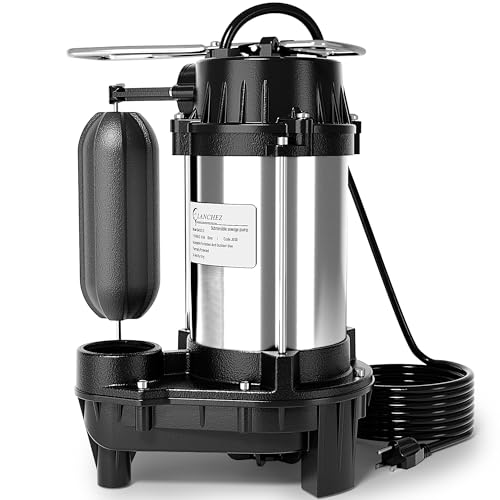
Designed for higher water throughput, this 1/2 HP unit can deliver up to 5,200 GPH and lift water up to 26 feet. It combines cast iron and stainless steel for durability in tough sump environments and includes an integrated vertical float switch with a defined on/off range. This model is best for users needing strong flow and reliability in larger pits. A caution: the warning about not lifting the pump by the power cord or switch should be observed to avoid switch damage.
RainBro Submersible Sump Pump 1/2 HP

RainBro’s 1/2 HP model provides up to 2,300 GPH with a lift up to 23 feet, suitable for narrower pits or basements with moderate water flow. It features stainless steel construction for corrosion resistance and includes a 23-foot power cord for convenient placement. Best for homes needing a lightweight, easier-to-maneuver unit. It may be less ideal for very large floods where maximum GPH is required.
AQUASTRONG 1/2 HP Sump Pump

The AQUASTRONG 1/2 HP unit delivers around 3,450 GPH and lifts water up to 25 feet. Its stainless steel and thermoplastic construction provides corrosion resistance and durable performance in basements and flood-prone areas. An automatic float switch adds convenience by turning the pump on and off based on water level. Choose this if you need a balance of solid flow and robust materials for debris-prone basements. A limitation is that some users may prefer higher lift in very deep pits.
Buying Guide: Key Considerations For 1/2 HP Submersible Sump Pumps
- Flow rate (GPH): Match capacity to your sump pit size and typical water load. Higher GPH speeds up water removal but may use more energy.
- Discharge size: Most models use 1″ to 1-1/2″ NPT or GHT fittings. Ensure compatibility with your drainage hose or pipe.
- Construction materials: Cast iron and stainless steel offer durability in demanding environments; thermoplastic can provide good corrosion resistance and lighter weight.
- Automatic float switch: A tested vertical float switch is essential for automatic activation and reliability during storms or rapid filling.
- Power cord length: Longer cords provide placement flexibility but consider safety and weatherproofing near outdoor or damp areas.
- Installation needs: Check inlet design (bottom vs. side), debris handling, and whether a check valve or screen is included or recommended.
- Portability vs. durability: Heavier metal pumps are sturdier but less portable. Plastic models are lighter but may have shorter lifespans in aggressive environments.
Frequently Asked Questions
- What size sump pump should I choose for my basement?
For a typical unfinished basement with moderate water intrusion, a 1/2 HP pump offering 2,000–3,500 GPH is common. For larger spaces or heavy runoff, higher GPH like 5,000+ is helpful.
- Is a vertical float switch better than a primary float?
Vertical float switches provide reliable activation thresholds and easier alignment inside the sump basin, which often improves automatic operation over other switch designs.
- Can I use a sump pump for hot tubs or pools?
Yes, many 1/2 HP submersible pumps handle clean and lightly debris-laden water, but verify the unit’s debris tolerance and discharge options for hot tub or pool drainage.
- What maintenance is required?
Regularly remove debris from the sump pit, inspect the impeller area, and test the float switch. Keep the discharge line clear to prevent backflow or clogs.
- What features improve longevity?
Durable cast iron or stainless steel bodies, a robust float switch rated for many cycles, and proper lubrication (as applicable) help extend pump life in wet environments.
- Do I need a backup sump pump?
For areas with frequent heavy flooding, pairing a primary 1/2 HP pump with a backup unit can reduce failure risk during power outages or extreme weather.
Add a Comment