When selecting a stepper motor linear actuator for DIY CNC, laser engraving, or small automation projects, precision, load capacity, and compatibility matter. The following five products represent compact, well-reviewed options that pair a stepper motor with a linear rail or screw system to deliver repeatable movement. Each section provides key specs, typical applications, and wiring notes to help you choose the right actuator for your setup.
| Product | Brand | Stroke/Travel | Key Features |
|---|---|---|---|
| DC 5V-9V 12V 2 Phase 4 Wire Stepper Motor Linear Rail 90mm Stroke | QINIZX | 90 mm | 18° step angle; metal body; durable; needs driver board |
| DC 5V Micro 2-Phase 4-Wire Stepper Motor Linear Rail 48mm Stroke | QINIZX | 48 mm | Compact design; 5–12 V operation; driver board required |
| FUYU FSL40 Linear Guide Version 2.0 | FUYU | 50 mm (approx.) | Aluminum rail; high accuracy; nema 23 motor option |
| Befenybay 100mm SFU1605 | Befenybay | 100 mm | SFU1605 ballscrew; NEMA17 motor; solid load capacity |
| RATTMMOTOR ZBX80 600mm Stroke | RATTMMOTOR | 600 mm | Large stroke; high horizontal load capacity; robust aluminum base |
QINIZX DC 5V-9V Stepper Rail With 90mm Stroke
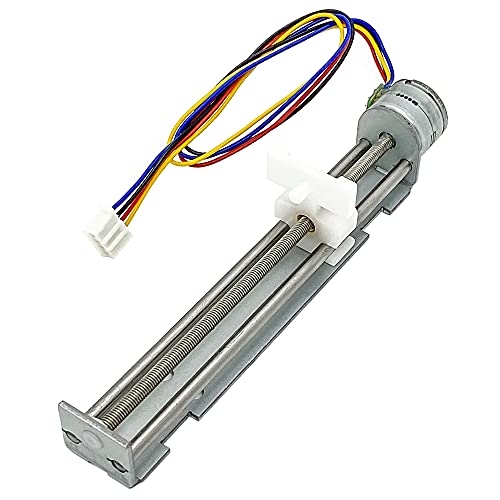
The QINIZX rail uses a compact form factor designed for small teams or limited workspace. The metal main body supports durability, while the slider uses plastic for lightness. The assembly is designed for straightforward integration with a suitable driver board. Drive voltage spans 5–12V with current up to 800mA, influencing force and heat. The device features an 18-degree step angle and a 3.1-inch effective stroke. Wiring is specified as Blue A+, Black A-, Red B+, Yellow B-. A compatible driver board is required to achieve actual rotation.
QINIZX DC 5V Micro 2-Phase 4-Wire Linear Rail

This micro rail kit emphasizes a compact footprint while maintaining a functional travel length. The design is lightweight and portable, suitable for small team projects or tight installations. Operating voltage ranges from 5V to 12V with 100–300mA drive current. The motor is integrated into the assembly and yields an 18-degree step angle. Total stage size is about 3.2 x 0.98 x 0.78 inches, with a 1.89-inch effective stroke. It requires a compatible stepper driver board; wiring uses Yellow A+, White A-, Red B+, Black B-.
FUYU FSL40 Linear Guide Version 2.0
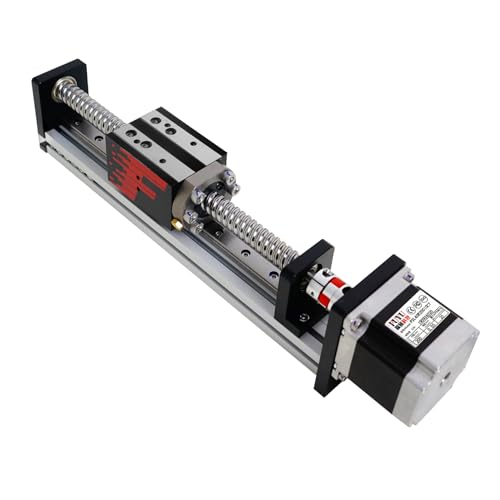
FUYU’s FSL40/FSK40 module combines an all-aluminum linear rail with a G1610 ballscrew for strong, rust-resistant performance. The unit offers accuracy up to ±0.02 mm and horizontal/vertical loading capacities of up to 25 kg and 20 kg, respectively. Sound levels remain low during operation. The included nema 23 stepper motor can reach speeds up to 1200 rpm, with max speeds under no-load conditions around 255 mm/s. When higher speeds are needed, a 400W servo option is available on request. Backplates and mounting methods vary by version.
Befenybay 100mm SFU1605 Linear Stage

This Befenybay stage uses an SFU1605 ballscrew paired with a NEMA17 stepper motor for precise X/Y/Z axis movement in CNC projects. It provides a horizontal load capacity of up to 30 kg and vertical capacity of up to 15 kg, with repeat positioning accuracy of ±0.03 mm. The system is designed for DIY CNC routers and engraving setups where repeatability and stability are critical for accurate toolpaths.
RATTMMOTOR ZBX80 600mm Linear Stage

The ZBX80 offers a substantial 600 mm stroke with an aluminum alloy base for rigidity. It supports a high horizontal load capacity (80 kg) and vertical carrying capacity (20 kg), making it suitable for larger projects or gantry-style setups. The total actuator length is about 830 mm, with the base plate excluding the motor around 719 mm. The screw is a robust ballscrew assembly designed to maintain precision under load, with the convenience of a NEMA23 motor for strong drive performance.
Buying Guide: Key Purchase Considerations
To select the right stepper motor linear actuator, consider these factors:
- Stroke/Travel: Match the required movement range to your project. Longer strokes enable bigger systems but may add weight and reduce stiffness at the end stops.
- Load Capacity: Evaluate horizontal and vertical loads your application will impose. Higher capacity improves stability and accuracy under cutting or engraving loads.
- Rigidity and Build Quality: All-metal rails and high-precision slides reduce flex, improving repeatability and surface finish.
- Motor and Driver Compatibility: Ensure the stepper motor and driver board are compatible with your control system. Check voltage ranges, current requirements, and wiring conventions.
- Speed and Acceleration: Consider max speed and acceleration for your tasks. Some units reach high speeds under light loads but slow under heavier loads.
- Mounting Options: Confirm the backplate, mounting holes, and groove configurations align with your gantry or frame design.
- Maintenance and Noise: Aluminum rails and sealed ball screws can reduce wear and noise; consider lubricants and seal types for your environment.
- Upgrade Path: If you anticipate expanding to multi-axis setups, choose modules that are compatible with future add-ons or servo upgrades.
- Cost vs. Benefit: Higher precision components cost more but yield better repeatability. Balance budget with required tolerances.
These products cover a range of budgets and applications—from compact, user-friendly micro rails to longer-stroke stages designed for robust CNC or laser setups. When pairing with controllers, drivers, and appropriate power supplies, these actuators can deliver repeatable, precise motion for hobbyists and light industrial projects alike.
Add a Comment