Stationary gas air compressors provide reliable, high-output air for demanding tools on job sites and workshops. This guide helps buyers choose among top models and matches each option to a typical use case. Whether you need long runtimes, dual-tool capability, or moveable power in a heavy-duty setup, the selections below cover common needs for construction, automotive work, and industrial tasks.
Overview table: Recommended picks at a glance
| Product | |||
|---|---|---|---|
| Albott 13HP Gas Air Compressor (30 Gallon) | 30 gallons | 180 PSI; 18 CFM @ 90 PSI | Heavy-duty continuous use; large shops |
| DeWalt 4 Gallon Portable Gas Powered | 4 gallons | 6.9 SCFM @40 PSI; 5.0 SCFM @90 PSI | Lightweight, portable jobs |
| Albott 6.5HP Gas Air Compressor (20 Gallon) | 20 gallons | Not specified here | Dual-tool setups, shop ares |
| Metabo HPT EC2510E | 8 gallons | 116-145 PSI | Pro-grade framing and finishing tools |
| Metabo HPT THE TANK XL | 9 gallons | 90 PSI typical range up to higher (9.5 CFM at 90 PSI) | Mobile, multi-tool consistency |
Albott 13HP Gas Air Compressor 30 Gallon
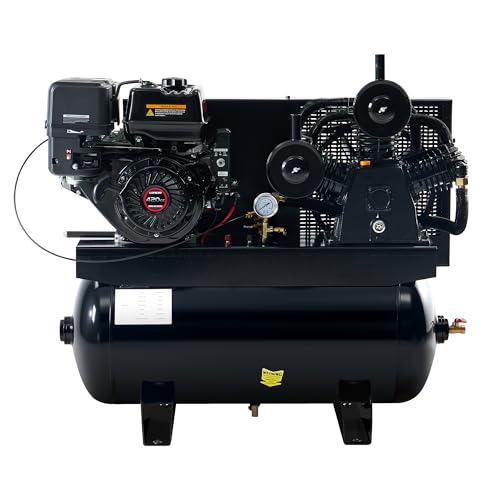
The Albott 13HP Gas Air Compressor with a 30-gallon ASME-certified tank is designed for long runs and steady air delivery. It features a 13 HP gas engine, a max pressure of 180 PSI, and an air delivery rate around 18 CFM at 90 PSI. This setup suits shops and fleets that run continuous, high-demand tools without frequent rest periods. Best for heavy-duty auto body, fabrication, or maintenance crews that need a steady supply of air over extended periods.
- Best for: professional shops needing high-volume, consistent air with a large storage tank.
- Why selected: robust cast-iron pump and frame offer wear resistance for heavy use.
- Caution: larger, heavier unit may require dedicated mounting and longer startup times.
DEWALT 4 Gallon Portable Gas Powered

The DEWALT model pairs a Honda GX160 OHV engine with an oil-free direct-drive pump. It delivers 6.9 SCFM at 40 PSI and 5.0 SCFM at 90 PSI, providing reliable performance for portable jobs. Its oil-free design minimizes maintenance, making it a practical choice for contractors who value ease of use and lower upkeep in a mobile setup.
- Best for: contractors needing a compact, portable gas-powered compressor for varied job-site tools.
- Why selected: efficient Honda engine, low maintenance due to oil-free pump.
- Caution: smaller tank means more frequent cycling for high-demand tasks.
Albott 6.5HP Gas Air Compressor (20 Gal)
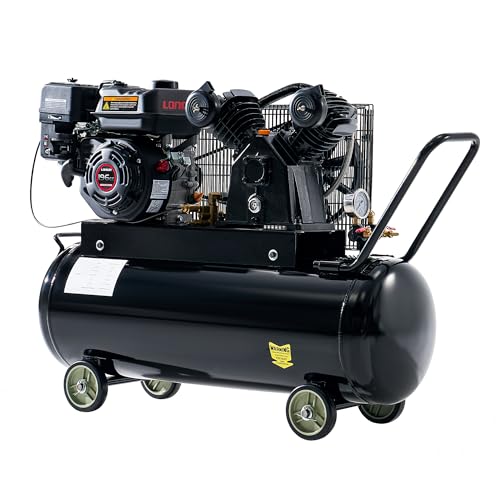
The Albott 6.5HP model offers a 20-gallon tank and a dual-outlet design for running two tools simultaneously. The 6.5 HP engine and cast-iron pump provide solid air pressure and durability for shop use. It’s well-suited for small to mid-size workshops that require ongoing air supply for multiple tools.
- Best for: shops needing two-tool capability with substantial air storage.
- Why selected: reinforced cast-iron components extend service life under regular use.
- Caution: 20 gallons may not be sufficient for very high-frequency operations without cycling.
Metabo HPT EC2510E Gas Powered Wheeled Compressor

This 8-gallon, professional-grade compressor uses a Honda GX engine and features a durable cast-iron cylinder for reliable, long-lasting performance. It delivers 116-145 PSI, which makes it compatible with framing, roofing, or siding tools. The integrated control panel and mobility features suit job sites that require robust power with easy handling.
- Best for: serious tradespeople needing dependable power and mobility on the job site.
- Why selected: professional-grade engine and cast-iron components boost durability and efficiency.
- Caution: 8 gallons may require more frequent refills on high-demand days.
Metabo HPT THE TANK XL

THE TANK XL combines mobility with substantial air delivery. Powered by a Honda GX 200 engine and assembled in the USA, it provides about 9.5 CFM at 90 PSI. Its wheelbarrow design and solid rubber tires facilitate transport on job sites. Best for crews that need to move a compact, high-output unit between tasks while maintaining steady air flow.
- Best for: mobile crews who require a compact, high-output unit with easy transport.
- Why selected: USA assembly and Honda engine underscore reliability for frequent use.
- Caution: 9-gallon tanks may not sustain long continuous runs without pauses for rest.
Buying Guide: Key Considerations When Choosing a Gas-Powered Air Compressor
What size tank best fits my job? Larger tanks store more air and reduce cycling, which is ideal for shops with heavy, continuous use. Smaller tanks suit portable tasks and quick, intermittent inflation.
How much pressure and airflow do I need? PSI and CFM determine tool compatibility. For framing and roofing tools, higher CFM at your target PSI helps keep performance steady. For simple inflation or light tools, moderate PSI is often enough.
Is portability important? If you move between locations or need to work in tight spaces, models with wheels and ergonomic handles offer better maneuverability. Otherwise, stationary setups can maximize stability and continuous airflow.
What maintenance considerations matter? Oil-free pumps reduce maintenance but may have different durability profiles than oil-lubed systems. Cast-iron cylinders and frames typically endure heavier use and offer longevity in rugged environments.
Are dual outlets or multiple tools a requirement? Some models provide two outlets or more, enabling simultaneous operation without cycling down. This can improve workflow in busy shops.
Fuel availability and engine reliability are practical concerns. Honda GX-series engines are commonly favored for reliability and ease of service on job sites, while other brands may offer comparable performance at different price points.
FAQ
- What is the advantage of a 30-gallon tank on a gas air compressor?
– A larger tank stores more air, reduces cycling, and supports longer periods of tool use without frequent restarts. - Can I run two tools at the same time with these compressors?
– Some models offer dual outlets, which allow simultaneous operation, while others may have a single outlet; check the specific model’s outlet configuration. - Is an oil-free pump better for maintenance?
– Oil-free pumps require less ongoing maintenance, but oil-lubed designs can offer different durability characteristics; consider your maintenance preferences and ruggedness needs. - Why choose a gas-powered compressor over electric on a job site?
– Gas-powered units don’t rely on electrical outlets and can provide mobility in outdoor or remote locations, which is valuable for sites lacking access to power. - What should I know about PSI and CFM for common tools?
– Tools specify required CFM at a given PSI. Matching or exceeding that CFM at your operating PSI ensures tool performance without drops in pressure. - Are Metabo HPT models built for professional use?
– Yes, Metabo HPT offers pro-grade engines and durable components intended for heavy-duty carpentry, roofing, and framing tasks.
Add a Comment