Yes, these stainless steel Schedule 80 pipe nipples deliver reliable strength and corrosion resistance for demanding piping setups. This guide highlights five solid options, each suited to specific needs such as size, length, and temperature tolerance. Best for professionals and DIYers working in chemical processing, food and beverage, or high-pressure systems where durability matters. Below is a quick comparison table to help you decide, followed by detailed product insights and a practical buying guide.
| Product | Size | Length | Material | Best For |
|---|---|---|---|---|
| USA SEALING ZUSA-PF-3550 | 1/2″ NPT | 4″ | 304 Stainless Steel | Compact high-pressure connections |
| Online Metals 304 Stainless Pipe | 1/2″ Nominal | 12″ | 304 Stainless Steel | Long runs, aerospace/food-grade use |
| USA SEALING ZUSA-PF-3582 | 1/2″ NPT | 6″ | 304 Stainless Steel | Moderate-length, seamless design |
| USA SEALING ZUSA-PF-3535 | 3/4″ NPT | 3″ | 304 Stainless Steel | Mid-size, tight spaces |
| Guardian 3/8″ x 36″ SS | 3/8″ NPT | 36″ | 304 Stainless Steel | Extended runs, high-pressure headers |
USA SEALING ZUSA-PF-3550 304 Stainless Steel Schedule 80 Pipe Nipple

Material: 304 Stainless Steel; Schedule: Schedule 80; Style: Pipe Nipple. Thread: Threaded on Both Ends, 1/2″ NPT; Length: 4″; Connection A and B: 1/2″ NPT Male; Construction: Seamless. Best for compact, high-pressure connections in tight spaces. Choose this if you need a reliable 1/2″ NPT pairing that fits standard fittings in cramped configurations. Limitation: shorter length may require additional coupling for longer runs.
Online Metals 304 Stainless Pipe, Schedule 80, 1/2″ Nominal, 12″ Length

Material: 304 stainless steel; Diameter: 1/2″ Nominal; Inside Diameter: 0.546″; Outside Diameter: 0.84″; Wall: 0.15″; Length: 12″. Applications: aerospace, food and beverage, pressure containers, architectural designs, cryogenic uses, and chemical processing. Best for longer runs where consistent wall thickness and corrosion resistance are essential. Caution: ensure proper supports for the 12″ span to avoid sagging in horizontal installations.
USA SEALING ZUSA-PF-3582 304 Stainless Schedule 80 Pipe Nipple

Material: 304 Stainless Steel; Schedule 80; Style: Pipe Nipple; Thread: Threaded on Both Ends, 1/2″ NPT; Length: 6″; Connection A and B: 1/2″ NPT Male; Construction: Seamless. Best for medium-length connections in high-pressure piping networks. Better for moderate spans than shorter nipples. Caution: verify fitment with existing 1/2″ NPT fittings to ensure thread compatibility.
USA SEALING ZUSA-PF-3535 304 Stainless Schedule 80 Pipe Nipple
Material: 304 Stainless Steel; Schedule: Schedule 80; Style: Pipe Nipple; Thread: Threaded on Both Ends, 3/4″ NPT; Length: 3″; Connection A and B: 3/4″ NPT Male; Construction: Seamless. Best for compact, high-pressure runs where a larger diameter pipe is not required. Choose this if space is restricted but you need robust corrosion resistance. Limitation: shorter length may require additional fittings to reach desired distance.
Guardian 3/8 x 36″ Stainless Schedule 80 Nipple
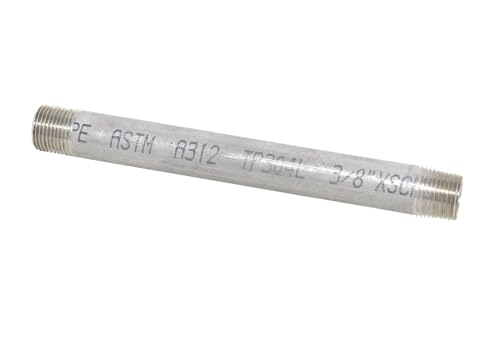
Pipe Type: 304 corrosion-resistant TBE Pipe Nipple; Threaded Ends: MNPT x MNPT; Temperature Range: -60°F to 450°F. Best for long runs requiring consistent stainless performance across extended lengths. Better for installations with ample space where a long, continuous nipple reduces the need for multiple joints. Limitation: 36″ length may require careful alignment and support to prevent sagging or vibration in dynamic systems.
Buying Guide: Key Considerations For Stainless Steel Schedule 80 Pipe Nipples
- Material grade: 304 vs 316. 316 offers higher corrosion resistance in chloride-rich environments; 304 is suitable for many general applications.
- Wall thickness and schedule: Schedule 80 provides thicker walls and greater pressure rating than Schedule 40. Ensure compatibility with system pressure.
- Thread type and size: Most listed items use MNPT or NPT threads. Verify thread standards with existing fittings to avoid leaks.
- Length and diameter: Longer nipples reduce the number of joints but require more support. The diameter affects fit with flanges and adapters.
- Temperature range: Some models list operating temperature limits. Ensure compatibility with fluid temperature to prevent deformation or failure.
- Seamless construction: Seamless nipples typically offer better integrity under pressure and fewer potential leak paths than welded segments.
- Application environment: Food-grade, chemical processing, or outdoor exposure may influence the choice of alloy and finish.
FAQ
- What is Schedule 80 in stainless steel pipes? Answer: Schedule 80 indicates thicker walls and a higher pressure rating compared to Schedule 40, increasing durability in high-pressure or demanding environments.
- Which stainless steel grade is most common for nipples? Answer: 304 stainless steel is the most common grade for general use due to good corrosion resistance and strength. 316 is used for harsher environments.
- How do I know which nipple length to choose? Answer: Consider the distance between fittings and the space available. Longer nipples reduce joints but require more support.
- Are stainless steel nipples suitable for high-temperature applications? Answer: Yes, many stainless nipples tolerate high temperatures, but check the temperature range specified by the manufacturer for each part.
- Can I mix 1/2″ and 3/4″ nipples in a single run? Answer: Yes, with appropriate adapters or reducers, but ensure all joints are rated for the system pressure and corrosion requirements.
- Do stainless steel nipples need special coatings? Answer: They typically do not require coatings; if used in outdoor or outdoor-durable applications, consider protective finishes to reduce corrosion in aggressive environments.
Add a Comment