For buyers seeking durable, corrosion-resistant connections in welded piping systems, stainless steel pipe fittings are a top choice. This guide highlights five compatible options and explains who each is best for. It covers options suited for plumbing, industrial exhaust, and fabrication projects, from compact nipples to mid-size NPT weld fittings. Use the buying guide to compare material grades, sizes, and threading to match your project requirements. The selections here emphasize strength, weldability, and compatibility with standard NPT connections.
| Product | Material/Grade | Size | Best For |
|---|---|---|---|
| Stainless Steel 316/316L Pipe Fitting, Nipple | 316/316L | 3/4″ x 3″ NPT | High-sulfur or coastal environments; heavy-duty connections |
| Stainless Steel 304/304L Pipe Fitting, Close Nipple | 304/304L | 2-1/2″ NPT | General-purpose plumbing and dry or mildly oxidizing environments |
| Stainless Steel 304/304L Pipe Fitting, Nipple | 304L | 1-1/2″ x 3″ NPT | Compact, length-optimized connections for tight spaces |
| 2″ 304L Stainless Steel Pipe, Welded | 304/304L | 1′ Length | Precise fabrication and stable welds for fabrication projects |
| Stainless Steel 304/304L Pipe Fitting, Close Nipple, 3″ NPT | 304L | 2-5/8″ Length | Reliable, standard-length nipple for compact runs |
Stainless Steel 316/316L Nipple, Welded

Material and construction: Stainless steel 316/316L provides greater strength and corrosion resistance than 304. This nipple is designed to connect and extend pipes with male NPT threads to receive female threaded fittings. Best for harsh or coastal environments where chemical resistance matters. It is suitable for higher-strength assemblies in industrial pipes or corrosive fluid handling. Limitations: Verify compatibility with your system’s pressure ratings and ensure proper welding during installation.
- Best for: High-salinity or aggressive chemical environments
- Why selected: Superior corrosion resistance of 316/316L over 304 grades
- Caution: NPT connections require proper sealing to prevent leaks
Stainless Steel 304/304L Close Nipple Welded

Feature set: Close nipple with male NPT threads for connecting and extending pipes. Made from 304/304L stainless steel for strength and general corrosion resistance. This size is well-suited for plumbing runs where a compact extension is needed and space is limited. Best for residential and light commercial systems with standard threading. Limitation: Not ideal for highly acidic or highly saline operations where 316 would be preferred.
- Best for: General plumbing and small-diameter runs
- Why selected: Common 304/304L alloy offers good strength at a lower cost
- Caution: Consider 316 in more corrosive settings
2″ 304L Welded Pipe, 1′ Length
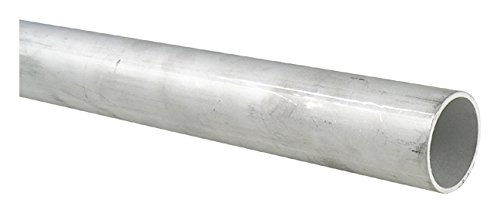
Profile: Welded 304/304L pipe with mill ID and mill OD, ensuring smooth welds and precise fabrication. The thicker walls help resist cracking from high exhaust pressure and thermal stress. Best for fabricators requiring exact dimensions and reliable welding characteristics. Limitation: Availability may vary by length; this listing is a 1′ section, which may require splicing for longer runs.
- Best for: Fabrication projects needing precise dimensions
- Why selected: Mill finish and dual certification support consistent welding quality
- Caution: Short length—plan for additional sections if longer runs are needed
Stainless Steel 304/304L Close Nipple, 3″ NPT
Connection type: Nipple with male NPT threads for quick assembly with female-threaded fittings. Constructed from 304L stainless steel for dependable strength and corrosion resistance in standard piping systems. Best for mid-sized runs where reliability is key and 304L balance of cost and performance is desirable. Caution: Do not exceed recommended torque to avoid threading damage.
- Best for: Mid-sized residential or commercial piping
- Why selected: Versatile and widely available 304L alloy
- Caution: NPT sealing requires proper thread sealant
Dixon CN200SS 2″ Nipple, 316

Material focus: 316 stainless steel; close nipple with 2″ NPT male threads. This weld-ready option is suited for systems requiring strong, corrosion-resistant joints in more demanding environments. Best for commercial or industrial piping that will face exposure to corrosive agents. Limitation: Availability may be more limited than 304/304L options in some markets.
- Best for: Industrial or coastal installations
- Why selected: Higher corrosion resistance of 316 makes it a robust choice
- Caution: Check thread tolerances for tight, leak-free fit
Quickun 304 Nipple, 1/2″ NPT x 1/2″ NPT
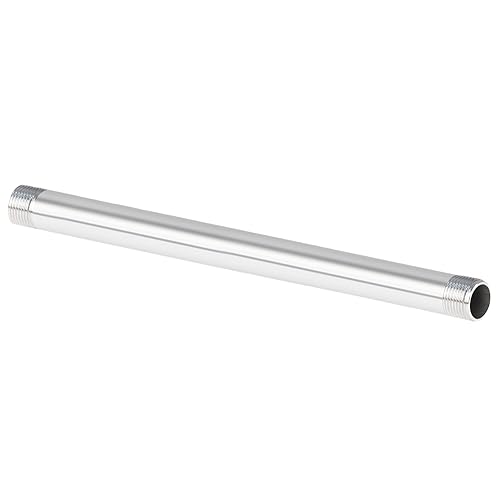
Feature profile: 304 stainless steel with 1/2″ NPT male threads on both ends, 12″ length. Suitable for easy replacements and simple installations in standard piping systems. Best for tight spaces or quick extensions where a longer nipple would be impractical. Limitation: 304 grade offers solid performance but may not withstand highly corrosive environments as well as 316.
- Best for: Small-diameter, short-length piping tasks
- Why selected: Clear dual-ended NPT threading for straightforward use
- Caution: Consider upgrading to 316 if exposure to harsh chemicals
Buying Guide
Key considerations when choosing welded stainless steel pipe fittings include material grade, size, threading, and environment.
- Material grade: 304/304L provides good general corrosion resistance and affordability. 316/316L offers superior corrosion resistance, especially in salty or chemically aggressive settings.
- Wall thickness and schedule: Higher schedules (e.g., Schedule 40) withstand higher pressures; verify compatibility with your system’s pressure rating.
- Threading: NPT threads are common for plumbing; ensure the thread size matches your mating fittings and use appropriate sealants or tapes to prevent leaks.
- Size selection: Choose nipple length and diameter that fit your layout with enough clearance for welding or threading.
- Weldability: Welded pipe fittings require clean, quality welds. Consider fabrication expertise or services if welding is involved.
Frequently Asked Questions
- What is the difference between 304 and 316 stainless steel?
- 304 is common for general use, while 316 offers higher corrosion resistance in aggressive environments.
- What does “NPT” mean?
- NPT stands for National Pipe Tapered; it creates a tight seal when tightened with thread sealant.
- Are welded pipe fittings suitable for high-pressure systems?
- Yes, but verify the material grade and schedule to ensure the assembly meets pressure ratings.
- How do I choose nipple length?
- Base the length on the required reach between fittings and the space available for proper threading and welds.
Add a Comment