Answering the question most boaters ask when shopping for a prop: which stainless steel outboard prop is best for reliability, speed, and durability across common HP ranges? The selections below cover popular Yamaha, Mercury, and Mercruiser applications, with profiles suited for anglers, weekend cruisers, and performance-minded skippers. Each pick emphasizes strong corrosion resistance, balanced blade design, and compatibility with common spline counts. The buyer’s guide at the end will help you compare options by engine type, pitch, and torque needs. A quick summary table is included to help you compare at a glance.
| Product | Engine Type / HP Range | Pitch / Diameter | Rotation | Material |
|---|---|---|---|---|
| WONENGDA 13 1/4 x 17 | Yamaha 60-115 HP | 13 1/4″ x 17″ | RH | Duplex Stainless Steel |
| YOUNG PROPS 13 Tooth (Mercury) | Mercury 40-60 HP | 13″ Spline | RH | Duplex Stainless Steel |
| YOUNG PROPS 14 1/2 x 19 | Mercury / Mercruiser 135-300 HP | 14.5″ x 19″ | RH | Stainless Steel |
| YOUNG PROPS 10 1/2 x 13 | Mercury 30-70 HP | 10 1/2″ x 13″ | RH | Stainless Steel |
| CAPTAIN 13 1/4 x 17 | Yamaha 50-130 HP | 13 1/4″ x 17″ | RH | Stainless Steel |
WONENGDA 13 1/4 x 17 Stainless Boat Propeller

This propeller is designed for Yamaha outboards in the 60–115 HP range. It features a 13 1/4″ diameter with a 17″ pitch, right-handed rotation, and three blades in a duplex stainless steel construction. It emphasizes durability and efficiency, aiming to preserve top speed while reducing engine wear. Best for Yamaha owners seeking OEM-like fit and a balance of speed and fuel economy.
Who this is best for: Yamaha operators needing a direct replacement that maintains strong acceleration and fuel efficiency for mid-range to high-range horsepower engines. Why selected: It mirrors original material and characteristic specs, helping maintain performance and engine longevity. Caution: Compatibility is specifically stated for Yamaha 60–115 HP; verify your engine model and prop hub kit before purchasing.
YOUNG PROPS Upgrade Stainless Steel Propeller for Mercury 40–60 HP

This propeller is aimed at Mercury engines in the 40–60 HP category. It uses a 13-spline tooth design, three blades, and right-hand rotation with a polished duplex stainless steel finish. The design emphasizes high strength and corrosion resistance for safe operation in saltwater and rivers, delivering solid durability and dependable performance. Best for Mercury operators who want a safer guarantee backed by robust stainless steel construction. Caution: The listing notes OEM alignment; confirm engine year and model for exact fit.
YOUNG PROPS 14 1/2 x 19 for Mercury / Mercruiser

Designed for Mercury and Mercruiser Sterndrives in the 135–300 HP range, this 14.5″ diameter, 19″ pitch propeller uses 15 splines and is right-hand driven. It features three blades and is produced from stainless steel with a robust build intended to improve top speed, acceleration, and RPM range while reducing wear. Best for high-performance saltwater setups or lake boats running larger Mercury/Merc cruiser configurations. Caution: Only compatible with engines listed; verify spline and drive type before ordering.
YOUNG PROPS 10 1/2 x 13 Stainless for Mercury 30–70 HP

This option targets Mercury engines in the 30–70 HP range with a 10 1/2″ diameter and 13″ pitch. It features three blades and a right-handed rotation, all in high-quality stainless steel for durability and corrosion resistance. Best for smaller boats or lighter craft where a smaller prop provides improved planing and acceleration. Caution: The smaller diameter and pitch can affect top speed on heavier hulls; ensure engine and boat weight align with the propeller’s specs.
CAPTAIN Yamaha 13 1/4 x 17 Prop for 50–130 HP

This Captain-branded propeller is designed for Yamaha engines ranging from 50 to 130 HP, featuring a 13 1/4″ diameter and 17″ pitch with a 15-spline tooth and right-handed rotation. It is positioned as an OEM-style option that emphasizes quality and performance alongside service promise commitments. Best for Yamaha boats needing a reliable OEM-aligned prop. Caution: Some Yamaha models outside the listed range may require a different pitch or spline configuration.
Qiclear 13 x 19 Stainless OEM Upgrade

Qiclear offers a 13″ diameter with a 19″ pitch, intended for Mercury and Mercruiser Alpha One drives in the 40–140 HP range with 15 splines. The prop is made from high-quality stainless steel with a five-layer surface finish, designed to resist impact and maintain speed. Best for Mercury/ Mercruiser owners seeking a high-toughness prop with improved back-to-back strength. Caution: Oversized pitch may affect hole shot on light boats; verify engine load and performance goals.
YOUNG PROPS 14 x 19 Stainless with Hub Kit
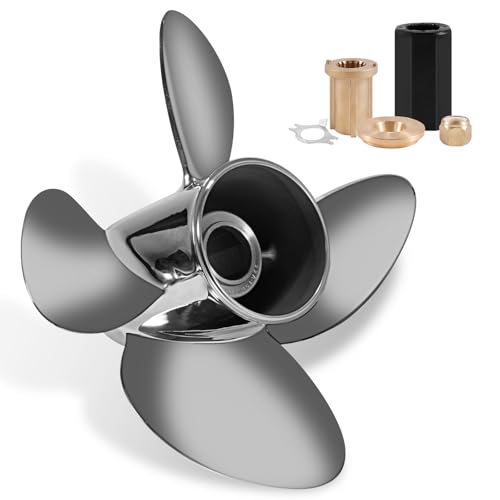
For Mercury engines in the 135–300 HP range, this 14″ diameter, 19″ pitch propeller is a four-blade design with a 15-tooth spline, right-hand rotation, and hub kit included. It emphasizes durable stainless steel construction and a balance of speed with improved thrust and control. Best for higher horsepower Mercury setups where extra blade area can enhance planing and acceleration. Caution: Four blades can increase drag; ensure propeller-to-hub clearance and RPM targets align with your boat’s performance goals.
FYMP 10.25 x 14/15/16-G Polished Yamaha Prop

This FYMP propeller targets Yamaha engines in the 40–60 HP range with a 10.25″ diameter and selectable pitches (14, 15, or 16). It uses a 13-spline tooth arrangement and right-handed rotation. The polished or black variants suit different aesthetic and performance preferences. Best for Yamaha boaters wanting a polished finish with a modest pitch option for improved speed on lighter hulls. Caution: Verify the exact engine model and recommended pitch to avoid reduced holeshot or cavitation.
Buying Guide: Key Considerations For Stainless Steel Boat Props
- Engine compatibility: Always match diameter, pitch, spline count, and rotation with your engine model and hull weight. OEM-recommended props keep vibrations and RPM ranges aligned with factory calibrations.
- Pitch and hull weight: Higher pitch typically yields higher top speed but slower acceleration. Lighter boats may benefit from lower pitch for quick planing; heavier boats may require higher pitch to maintain RPM sweet spots.
- Blade count: Three-blade props offer smooth operation and good acceleration; four-blade props can improve grip and load tolerance but may reduce top speed in light boats.
- Material and finish: Duplex stainless steel resists corrosion; heat-treated blades and surface finishes reduce wear and risk of chipping under rough use or frequent impacts.
- Maintenance and fit: Look for hub kit inclusion or compatibility with your current hub system. Proper maintenance extends prop life and minimizes vibration-related wear.
- Performance goals: Decide whether your priority is maximum speed, quick planing, fuel efficiency, or reliability in saltwater environments. Choose a prop that best aligns with these goals and your typical waters.
Frequently Asked Questions
- What does diameter and pitch mean for a boat propeller?
– Diameter affects thrust and hull lift; pitch influences the theoretical speed and torque requirements. Matching both to engine and boat weight is essential for optimal performance. - How do I know which prop is best for Yamaha vs Mercury engines?
– Check the spline count, rotation (RH vs LH), and the engine HP range specified by the prop. OEM-style props for Yamaha and Mercury engines are designed to fit their respective hubs and gearings. - Is a four-blade prop better than a three-blade prop?
– Four blades can improve acceleration and load handling, especially on heavier boats or with higher horsepower, but may reduce top speed on lighter hulls. Consider your boat’s weight and desired performance. - What should I do if I’m between pitch options?
– If you’re between pitches, consult your engine’s RPM range and consider a slightly higher pitch for better mid-to-high speed stability, or a lower pitch to improve holeshot. - Are stainless steel props worth the investment?
– Yes, for durability, corrosion resistance, and longer service life in harsh water conditions. They’re generally more robust than aluminum props, especially for saltwater use.
Add a Comment