For autobody shops and hobbyists, clean intake filtration is essential to maintain consistent airflow, reduce dust deposition, and extend filter life in spray booths. The following five intake filter panels combine tacky adsorption with sturdy internal frames to minimize bypass and flutter. Each option is designed for 20″ x 20″ crossdraft installations and comes in convenient multi-pack configurations. This guide compares construction, filtration efficiency, ease of installation, and practical considerations to help you choose the right panel for your booth’s needs.
| Product | Brand | Size | Pack |
|---|---|---|---|
| AUC Series 55 Panel | AUC | 20″ x 20″ | 20 per case |
| Sankair Intake Panel | Sankair | 20″ x 20″ | 20 per case |
| Hiton Series 55 | Hiton | 20″ x 20″ | 20 per pack |
| wioboy Tacky Panel | wioboy | 20″ x 20″ | 20 per case |
| Master Elite Premium | Master Airbrush | 20″ x 20″ | 20 per box |
AUC Tacky Intake Filter Pad Series 55

The AUC Series 55 panel uses 100% polyester media impregnated with non-migrating tackifiers. The media is heat-sealed to an 11-gauge internal support frame, providing rigidity and durability in high-draft environments. A two-ply design delivers enhanced adsorption: the first porous ply traps large particles while the second tacky ply captures smaller particulates. The result is improved filtration efficiency and longer service life. Installation is straightforward—links slide in and out of the housing without the need for tape, and the internal frame resists collapse, helping maintain a consistent airflow profile across the filter bank.
Sankair Spray Booth Intake Panel With Internal Frame
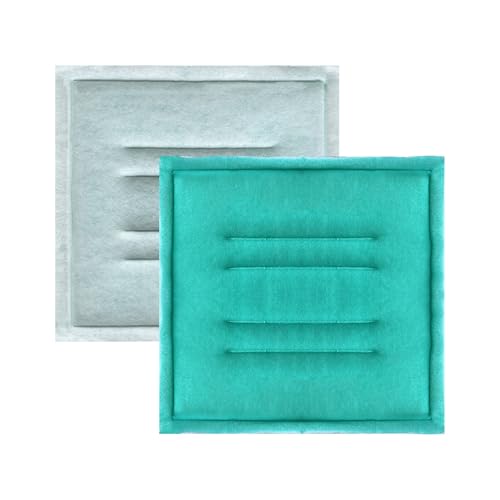
Designed for two-stage filtration, Sankair panels use polyester media to capture dust and overspray, helping maintain a clean booth environment. A tacky adhesive is integrated to improve particulate capture and stabilize airflow, reducing variation in surface quality. Pre-framed and readily installable, these panels come in standard sizes for hassle-free replacement and compatibility with existing housings. The combination of a tacky layer and solid internal framing helps minimize bypass and flutter, ensuring consistent filtration performance across runs.
Hiton Tacky Intake Filter Pad 20″ x 20″

Hiton offers an economical cross-draft intake filtration option with a dry tackifier to hold dirt in place. A self-sealing gasket and an internal wire frame prevent bypass and flutter, maintaining a stable airflow into the booth. The filter consists of two layers of 100% polyester media, providing a balance of filtration efficiency and cost. This makes Hiton a practical choice for shops prioritizing value without compromising basic filtration performance.
wioboy Intake Filter Pad 20″ x 20″

wioboy provides an economical, performance-oriented solution for cross-draft intake applications. The panel features a self-sealing gasket and an internal wire frame to minimize bypass and flutter. Two layers of 100% polyester media deliver reliable capture of dust and overspray, helping to maintain consistent surface finish quality. The design emphasizes ease of installation and repeatable performance across filter changes, making it suitable for busy shops that rotate filters frequently.
REDLOTUS Filter Paint Booth Tacky Intake Panel
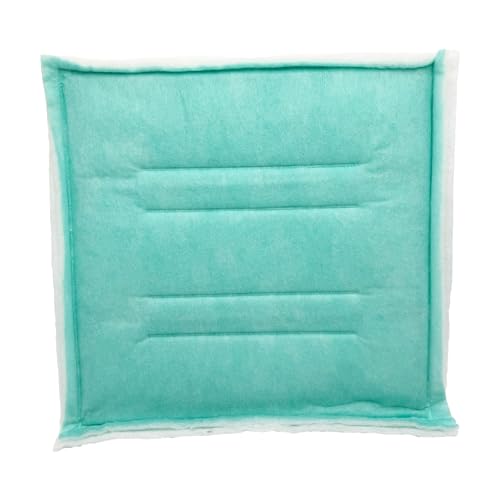
REDLOTUS FILTER’s intake panel captures and immobilizes particulates with a tacky adhesive, designed to keep dirt in place and prevent re-entrainment. The panel features a self-sealing gasket and a robust internal frame to eliminate bypass and flutter. Installed without adapters or sharp edges, it supports a straightforward setup that reduces installation time and downtime between jobs. This panel is positioned as a reliable option for consistent performance in standard crossdraft booths.
Master Elite Premium Filter Panel 20″ x 20″

Master Elite’s premium panels are sold in a 20″ x 20″ format, with a box of 20 for convenient stocking. The panels feature a sturdy internal wire frame and heat-sealed construction between two layers of 100% polyester media. A self-sealing gasket helps prevent air bypass, and the tackifier-coated outer layer improves dirt retention on the air-leaving side. The manufacturer cites a high capture rate for fine particles, making these panels suitable for shops requiring strong filtration performance in busy production environments.
Buying Guide: Key Purchase Considerations
- Compatibility and size: Ensure 20″ x 20″ crossdraft compatibility and alignment with your booth model. Check for the presence of an internal wire frame for added rigidity.
- Installation ease: Panels with self-sealing gaskets, pre-framed construction, and straightforward mounting reduce downtime during changes.
<liFiltration mechanism: Look for tacky adsorption layers (two-ply designs are common) and a tackifier adhesive that improves particulate capture without overly restricting airflow.
<liMaterial durability: High-quality polyester media resists tearing and maintains filtration performance over multiple cycles.
<liAirflow stability: A rigid frame reduces flutter and bypass, maintaining a consistent airflow pattern across the entire panel bank.
<liMaintenance and lifecycle: Consider the expected service life, replacement frequency, and packaging (packs of 20 or 20 per case) to optimize inventory management.
<liRegulatory and environmental considerations: Fiberglass and specific media types may have differing environmental or safety implications—verify compatibility with your shop’s standards.
<liCost versus performance: Balance upfront cost with adsorption capacity and micron capture efficiency to achieve long-term savings through reduced downtime and cleaner finishes.
<liEase of disposal: Some filters may contain adhesives or treated media—consult local waste guidelines for disposal.
In selecting an intake filter panel, consider your booth’s airflow demand, the typical particulates generated by your current projects, and your maintenance cadence. Panels with reinforced frames and high tackifier content generally offer better stability in high-overspray environments, while economical options may suffice for lighter production or hobby use. For shops handling frequent color changes or metallics, prioritize higher capture efficiency and robust construction to minimize reoccurring filter changes.
Add a Comment