Finding a dependable solar deep well pump is essential for remote homes, farms, livestock watering, and off-grid water systems. The right pump combines solar compatibility, adequate head and flow, durable materials, and easy installation. Below you’ll find five top options that balance efficiency, reliability, and versatility for American users seeking solar-powered deep well pumping solutions.
| Product | Brand | Key Benefit |
|---|---|---|
| ECO-WORTHY 12V DC Submersible Deep Well Pump | ECO-WORTHY | Low-voltage, versatile solar or battery power |
| JENENSERIES 500W DC 48V Solar Pump | JENENSERIES | High head and decent flow with MPPT controller |
| ECO-WORTHY 24V Submersible Deep Well Pump | ECO-WORTHY | Direct solar or battery connection for 24V systems |
| ECO-WORTHY 12V DC Submersible Well Pump | ECO-WORTHY | Compact, solar-ready with long cable |
| VEVOR Deep Well Submersible Pump (230V) | VEVOR | High-flow, high-head for larger wells and industrial use |
Notes: The selections above emphasize solar operability, head capacity, and compatibility with common well sizes. Each option includes robust materials and a reputable brand presence in the American market. The following sections profile five standout models with objective specs and features to help you compare suitability for your needs.
Best Budget Solar Submersible for Small Wells
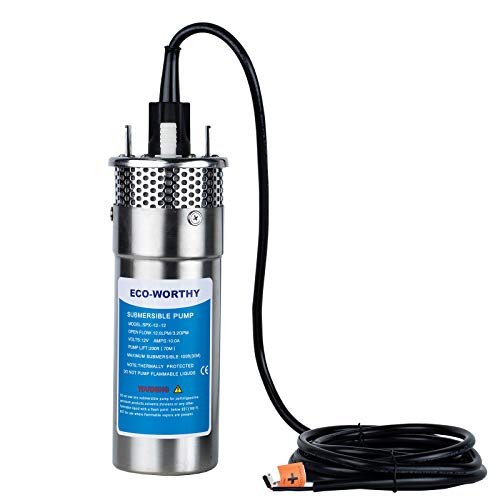
The ECO-WORTHY 12V DC Submersible Deep Well Pump delivers a compact, economical option for remote watering and small tanks. With a maximum head of 230 feet and a flow of up to 3.2 GPM (12 LPM), it suits shallow to moderate-depth wells. The design supports solar panels and 12V battery systems, and it can be powered by vehicle batteries in a pinch, increasing versatility for off-grid settings.
Key features include a 120W DC motor, a 10-foot (3 m) cable, and simple hookup to solar or battery power. It is well-suited for livestock water, garden water transfer, or filling tanks where electrical mains are unavailable. Selection should consider well depth, hose and pipe sizing, and the need for a reliable battery or solar charging setup to maintain pumping performance during cloudy periods.
In practice, this model balances cost and capability for users who want a true solar-ready pump without extra bells and whistles. It is a solid baseline choice for those starting a solar deep-well system or expanding an existing solar water solution.
High-Head Solar Pump With MPPT Controller
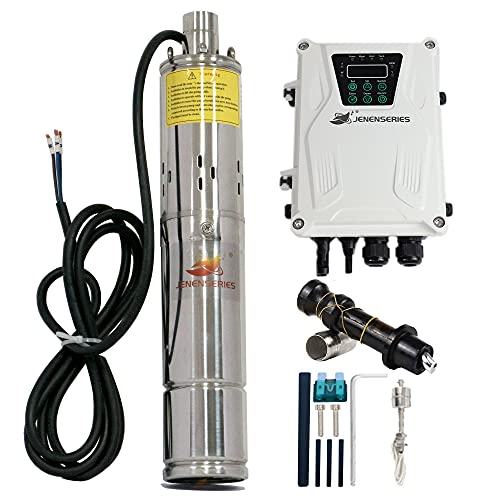
The JENENSERIES 500W DC 48V solar water pump targets higher-demand applications with a maximum head up to 393 feet and a 7.9 GPM flow. This three-inch deep-well submersible pump includes an MPPT controller and float switch kit options for automated operation. The 304 stainless steel construction supports durability in demanding environments and long-term field use.
For farm, home, or industrial settings, the MPPT controller optimizes energy from solar panels, improving performance under variable sunlight. The pump’s adaptable design allows battery support for pumping on demand, which is valuable for remote locations with intermittent sun. A water shortage sensor helps protect the system by stopping the pump when water is insufficient, preventing dry-running damage.
Installation considerations include well diameter, panel configuration, and proper system integration with a solar charge controller. If you need more head and a robust flow for larger tanks or irrigation, this model provides a strong option with scalable solar support.
Solar-Ready 24V Submersible Deep Well Pump
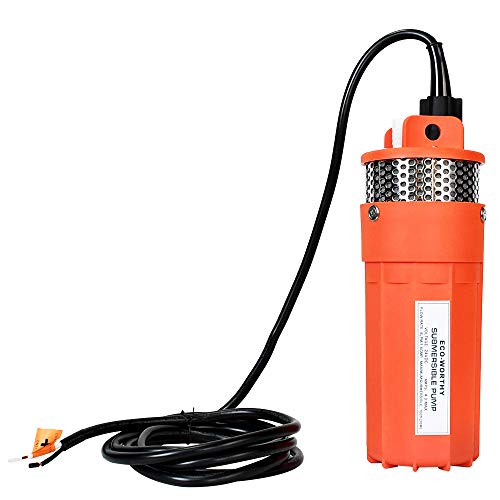
This ECO-WORTHY model is designed for direct solar or 24V battery operation, suitable for wells of 4-1/8 inches or larger. It also serves ponds and rivers and is intended for pumping water into tanks. The design emphasizes straightforward installation: connect to a solar panel, battery, or charge controller, and prepare for pump operation with a simple power hookup.
The 24V configuration broadens compatibility for solar systems that already use 24V battery banks, potentially improving efficiency and matching other equipment. The pump’s installation notes advise avoiding lifting wires directly to the pump and reserving a rope-access hole for safe handling during maintenance. This model is well-suited for ranches and smaller farms seeking clean solar integration without complex electronics.
Consider well size, depth, and the electrical supply when selecting this pump. For users with a ready 24V solar array or battery bank, this option offers a balanced mix of ease of use and performance.
Reliable 12V Deep Well Pump With 10 Ft Cable

The 12V DC Submersible Well Pump is designed for solar or battery operation, with a 10-foot cable and a 1.6 GPM flow rate. It is described as easy to install, with the ability to connect to a solar panel or 12V battery for irrigation, ranch water, or tank filling. The design targets households and small farms that prioritize straightforward solar integration and reliable operation in a compact form factor.
Performance depends on solar exposure and battery capacity. This model’s simplicity makes it a popular choice for first-time solar pumping installations or as a supplemental pump for smaller wells. Widespread use in remote locations is supported by its compatibility with standard 12V solar setups and common battery configurations.
When evaluating this pump, assess well depth relative to the 100-foot lift and ensure appropriate wire sizing and safety measures for long-term operation.
High-Flow Deep Well Pump For Larger Needs

The VEVOR Deep Well Submersible Pump (3HP, 230V) delivers 37 GPM at up to 640 feet of head, geared toward heavier-duty needs for industrial, irrigation, and larger residential systems. It includes a 33-foot cord and an external control box, with stainless steel construction and IP68 waterproof rating for durability in challenging environments. The pump uses 18-stage thermoplastic impellers for efficient performance and reliable operation, even in demanding conditions.
Important considerations include electrical supply, well diameter, and space for an external control box. The robust motor and protection features help prevent damage due to dry running and overload. This model suits larger wells and properties requiring high flow and significant lift, but it requires appropriate electrical provisioning and proper installation practices to ensure longevity.
Buyers should compare system voltage, power availability, and maintenance requirements with other options to determine if this high-capacity unit matches their water demand and energy resources.
Buying Guide: Key Purchase Considerations
- Well depth and lift: Match head (ft) and flow (GPM/LPM) to your well’s depth and required water volume. Deeper wells typically demand pumps with higher head capabilities.
- Voltage and power source: Solar-compatible models often support 12V, 24V, or 48V systems. Consider existing solar arrays, battery banks, and charge controllers to optimize efficiency.
- Motor type and efficiency: DC motors are common for solar pumping. Look for models with MPPT controllers or smart sensors to enhance performance under variable sunlight.
- Materials and durability: Stainless steel construction and IP-rated housings improve longevity in damp or underground conditions. Check for corrosion resistance and thermal protection features.
- Installation and maintenance: Evaluate ease of installation, included accessories (float switch, external control box), and maintenance requirements. Ensure safe handling during installation near water.
- System integration: Plan for battery charging, water storage tanks, and potential automation, including sensors for water shortage and tank fullness.
- Warranty and service: Consider brands that offer solid warranties and accessible customer support for field repairs and part replacements.
- Cost of ownership: While solar pumps reduce operating costs, initial setup, panels, and controllers contribute to total expenditure. Assess long-term savings vs upfront costs.
- Water quality and well integrity: Submersible pumps require clean water to avoid clogging and damage. For wells with sediment, consider filtration or pre-screening options.
These considerations provide multiple perspectives—from budget-conscious setups to high-demand, reliability-focused configurations. The best choice depends on your well depth, daily water needs, available solar resources, and willingness to invest in a solar-ready control system. Regardless of model, ensure proper installation, safety practices, and routine maintenance to maximize the lifecycle and performance of a solar deep-well pumping solution.
Add a Comment