If you’re choosing a small walk-behind concrete saw, you’re likely balancing budget, maneuverability, and cutting depth. This guide highlights five solid choices suitable for sidewalks, driveways, and light commercial work. Each option targets a different user type—from DIY homeowners to frequent contractors—so you can identify which saw matches your project scale and terrain. The table below compares key attributes to help you decide quickly before diving into the details.
| Product | Blade Size | Power Source | |
|---|---|---|---|
| SKIL 7″ Walk Behind Worm Drive Skilsaw for Concrete | 7″ (recomm.), adjustable | Worm-drive gasoline | Durable professional cuts and long-term use |
| Stark USA 6.5HP Walk-Behind Concrete Cut Off Saw | 14″ | Gasoline | Small to medium projects with good stability |
| Tomahawk 6″ Early Entry Walk-Behind Concrete Saw | 6″ | Gasoline (Honda GX120) | Early-entry cuts and tight spaces |
| CORMAC CQ480 Walk Behind Floor Saw | up to 20″ | Gasoline | Heavier-duty jobs with longer straight cuts |
| Evolution R14DCT 14” Electric Concrete Saw | 14″ | Electric (20A) | Indoor/outdoor, low-maintenance cutting |
Best Overall: SKIL 7″ Walk Behind Worm Drive Skilsaw
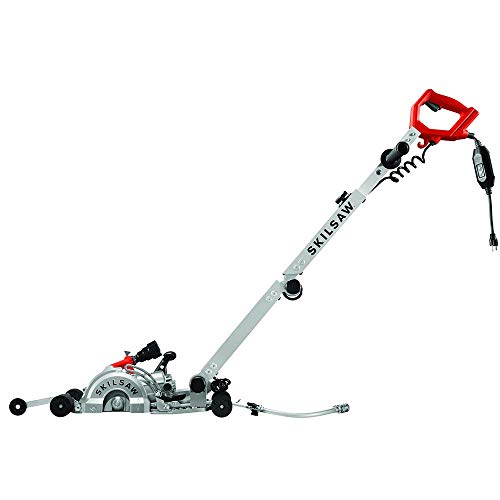
The SKIL SPT79A-10 is a worm-drive walk-behind saw designed for durable, professional cutting. It features an adjustable handle that folds for transport, a two-finger trigger to reduce fatigue, and a wet/dry dust management system for cleaner cuts and longer tool life. This model is best for contractors and seasoned DIYers who require steady performance on larger or frequent projects. A potential limitation is that worm-drive mechanisms can be heavier to maneuver in tight spaces.
Best for Small to Medium Jobs: Stark USA 14″ Gas Cut Off Saw
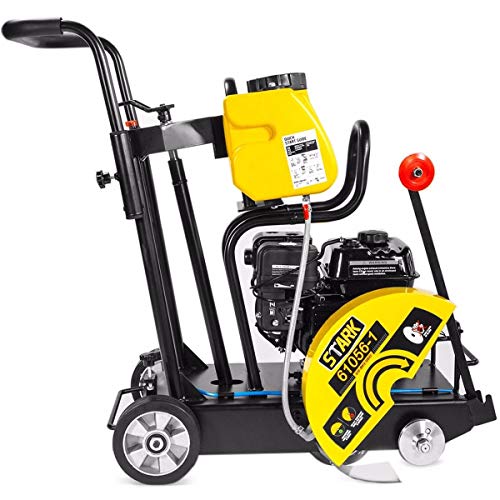
The Stark USA model provides a 14″ blade and a productive push design with balanced weight distribution for better maneuverability. It includes a water tank for optimal blade cooling and a saw position guide to ensure straight cuts. This option is best for homeowners tackling sidewalks or driveways, and professionals needing a reliable, easy-to-handle machine for mid-scale tasks. A caution: ensure steady water supply to avoid blade overheating during extended cuts.
Best for Tight Spaces: Tomahawk 6″ Early Entry Saw
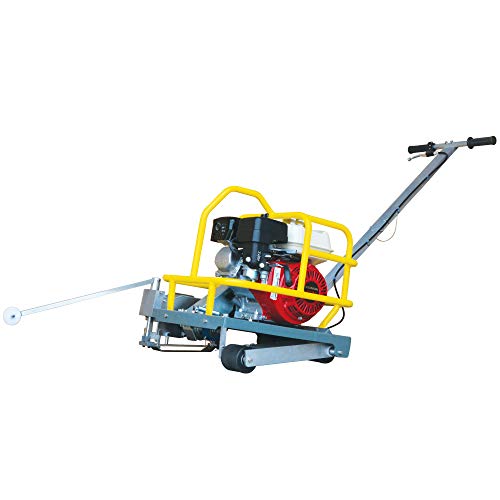
The Tomahawk Power model is compact with a 6″ blade and a 3.5HP Honda GX120 engine. It’s designed for early-entry work and tight corners where larger units can’t fit. Best for smaller sites, edging, and precision kerf cuts. A limitation is the smaller blade depth, which reduces cutting capacity on thicker slabs.
Best Heavy-Duty Budget Pick: CORMAC CQ480 Walk Behind Floor Saw

The CQ480 features a robust 13HP gasoline engine and a solid box frame design that minimizes vibrations for longer blade life and straight cuts. It includes a 20″ concrete blade and water tank. This is best for frequent, straight-line cuts on larger slabs or pavement. A caution: larger size can reduce maneuverability in very tight areas.
Best Electric Option: Evolution R14DCT 14” Electric Saw

The Evolution R14DCT uses a high-torque 20A motor to deliver gas-like cutting performance with no fuel or emissions. It features a 14″ diamond blade with a deeper 5-1/8″ cut depth and an auto ON/OFF dust suppression system for cleaner indoor and outdoor operation. It’s best for indoor projects or sites requiring minimal maintenance and ventilation considerations. A limitation is it requires a compatible 20A outlet on site.
Buying Guide: Key Purchase Considerations
- Cut depth and blade size: Choose a saw with a blade large enough for your maximum required cut depth. Larger blades cut deeper but can be heavier to handle.
- Power source: Gas-powered units offer mobility and sustained power for outdoor jobs, while electric models reduce emissions and noise, ideal for indoor use with proper outlets.
- Portability and setup: Look for foldable or adjustable handles, compact frames, and straightforward depth adjustment for faster setup on job sites.
- Dust control: Systems with integrated water suppression keep dust down and extend blade life, important for OSHA compliance and cleaner work areas.
- Durability: Box-frame construction and vibration minimization improve longevity and accuracy, especially on longer cuts.
- Site conditions: For tight spaces, consider a smaller 6″ or 7″ model; for straight, longer runs, a 14″ or 20″ unit may be more efficient.
FAQ
What type of walker saw is best for residential sidewalks?
A compact model with a 14″ blade or smaller, gas-powered for outdoor use, or electric for indoor work with proper outlets.
Do I need a dust suppression system?
Yes for cleaner cuts, better visibility, and OSHA compliance, especially in indoor or enclosed spaces.
Is a larger blade always better?
Not always. A larger blade increases cut depth and weight. Choose based on your needed depth and maneuverability.
Which fuel type is easier to maintain?
Electric saws are lower maintenance; gas-powered units offer broader outdoor versatility but require fuel and engine upkeep.
Can these saws cut asphalt?
Yes, most models can handle asphalt in addition to concrete, though blade quality and depth settings should be appropriate for asphalt.
What safety features should I look for?
Dust suppression, blade guard design, stable handles, and proper depth adjustment contribute to safer operation.
Add a Comment