When shopping for a compact plastic molding machine, you want a reliable unit that fits your workflow, budget, and material needs. This guide highlights five practical options suited for hobbyists, educators, and small businesses. Each product is evaluated for ease of use, material compatibility, and value. The top picks cover manual and semi-automatic options, plus a compact extrusion accessory to expand capabilities.
The following summary table helps compare key points at a glance. All items are suitable for small projects, with notes on best use cases and limitations.
| Product | Brand | Type | Best For | Notes |
|---|---|---|---|---|
| ICZW Vertical Injection Molding Machine (20g) | ICZW | Semi-automatic pneumatic injection | Small parts, hobby-grade production | 0-15g per cycle, adjustable temperatures |
| ICZW Vertical Injection Molding Machine (10g) | ICZW | Manual injection with bench vise | DIY projects, 3D-printed molds | 0-10g, lower pressure, supports DIY molds |
| LABFENG 100g Vertical Injection Molding Machine | LABFENG | Semi-automatic pneumatic injection | Industrial-ish small runs, varied materials | Precise temperature control, automated reset |
| Plastvac P7 110V Dental Vacuum Forming Machine | JMU | Vacuum forming machine | Thermoplastic shaping for dental or lab use | Two plasticizing processes, built-in vacuum |
| ICZW Single Screw Extruder (Accessory) | ICZW | Single-screw extruder accessory | Customize extrusion for PET/ABS/PS/etc. | 2 heaters, high-temp capable |
ICZW Vertical Injection Molding Machine (20g)

- Best for small parts and hobbyist production with a 0-15g injection range per cycle.
- Semi-automatic pneumatic operation with adjustable heating up to 350°C (662°F).
- Supports multiple mold types by swapping molds, enabling repeated use from a single unit.
Best for: Beginners or hobbyists who want a compact, adjustable machine that supports quick mold changes. Caution: The theoretical 0-15g range depends on mold design and material; real results vary with setup and consistency.
ICZW Vertical Injection Molding Machine (10g)

- Best for DIY projects and education with a lower 0-10g capacity.
- Manual injection with a bench vise design and the ability to use 3D-printed molds.
- Operating temperature is adjustable from 0-350°C (0~662°F) with typical material ranges around PEPP 200-240°C, ABS 180-210°C, PS 180-200°C.
Best for: Makers and classrooms exploring mold-making with affordable, low-pressure operation. Caution: Lower injection capacity may limit product size and batch quantity.
LABFENG 100g Vertical Injection Molding Machine

- Best for broader material use with a 100g injection capacity and semi-automatic pneumatic operation.
- Features wide material support and precise temperature control on the control panel.
- Automatic reset after each squeeze saves time for the next step in production.
Best for: Small to mid-scale projects requiring higher output and consistent temperature control. Caution: Higher capacity typically means larger footprint; ensure workspace fits the unit.
Plastvac P7 110V Dental Vacuum Forming Machine

- Best for dental and lab applications with an integrated vacuum forming capability.
- Two plasticizing processes (Conventional and Rotary) supported by a 1400W motor.
- Offers quick setup and practical sheet-to-product workflow; payback potential noted with production volume.
Best for: Labs or clinics needing reliable vacuum forming with straightforward operation. Caution: Dental-specific use may require adherence to relevant safety and material guidelines.
ICZW Single Screw Extruder Accessory
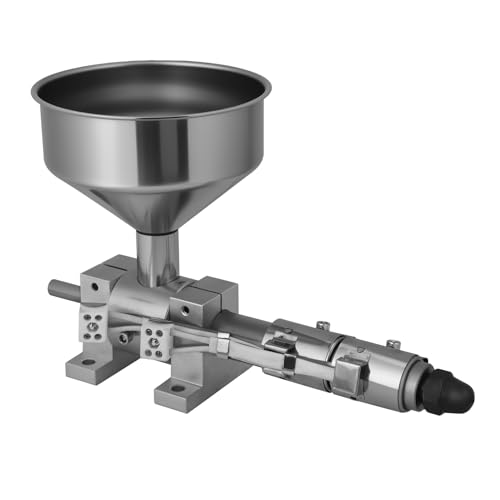
- Best for extending capabilities with an accessory single-screw extruder for DIY plastic extrusion.
- 2 heating coils and a hopper, compatible with several materials like PE, PP, PS, PVC, ABS, PET.
- High-temperature capability up to 572°F (300°C) for diverse plastic formulations.
Best for: Users who want to add extrusion work to existing setups or prototype filament and pellets. Caution: This is an accessory; tool compatibility with other machines should be verified before purchase.
Buying Guide: Small Plastic Molding Machines
- What is your primary use? Choose a machine that matches your typical part size and production volume. For tiny parts, 0-10g range is often sufficient; for small runs, 100g or higher may be better.
- Manual vs. semi-automatic? Manual options are cheaper and great for DIY, while semi-automatic units offer greater repeatability and speed for small batches.
- Material compatibility matters. Ensure the unit supports the plastics you intend to use (ABS, PS, PET, PE, PVC, etc.).
- Temperature control is critical. Look for adjustable ranges and stable control panels to maintain uniform heating.
- Floor space and power needs. Check the footprint, voltage, and plug type to fit your workshop and electrical setup.
- Expansion potential. If you anticipate growth, consider machines that allow mold changes or accessory attachments, such as extrusion options.
- Safety and ease of use. Favor devices with straightforward operation, clear reset features, and minimal maintenance requirements.
Frequently Asked Questions
- What is a small plastic molding machine best used for? It’s ideal for creating small plastic parts, prototypes, educational projects, and small-batch production where precision and repeatability matter.
- Do these machines require extensive training? Most models are designed for straightforward operation, but reading the manual and practicing with simple molds improves results.
- Can I use DIY or 3D-printed molds? Some units, especially the manual ICZW model, support DIY and 3D-printed molds when using compatible materials and press settings.
- Is vacuum forming necessary for all projects? Vacuum forming is specialized for shaping thermoplastics into sheets or facial/medical-like forms. It’s not required for all injection tasks but expands capability for certain shapes.
- What maintenance is typical? Regularly inspect heaters, clamps, and seals; ensure proper mold alignment; keep surfaces clean; and verify electrical connections before use.
- Are these machines suitable for professional manufacturing? They are primarily aimed at hobbyists and small shops. For regulated production, verify compliance, safety standards, and workflow efficiency for your industry.
Add a Comment