Find the right small industrial dust collector for your workshop with reliable airflow, easy maintenance, and practical bag or canister filtration. This guide highlights five solid choices, each suited to different shop sizes and tasks. Best for compact spaces, mid-size hobby shops, or professional setups needing steady dust control without upgrading to full-size industrial systems. The buyer profiles below help you match features to your workflow and space constraints.
| Product | Best For | Why It Stands Out |
|---|---|---|
| Jet DC-1100VX-CK | Small to mid-size woodshops | Durable, low-noise single-stage operation with quick-bag installation |
| Shop Fox W1666 | Budget-conscious hobbyists | 2 HP with practical design for simple setup |
| VEVOR 1550 CFM | Medium tasks with finer dust | Two 42-gallon bags and 2.5-micron filtration for finer particles |
| WEN DC3401 | Mobile, flexible setups | 15-gallon bag with 7.4-amp motor and portable base |
| Jet JCDC-1.5 | Two-stage efficiency seekers | Cyclone two-stage separation with direct-mounted filter |
Jet DC-1100VX-CK Dust Collector

Features include a durable motor design with permanently-lubricated, totally-enclosed, fan-cooled motors rated for continuous duty. The Easy Bag Installation uses quick-connect collection bags with an elastic band for fast setup and removal. The unit operates in a single-stage mode, delivering economical and quiet performance for smaller tasks. Best for: small to mid-size shops that need reliable, quiet dust collection without complex setup. Caution: single-stage systems may require more frequent bag changes with heavy debris.
Shop Fox W1666-2 HP Dust Collector
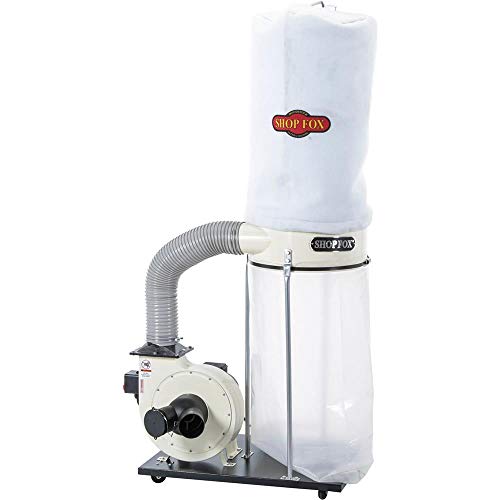
The Shop Fox W1666 offers a 2 HP motor for steady airflow in compact spaces. Best for hobbyists looking for a straightforward, no-fruss setup with reliable performance. This model is easier to install and maintain for users upgrading from smaller units. Caution: may be less optimal for heavy industrial-duty tasks that create high-volume dust over long periods.
VEVOR Dust Collector, 1550 CFM

Powerful 1550 CFM airflow with two 42-gallon bags and 2.5-micron filtration. Best for medium tasks and workshops that need rapid dust removal and better filtration of finer sawdust. The dual bags allow longer run times between emptying. Caution: heavier unit; ensure adequate space and electrical capacity for 220V operation.
WEN Woodworking Dust Collector DC3401
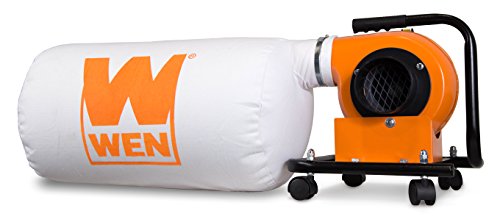
Features a 5.7-amp motor with a 12-gallon bag and a mobile base. Best for portable, flexible dust collection in smaller or shared spaces. The 4-inch dust port allows easy connection to various woodworking tools. Caution: higher-wrequency emptying with the 12-gallon bag can interrupt longer sessions.
Jet JCDC-1.5 Cyclone Dust Collector

Two-stage cyclone separation offers more working CFM than comparable horsepower single-stage units. Heavy debris is guided into a 20-gallon steel drum before hitting the filter, reducing clogs. Direct-mounted filter design minimizes hose-related inefficiencies. Best for: users needing higher separation efficiency in smaller to mid-sized shops. Caution: cyclone setups can be more complex to install than basic single-stage units.
WEN Woodworking Dust Collector DC3474

With a 7.4-amp induction motor and a 15-gallon bag, this model offers notable mobility and a compact footprint. Best for flexible workshop setups that require occasional wall-mount capability. The 4-inch dust port supports a range of tooling connections. Caution: moderate bag capacity means more frequent emptying in busy shops.
Buying Guide: Key Purchase Considerations
- Airflow and dust capacity: Match CFM and bag size to your tools and the volume of dust generated. Higher CFM supports larger or busier shops, while smaller bags suit light-to-moderate use.
- Filtration stage: Single-stage units are simple and quiet; two-stage cyclone systems offer better separation and longer filter life, especially with heavier debris.
- Portability vs. permanence: Consider mobile bases or wall-mount options for flexible layouts versus fixed installations for continuous operation.
- Filtration quality: Micron rating (e.g., 2.5-micron vs 2-micron) affects the removal of fine dust. Finer filtration improves air quality but may require more maintenance.
- Ease of maintenance: Quick-bag access, tool-free filter changes, and direct-mounted filters reduce downtime during setup and cleanup.
- Electrical requirements: Some units run on standard 115V, others on 220V. Plan for electrical outlets and circuit capacity in your shop.
- Space constraints: Measure ceiling height and floor space. Choose a unit with a footprint that fits without blocking tools or traffic lanes.
FAQ
- What size dust collector do I need for a small shop?
– For a small shop with a few power tools, a unit around 1000–1500 CFM with a 20–30 gallon drum or bag is typically sufficient, depending on tool usage and layout. - Is a two-stage cyclone worth it for hobby woodworking?
– Yes, if you frequently work with fine sawdust or have limited space, two-stage cyclones improve separation and reduce filter loading. - Can I use a wall-mount dust collector in a shop with a concrete floor?
– Wall-mount options are useful for space management, but ensure solid mounting points and proper airflow connections. Concrete floors are fine when mounting to studs or framing. - What filtration micron level should I prioritize?
– 2–2.5 microns captures most fine wood dust. If you work with fine sanding or MDF, aim for 2 microns or better. - How often should I replace filters or bags?
– Replacement intervals depend on usage, debris type, and filter type. Check for visible clogging, decreased airflow, and manufacturer recommendations. - Are these units suitable for professional shops?
– They are designed for small to mid-sized professional or serious hobby shops. For large commercial operations, larger, dedicated systems may be required.
Add a Comment