When you need reliable water transfer or drainage performance in remote locations or during power outages, small gas powered water pumps are a practical solution. This guide highlights five top options, detailing who each pump is best for, and why they stand out. It is ideal for homeowners, farmers, landscapers, and contractors seeking portable, durable pumps that run on gasoline.
Summary table of selected products:
| Product | Best For | Key Benefit |
|---|---|---|
| Honda WB20XT4A | Heavy-duty general use | 164 GPM with solids handling |
| VEVOR 2 in 158–142 GPM | Remote work sites | No electricity required, strong lift |
| XtremepowerUS 1 in | Budget portable pumping | Lightweight and versatile |
| VEVOR 3 in 264 GPM | Large draining tasks | High flow and heavy-duty frame |
| Honda WX10 | Home and hobby use | Compact, self-priming, 32 GPM |
Honda WB20 2-Inch General Purpose Water Pump

This 2″ gas-powered pump handles water transfer with a 164 GPM capacity and accepts solids up to 5/16 inch. It is well-suited for agricultural, construction, and landscaping tasks where quick drainage or transfer is needed. The Honda GX series commercial engine is designed for easy starting and dependable power in tough conditions. A cast iron volute and a heavy-duty frame protect internal components and extend lifespan.
- Best for high-demand setups requiring solids handling and robust construction.
- Choose this if you need strong reliability and a long service life on job sites.
Limitation: This model is heavier and bulkier than smaller units, which could affect portability for lighter, quick-mix jobs.
VEVOR Gas Powered Water Pump, 2 in, 142 GPM

Designed for remote work and hillside drainage, this 2″ semi-trash pump delivers steady flow and strong lift. It runs on a gasoline engine, so no electrical outlet is required, making it ideal for farms, remote sites, and emergency power outages. Its high head lift helps move water to elevated areas, such as irrigation terraces or elevated ponds.
- Best for off-grid sites where electricity is unavailable.
- Better for applications needing consistent lift and robust build.
Caution: As with all gas pumps, routine maintenance and fuel management are essential for reliable performance over time.
VEVOR Gas Powered Water Pump, 2 in, 158 GPM

This 2″ semi-trash pump provides strong performance under load with high lift capability for hillside irrigation or site drainage. The gasoline engine ensures operation without an electrical source, suitable for farms and remote locations. The sturdy frame and cast iron impeller contribute to durable pumping across demanding tasks.
- Best for longer drainage sessions where continuous power is needed.
- Choose this if you need reliable lift and consistent flow in tough conditions.
Limitation: The 158 GPM rating is lower than some larger units, so plan accordingly for very large transfer tasks.
Honda Power Equipment WX10

This compact, 32 GPM pump is ideal for homeowners, gardeners, and boat owners needing a portable, self-priming option. The Honda GX-series commercial engine provides dependable power in a small package. Total head lift reaches about 121 feet, making it capable of draining pools or ponds with limited elevation challenges. It’s lightweight at around 13 lbs, which enhances transportability.
- Best for light-duty home and hobby tasks where portability matters.
- Better for users prioritizing a small, easy-to-move unit over high flow.
Caution: Lower flow means it is less suitable for large-scale irrigation or heavy-duty drainage compared to 2″ units.
BestCosy Portable Battery Transfer Pump
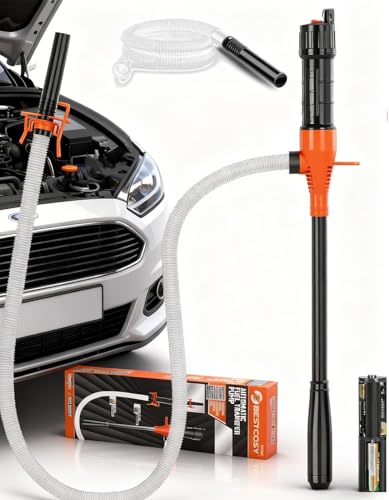
This handheld, battery-powered transfer pump offers flexibility where no electrical outlets are available. It supports 2 D-cell or 6 AA batteries and provides about 2.4 GPM, capable of moving up to 1,000 gallons per battery set for typical emergency or on-the-go transfers. It is suited for small, quick tasks like refueling cans or transferring water in temporary setups.
- Best for emergency, small-volume transfers where portability is critical.
- Choose this if you need a compact, battery-enabled option for light tasks.
Caution: Battery availability and battery life limit continuous operation; not designed for heavy pumping or long runs.
Buying Guide
What should you consider when choosing a small gas powered water pump?
- Flow rate and head height: Match GPM and lift to your job. Higher GPM is better for rapid drainage, while higher head height is necessary for moving water to elevated targets.
- Solids handling: If your water contains debris, choose a semi-trash or trash-capable pump with an appropriate impeller and volute design.
- Engine and startup: A commercial-grade or robust 4-stroke engine improves reliability in tough conditions and easier starting in cold weather.
- Portability and durability: Look for lightweight frames, cast iron components, and rugged construction when you need to move the pump around a site.
- Power independence: Gas-powered units do not require electrical outlets, which is essential for remote locations or during outages.
- Maintenance requirements: Regular fuel management, oil checks, and filter care help maximize pump life and performance.
- Application fit: Home use vs. farm drainage vs. construction site drainage each benefit from different capacities and build qualities.
Frequently Asked Questions
- What is the difference between a standard water pump and a semi-trash pump?
– A semi-trash pump handles some solids better than a standard pump, reducing clogging in debris-filled water; a trash pump can handle larger solids and more aggressive debris. - Can these pumps run without electricity?
– Yes, most gas-powered models operate independently of electrical power, which is ideal for remote locations and outages. - Which pump should I choose for large outdoor drainage?
– For large drainage tasks, a 2″ or larger pump with high GPM and strong lift (like the 164 GPM Honda WB20) is typically better than smaller units. - Are battery-powered transfer pumps sufficient for emergency use?
– Battery-powered transfer pumps are best for light, quick transfers or emergencies where no other power source is available, not for continuous heavy pumping. - How do I prevent clogging and extend pump life?
– Use proper filtration, maintain clean fuel, check and replace worn impellers, and ensure the solids intake is within the pump’s design limits.
Add a Comment