Answering the question “which skid steer demolition bucket should I choose?” this guide highlights five sturdy options designed for rock, debris, and dirt handling on tough sites. Each pick targets different job needs—whether you’re screening material, sorting rocks, or tackling large rubble. This overview helps buyers choose confidently by explaining best uses, who each bucket suits, and practical trade-offs. The following table summarizes key points to compare at a glance.
| Product | Best For | Material Type | Width | Notable Limitation |
|---|---|---|---|---|
| Skid Steer Attachment Screening Bucket | General site cleanup and material separation | Dirt, gravel, sand, demolition debris, boulders | 72 in | May require compatible hydraulic flow for optimal screening |
| MIVA 55” Skeleton Rock Bucket | Rock sorting and debris separation | Rocks, dirt, gravel, demolition debris | 55 in | Limited to smaller widths; best in tight spaces |
| Kivel Extreme Duty 84″ Bucket | Heavy-duty material handling | All materials with heavy use | 84 in | Heavy; requires strong machine power |
| Titan Skeleton Rock Bucket 72″ | Rock and debris separation on larger sites | Rocks, dirt, debris, mulch | 72 in | Heavier than some alternatives |
| Landhonor 72″ Rock Grapple Bucket | Rock, root, and brush handling | Rocks, logs, brush | 72 in | Grapple design isn’t ideal for fine sifting |
Skid Steer Attachment Screening Bucket
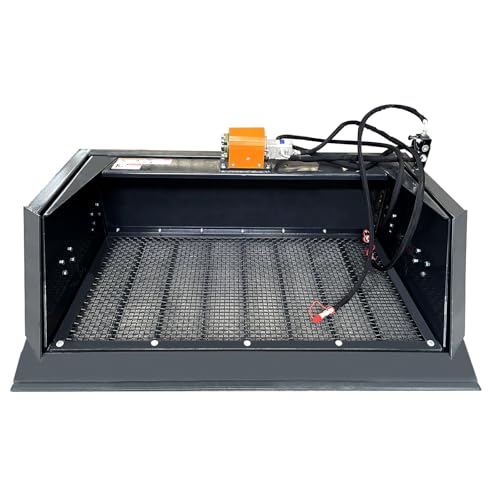
This 72-inch screening bucket is built for versatile material processing. It screens dirt, gravel, sand, demolition debris, and boulders while supporting excavating, loading, and hauling after fines removal. It’s designed to reduce downtime with a rugged build and durable components, making it suitable for commercial construction, residential renovations, landscaping, farm work, and industrial cleanup. Best for operators needing a single attachment that can screen and move mixed materials.
Who it’s best for: contractors who want a multi-purpose screening tool that minimizes equipment swaps and maximizes on-site throughput. Use this when you regularly process mixed debris and need a simple, robust screening solution. Caution: ensure your skid steer hydraulic system aligns with the bucket’s flow requirements to maximize screening efficiency.
MIVA 55” Skeleton Rock Bucket

This skeleton rock bucket features a 55-inch working width, 3.5-inch tine spacing, and bolt-on teeth. Its design emphasizes fast separation of rocks larger than 3.5 inches from dirt or gravel, with a load capacity of about two tons. It’s well-suited to landscaping tasks, trench backfill, and site cleanup where quick rock sorting and dirt separation are needed. Best for projects requiring efficient rock sorting in tighter spaces.
Who it’s best for: operators focused on fast rock vs. soil separation in confined areas. Choose this if you frequently encounter larger stones and need a lighter, more maneuverable bucket. Caution: due to its width and tooth spacing, extremely fine sifting may require an additional attachment for finish grading.
Kivel Extreme Duty 84″ Bucket

This 84-inch heavy-duty bucket uses 3/16-inch steel with a double-plate quick attach and 3/4×6 cutting edge. It offers robust performance for digging, grading, and spreading across skid steers, wheel loaders, and track loaders compatible with SSQA mounts. It’s designed for demanding construction and material-handling tasks where durability and attachment strength matter. Best for operators who need a high-strength, large-capacity bucket for tough jobs.
Who it’s best for: heavy users requiring a long-wow factor from a single bucket in diverse material conditions. Limitations: the extra width adds weight and may reduce maneuverability on smaller jobsites.
Titan Skeleton Rock Bucket 72″

This 6-foot skeleton rock bucket pairs a universal skid steer connection with a rugged, 0.5-inch steel framework and 4-inch tine spacing. It includes reinforced side cutters and a deep rock dam to help hold debris while dirt cascades through the tines. It’s a flexible choice for a range of jobs from rock removal to debris sorting on larger sites. Best for users who need a sturdy, all-purpose rock bucket with good airflow for dirt separation.
Who it’s best for: operators needing a universal attachment that balances strength and sifting efficiency. Caution: the bulky design may limit visibility and precision in very tight spaces.
Landhonor 72″ Rock Grapple Bucket

This 72-inch rock grapple attachment is designed for heavy-duty rock, log, and brush handling. It features a robust 1/2-inch steel main frame, reinforced 5/8-inch tines, and a fully welded construction. With high-performance cylinders rated at 4,000 PSI, it provides powerful clamping and pickup capability. Best for rough-site clearing and material handling where grip strength and material size vary. Caution: grapples are less ideal for fine sifting or precise grading tasks.
Buying Guide: Key Purchase Considerations
What material tasks will dominate your projects? Choose a bucket with appropriate tine spacing and edge design for your typical debris, rock, or soil mix. If you encounter frequent rock sizes larger than 3 inches, a skeleton rock bucket or grapple may reduce manual digging time.
Machine compatibility matters. Verify your skid steer’s Quick Attach (SSQA) or universal mounting plate and hydraulic flow to ensure the attachment operates efficiently. Larger buckets require stronger loaders; ensure your machine can handle the weight and reach without compromising stability.
Durability and wear parts affect long-term costs. Look for thick steel construction, reinforced edges, and bolt-on teeth for easier maintenance. Consider whether you prefer a screen, rake, or grapple design based on whether you need filtering versus grabbing and lifting.
Site conditions influence choice. In tight spaces, a narrower bucket with tighter tine spacing improves maneuverability. For open sites with heavy debris, a wider, heavier bucket offers more throughput and robustness.
Maintenance and downtime. A rugged build reduces repairs, while simple bolt-on components shorten replacement times. Plan for routine lubrication and inspection of pins, seals, and cutting edges to extend service life.
FAQ
- What is the best skid steer demolition bucket for rock sorting?
- Do these buckets require special hydraulic flow settings?
- Which bucket is best for tight spaces and maneuverability?
- Can a rock bucket also do dirt and debris separation?
- Are skeleton rock buckets compatible with most skid steers?
- How do I choose between a screen bucket and a grapple?
Add a Comment