Answering the right buying question: these skid steer concrete mixing buckets are designed to load, mix, and pour concrete directly at the job site, saving time and reducing labor. Ideal for small-to-medium sites, landscaping crews, and rental fleets needing flexible, on-demand mixing. The top picks below are best for durability, ease of maintenance, and compatibility with common skid steer models. The included table highlights quick references for each product.
| Product | Brand | Capacity | Notable Feature |
|---|---|---|---|
| FORGLO 92 Gallon Skid Steer Mixer | FORGLO | 92 gal | Heavy-duty blades and central hydraulic outlet |
| MIVA 350L Skid Steer Mixer with Removable Screen | MIVA | 350 L | Removable screen and safety grid |
| Titan Attachments UA Cement Bucket | United Attachments | 3/4 yard | USA-made finish with quick tach |
| 330L Skid Steer Concrete Mixer Bucket | Generic | 330 L | Hardox steel construction |
| LandHonor Concrete Mixer Double Discharge | LandHonor | 66 gal | Double discharge for side and center pours |
FORGLO 92 Gallon Skid Steer Concrete Mixer Attachment
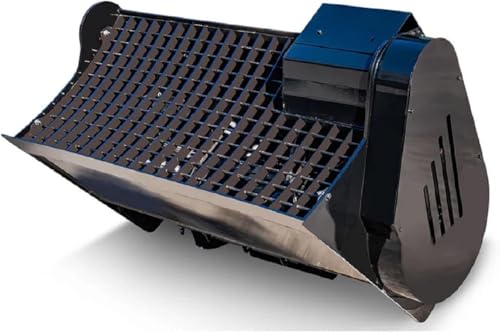
Best for heavy-duty construction sites and landscaping crews that need reliable, high-capacity concrete mixing. The 350L-capacity (approximately 92 gallons) bucket blends concrete evenly and supports precise pours through a hydraulic central outlet or tilt-dumping. The reinforced wear-resistant blades and thickened base plate add longevity in demanding environments. The hinged front safety grid aids interior cleaning and operator protection, reducing downtime.
Who it’s best for: contractors and rental fleets handling frequent, medium-volume concrete pours. Why selected: combines industrial durability with controlled discharge, supporting efficient site workflows. Caution: ensure compatible hydraulic flow for optimal central-outlet performance.
MIVA Skid Steer Concrete Mixer Attachment 350L

Best for users needing a compact yet capable 350L mixer with an integrated safety grid and screen. The dual-benefit design supports efficient loading, uniform mixing, and precise pours via hydraulic central outlet or tilt-dumping. Durable blades and a thickened base plate resist wear on tough sites such as farms, commercial yards, and general construction.
Who it’s best for: mid-size projects and rental fleets prioritizing quick maintenance and reliable discharge. Why selected: mirrors FORGLO’s performance while offering a removable screen for easy cleanup. Caution: confirm the 350L capacity fits the job scale to avoid overloading on tight sites.
Titan Attachments UA Skid Steer Cement Bucket

Best for buyers seeking a locally manufactured, durable skid-steer bucket with a simple, robust design. This 3/4-yard capacity unit uses a powder-coated A36 steel construction and a Quick Tach system for fast attachment changes. The side spill guard and removable spout simplify cleanup and material control.
Who it’s best for: contractors who value straightforward construction and quick setup. Why selected: offers a balance of rugged build and ease of use. Caution: ensure compatibility with your Quick Tach model and space for the 60″ width.
330L Skid Steer Concrete Mixer Bucket

Best for customers needing maximum mixing capacity with heavy-duty construction. The bucket features a 330L maximum capacity and a 220L rated capacity for efficient loading and dispensing. Hardox steel blades and a reinforced bucket bottom increase durability under demanding site conditions.
Who it’s best for: larger projects on rough terrain where high-volume pours are routine. Why selected: a strong blend of capacity and durable materials. Caution: verify that your skid steer’s hydraulic capacity matches the load and flow requirements.
LandHonor Concrete Mixer Double Discharge

Best for versatility in pour options, offering both a side chute (manual) and a hydraulic center chute with a hose. This enables precise side pours, reach to difficult areas, or use as a bag-filler. Mounted on a skid steer, it can scoop, mix, and pour while moving, boosting site efficiency.
Who it’s best for: sites needing flexible discharge pathways and efficient material handling. Why selected: the dual-discharge capability adds adaptability. Caution: double-discharge systems add complexity; verify control layout and hose routing for safe operation.
Buying Guide: Skid Steer Concrete Mixing Buckets
Key considerations for choosing the right mixer bucket
Capacity and output: match bucket size to typical job load and the skid steer’s hydraulic capacity. Larger capacities reduce refills but require more powerful hydraulics.
Construction quality: look for wear-resistant blades, reinforced bottoms, and corrosion-resistant coatings. Hardox steel or thick base plates increase longevity on harsh sites.
Discharge options: central hydraulic outlets, tilt-dumps, and side chutes affect pour precision and access to hard-to-reach areas.
Attachment compatibility: confirm quick-attach compatibility (e.g., universal quick attach, Quick Tach) with your skid steer model.
Maintenance access: hinged safety grids, removable screens, and accessible interior components speed up cleaning and service.
Safety and ergonomics: consider grids, guards, and ergonomic controls that minimize operator risk during loading and discharging.
Practical buying questions
- Which capacity is right for my typical pours: 300–350 L vs. 66–92 gallon range?
- Is a double discharge feature worth the extra setup for my job sites?
- Do I need a USA-made unit or is a globally sourced build acceptable for my needs?
- Will my skid steer’s hydraulic flow support efficient mixing and quick discharge?
- Which features ease maintenance in muddy or dusty environments?
Brief FAQ
- What is the typical working capacity of these buckets? – Capacities vary from about 66 gallons to 350 liters, depending on model.
- Can these buckets be used with common skid steers? – Yes, most are designed for universal quick-attach systems or Quick Tach setups.
- Are these buckets suitable for both mixing and dispensing concrete? – Yes, most models support controlled hydraulic discharge for pours.
- What maintenance helps extend bucket life? – Regular cleaning, inspecting blades and seals, and ensuring proper lubrication of moving parts.
- Is there a recommended cleanup after using a bucket in wet concrete? – Use hinged safety grids and interior access points to clean blades and discharge channels.
Add a Comment