Looking for a reliable single phase vacuum pump to support HVAC servicing, laboratory filtration, or industrial evacuation tasks? This guide reviews five solid choices, highlighting who each pump is best for and why. The list covers compact pocket-pump options ideal for fieldwork, as well as higher-capacity models suitable for more demanding tasks. Each entry notes practical limits and how to choose based on your application, whether you’re maintaining refrigerant systems, drawing down vacuum for research, or exhausting to a remote location.
Summary of selected products
- Yellow Jacket 93600 Bullet Single Phase Vacuum Pump, 7 CFM, 115V
- Yellow Jacket 93560 Superevac Single Phase Pump, 6 CFM, 115V
- Welch Vacuum 2567B-01 Wob-l Dry Pump, 115V/60 Hz
- Welch Vacuum 2563B-24 WOB-L Dry Pump, 115VAC, 60Hz
- Across International EV7.110 Ai Easyvac 7 CFM Vacuum Pump
Yellow Jacket Bullet 7 CFM Vacuum Pump — Best For Professional Field Work

The Yellow Jacket 93600 Bullet is a single-phase, 7 CFM pump designed for automotive and HVAC service. It features a wide-mouth oil reservoir port for easier, cleaner filling and a large oil sight glass for quick monitoring. The exhaust can be threaded to attach a garden hose, allowing exhaust to remote locations to reduce oil mist near the operator. This model is best for technicians who frequently need portable, robust vacuum capability at job sites and in shops.
Who it’s best for and why: Best for professional technicians who require clean oil handling, modular exhaust routing, and reliable performance in field settings. The wide oil port and visible sight glass simplify maintenance in busy environments. Choose this if you prioritize portable, service-ready performance with straightforward oil changes. Caution: keep oil changes regular to maintain optimal vacuum levels.
Notes: This pump’s design supports easy oil management and flexible exhaust options, which helps reduce contamination risk in sensitive tasks.
Yellow Jacket Superevac 6 CFM — Best for System Isolation
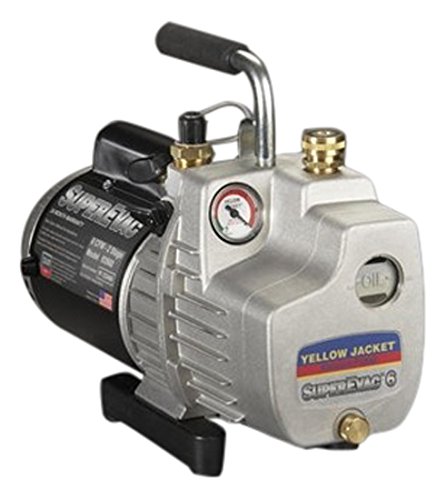
The Yellow Jacket 93560 Superevac is a 6 CFM, single-phase pump that emphasizes oil-change workflow and vacuum integrity. It provides an isolation valve for oil changes without losing vacuum, an integrated vacuum indicator gauge, and a wide-mouth oil reservoir port. The unit also doubles as an exhaust with a garden hose connection for remote exhausting. It’s well-suited for technicians who need to perform oil changes without sacrificing vacuum during servicing or calibration tasks.
Who it’s best for and why: Best for technicians performing frequent oil changes or maintenance on vacuum systems, where maintaining vacuum continuity is critical. If you work on complex refrigerant or lab systems and require persistent vacuum during service, this model offers practical controls. Caution: ensure proper hose routing to avoid oil mist in the work area.
Welch Vacuum 2567B-01 Wob-l Dry Pump — Best for Automation

The Welch Vacuum 2567B-01 is a dry pump with a single-phase 115V motor, rated at 1/3 hp and 250W. It’s designed for aspiration and automation applications, offering reliable dry operation without oil to manage. This model is ideal for systems where oil contamination must be avoided or where a clean, dry vacuum is required for automated processes or filtration tasks.
Who it’s best for and why: Best for laboratories and automation lines where oil-free operation is essential, and where duty cycles accommodate a compact, dependable dry pump. Caution: dry pumps require clean oil-free seals and may need more frequent maintenance in dusty environments.
Welch Vacuum WOB-L Dry Pump — Reliable Lab‑Grade Dry Pump
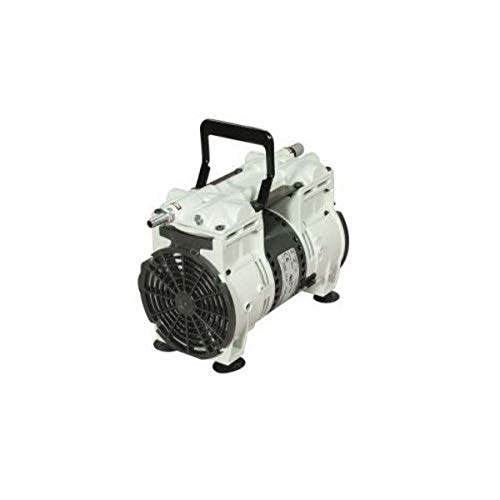
The Welch Vacuum 2563B-24 is a WOB-L dry pump with single-phase 115VAC, 60Hz operation and UL certification. It’s designed to deliver clean, oil-free vacuum suitable for lab filtration, microelectronics, and research setups. The model’s compact size and dry design help minimize maintenance in controlled environments.
Who it’s best for and why: Best for research labs and filtration workflows that require consistent dry vacuum without oil residues. Caution: verify compatibility with your system’s exhaust handling and consider additional filtration if dust is present in the intake stream.
Across International Ai Easyvac EV7.110 — Best for Compact 7 CFM Workflows

The Across International EV7.110 Easyvac operates at 7 CFM with a 370W motor and a 110V single-phase supply. This pump is designed to support compact but capable vacuum workloads, including exhaust oil mist filtration and accessory fittings. It’s suitable for labs, small clinics, and hobby or light commercial use where space is limited but performance matters.
Who it’s best for and why: Best for laboratories and small workshops needing a balance between size and vacuum capacity. Caution: confirm availability of compatible exhaust/mist filtration and consider noise and vibration management in small rooms.
Buying Guide: Key Considerations for Single Phase Vacuum Pumps
- Vacuum capacity (CFM): Match the flow rate to your needs. Higher CFM suits larger volumes and faster evacuations; lower CFM can be more portable and energy-efficient for small tasks.
- Oil vs. dry operation: Oil-sealed pumps are common and robust but require oil management. Dry pumps avoid oil contamination but may need different maintenance routines and service considerations.
- Single-phase voltage: Ensure compatibility with your power supply (most listed models use 110V–115V in the US). Check phase stability and duty cycle for continuous use.
- Oil management features: Look for wide-mouth oil ports, visible sight glasses, and easy oil drain designs to simplify servicing and reduce spills.
- Exhaust options: Pumps with threaded exhausts or hose fittings let you route exhaust away from the operator, reducing oil mist exposure and improving workspace cleanliness.
- Isolation and maintenance: Pumps with isolation valves or built-in gauges help perform maintenance without losing vacuum, minimizing downtime.
- Dry vs oil contamination risk: Oil-free (dry) pumps prevent oil contamination in vacuum systems where purity is essential, such as certain filtration or research applications.
- Size and portability: Field work benefits from lighter, compact models with robust handles and simple setup. Heavier units suit shop or lab benches with stable mounts.
- Electrical safety and certifications: UL/CSA listings and temperature safeguards improve reliability in demanding environments.
Common buying questions
- What is a single-phase vacuum pump best used for? — It’s ideal for HVAC service, refrigeration work, laboratory filtration, and light to medium industrial evacuation tasks where a reliable vacuum is required.
- Should I choose a dry pump over an oil-sealed pump? — If oil contamination must be avoided or your workflow involves very clean vacuums, a dry pump is advantageous. For rugged field use and cost efficiency, oil-sealed pumps remain popular.
- Is 7 CFM enough for most applications? — Many field and lab tasks can be handled with 5–7 CFM; heavier industrial or large-volume systems may require 7–10 CFM or more.
- What maintenance does a vacuum pump require? — Oil-sealed pumps need regular oil changes and lubrication, while dry pumps need dust control and seals inspection. Follow manufacturer recommendations for service intervals.
- Can these pumps run continuously? — Duty cycles vary by model. Check the listed motor wattage and cooling features; some units are better suited for intermittent operation than continuous use.
- Do these pumps come with exhaust filtration? — Some models offer exhaust accessories or support after-market filtration; verify compatibility if you have indoor air quality concerns.
| Product | ||
|---|---|---|
| Yellow Jacket 93600 Bullet | Oil-sealed, 7 CFM | Field service, portable shop work |
| Yellow Jacket 93560 Superevac | Oil-sealed, 6 CFM | Service with vacuum continuity during maintenance |
| Welch Vacuum 2567B-01 Wob-l | Dry, 1/3 hp | Automation, clean vacuum needs |
| Welch Vacuum 2563B-24 WOB-L | Dry, UL certified | Lab and filtration tasks demanding oil-free vacuum |
| Across International EV7.110 Easyvac | Oil-sealed, 7 CFM | Compact 7 CFM workflows in labs |
Glossary of terms
- CFM: Cubic feet per minute, a measure of vacuum flow rate.
- UL/CSA: Safety certifications indicating compliance with electrical standards.
- Dry pump: A vacuum pump that does not use oil; preferred when oil contamination must be avoided.
Which pump to pick — quick recommendations
- Best for field technicians who need portability and convenience: Yellow Jacket Bullet 7 CFM.
- Best for maintenance workflows requiring vacuum continuity: Yellow Jacket Superevac 6 CFM.
- Best for oil-free vacuum in labs or automation lines: Welch Vacuum 2567B-01 Wob-l Dry Pump.
- Best for compact lab setups needing clean vacuum with UL certification: Welch Vacuum 2563B-24 WOB-L Dry Pump.
- Best for small to medium labs needing a balance of size and performance: Across International EV7.110 Easyvac.
Additional Resources for Selecting a Single Phase Vacuum Pump
When assessing options, compare not only the maximum vacuum but also the noise level, footprint, and maintenance requirements. Consider how you will route exhaust, how often you perform oil changes, and whether a dry pump better supports your cleanliness standards. If possible, select models with clear maintenance features and gauges to simplify servicing over time.
Frequently Asked Questions
- Do these pumps require any special power setup? — Most are designed for standard 110–115V single-phase outlets; verify your local electrical requirements.
- Is one pump suitable for both automotive and lab use? — Some models are versatile, but it’s common to choose based on whether you need oil-free vacuum or the ability to route exhaust safely.
- Can I use a single pump for multiple refrigerants? — Many pumps support multiple refrigerants, but ensure compatibility with your system and necessary adapters.
- What maintenance steps are universal? — Regularly check oil levels (for oil-sealed models), replace filters if present, and inspect seals for wear. Dry pumps require dust management.
- How do I decide between higher CFM and portability? — If your tasks involve large volumes or quick evacuations, higher CFM helps. For mobile work or tight spaces, prioritize portability with adequate CFM.
Add a Comment