If you need a reliable visual cue to monitor liquid movement in piping, a sight flow indicator with an impeller is a practical choice. This guide focuses on 5 solid options ideal for water, oil, and light chemical flows. Best for industrial maintenance teams, plant operators, and DIY plumbers who want immediate, at-a-glance flow status. Below, compare quick specs, intended use, and any notable caveats to help you pick the right model for your system.
| Product | Thread / Connection | Material | Best For |
|---|---|---|---|
| Antrader 3/4″ DN20-3/4″ | 3/4″ NPT Female | 304 Stainless Steel | General water flow visualization in medium-to-large piping |
| Antrader 1/2″ DN15-1/2″ | 1/2″ NPT Female | 304 Stainless Steel | Compact water lines and smaller-diameter runs |
| WZHLCX 1/2″ DN15 | 1/2″ NPT Female | 304 Stainless Steel | Clear viewing and high-visibility red impeller in tight spaces |
| LOYALHEARTDY 1″ DN25 | 1″ NPT Female | 304 Stainless Steel | Industrial-scale piping with high pressure |
| 3/4″ NPT Female | 304 Stainless Steel | Durable, high-visibility with 8-impeller design |
Antrader 3/4″ NPT Window Sight Indicator With Impeller

Best for: medium-diameter water lines in commercial or residential piping where visibility and easy maintenance matter. This model features a 3/4″ NPT Female thread and an impeller, providing a clear line of sight to visualize flow. Use for straightforward monitoring and quick troubleshooting when installing a new indicator in standard water pipelines. Caution: ensure compatibility with your pipe material to avoid thread leaks or corrosion over time.
Antrader 1/2″ NPT Window Flow Indicator With Impeller

Best for: tight-space installations or smaller-diameter pipelines where visual flow confirmation is essential. This 1/2″ model provides the same impeller-based visibility as larger variants, enabling quick status checks in compact systems. Limitation: smaller window area may reduce visibility in highly opaque fluids or in bright lighting without proper positioning.
1/2″ NPT Stainless Steel 304 Flow Indicator With Red Impeller
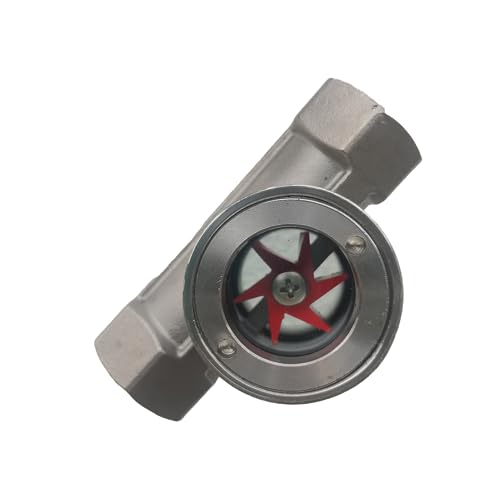
Best for: visible, high-contrast flow cues in small-line industrial systems. The PTFE impeller and bright red color maximize visibility, making it easier to monitor flow in challenging environments. Caution: the unit specifies compatibility with water and similar liquids; avoid highly viscous or incompatible media without verifying material compatibility.
1″ NPT Stainless Window Flow Indicator With Impeller
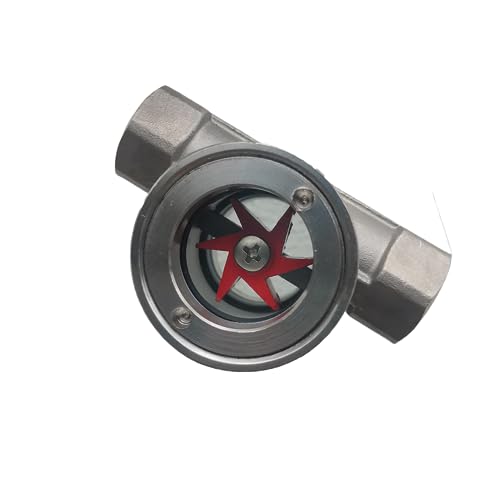
Best for: larger-diameter lines where a 180-degree viewing angle aids maintenance workflows. This model uses a clear window for easy observation and an impeller for dynamic flow cues. Limitation: ensure the operating environment does not exceed the maximum temperature or pressure ratings for your system.
3/4″ NPT Stainless Steel Flow Indicator With 8-Impeller

Best for: industrial-grade monitoring in higher-flow applications or systems requiring rapid visual feedback. The 8-impeller design enhances the apparent flow signal, aiding precise interpretation in process control. Caution: some environments may demand corrosion-resistant coatings beyond standard stainless steel for extended longevity.
LEYSRIS 3/4″ NPT Stainless Steel With Tempered Glass

Best for: robust water cooling and process lines that demand a sturdy glass window for clear observation. The tempered glass window provides durable visibility, with a stainless steel body designed for industrial environments. Limitation: the window is not designed for extremely aggressive chemicals; verify compatibility with your media before installation.
Buying Guide
What size and connection should I choose?
Match the thread size to your pipeline. Common options include 1/2″ and 3/4″ NPT. Larger sizes offer easier viewing in bigger pipes, while smaller sizes fit tight spaces.
Which materials matter?
Stainless steel bodies resist corrosion and high pressure, making them suitable for industrial systems. Brass or coated variants may be used in specific HVAC or refrigerant lines, but verify compatibility with your fluid.
How important is the viewing window?
A clear, well-sealed window improves visibility and reduces maintenance checks. Tempered glass is durable, while window coatings or color-contrasted impellers enhance contrast for quick interpretation.
What about pressure and temperature limits?
Check max temperature and max pressure ratings to prevent leaks or window failures under operating conditions. Higher-pressure systems require robust seals and precise threading.
How does the impeller design affect monitoring?
Impellers create moving flow cues. More impellers (like eight) provide stronger visual signals, but ensure the indicator isn’t overly sensitive to minor fluctuations in your process.
When should I avoid a model?
Avoid indicators if your medium is highly viscous, corrosive beyond the material spec, or if the environment requires non-metallic components not present in the unit.
Maintenance tips
Regularly inspect seals for leaks, clean the viewing window, and replace worn gaskets as necessary to maintain a clear line of sight and reliable readings.
FAQ
- What is a sight flow indicator with an impeller used for?
Answer: It visually shows liquid flow in a pipeline, with the impeller providing moving cues for quick assessment. - Which material is best for harsh industrial environments?
Answer: Stainless steel bodies with tempered glass windows offer durability and visibility in demanding settings. - Are these indicators suitable for refrigerant lines?
Answer: They can be, if the materials and fittings are compatible with the refrigerant and system pressures. - How many impellers should I look for?
Answer: More impellers can improve visibility, but ensure you can interpret the signal clearly in your process. - What installation considerations matter?
Answer: Ensure correct thread size, proper sealing, and alignment with the system’s flow direction to prevent leaks.
Add a Comment