Finding the right side by side dump trailer depends on load capacity, bed size, and versatility for hauling dirt, mulch, firewood, or debris. This guide highlights five sturdy options, detailing who each trailer is best for and why it works for common yard and farm tasks. Whether you own a riding mower, ATV, or lawn tractor, these trailers offer easy dumping, removable sides, and durable construction to minimize trips and maximize efficiency.
Product Overview Table
| Product | Bed Capacity | Best For | |
|---|---|---|---|
| VEVOR Heavy Duty ATV Trailer | 15 cu ft | General yard work with lawn tractors or ATVs | Balanced capacity and compatibility |
| GarveeLife ATV UTV Trailer | 22 cu ft, 1600 lbs | Heavy-duty hauling on larger properties | High load capacity and robust build |
| SierraSquad 22 Cu.Ft Steel Trailer | 22 cu ft, 1600 lbs | Large loads with removable sides | Versatility with flatbed conversion |
| EliteEdge Heavy Duty Steel Dump Trailer | 17 cu ft, 750 lbs | Medium-duty yard tasks with sturdy frame | Strong steel construction and durability |
| Brinly 10 cu.ft. Poly Utility Cart | 10 cu ft, 650 lbs | Light to moderate loads, easy maintenance | Durable poly bed with steep dump angle |
VEVOR Heavy Duty ATV Trailer

Capacity and compatibility make this trailer a practical choice for moderate yard work. It features a 750 lb load limit and 15 cubic feet of hauling space with three-sided railings for added containment. The universal hitch simplifies pairing with many tractors, lawnmowers, ATVs, and UTVs, enabling easy attachment and operation. Best for homeowners with mid-sized properties who need a reliable daily hauler for soil, mulch, grass clippings, and firewood.
Limitations include a lower payload than larger models, so it’s best suited for smaller loads or frequent trips rather than heavy-duty farm tasks.
VEVOR ATV UTV Trailers Tow Behind Dump Cart

This heavy-duty option increases capacity to 1500 pounds with a 15 cubic foot bed, making it better for larger loads or frequent hauling on bigger properties. It connects to existing tractors, lawnmowers, ATVs, or UTVs with no special tools, accelerating yard cleanup and material transport. Choose this if you regularly move substantial debris, soil, or compost and need fewer trips.
Note that the upgraded frame and thicker shell improve strength, but the larger payload requires appropriate towing capacity from the vehicle you pair it with.
SierraSquad 22 Cu.Ft Steel Trailer
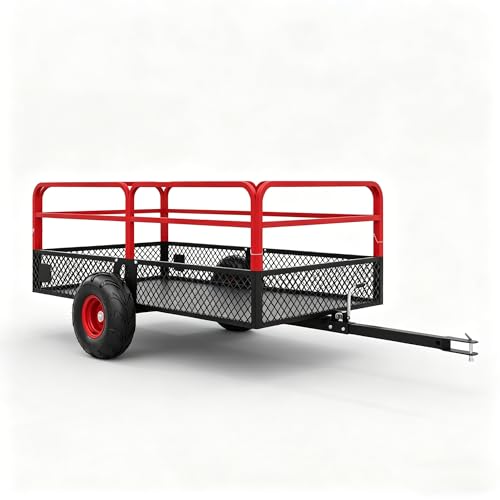
With a 22 cubic foot bed and 1600 pounds of capacity, this model targets heavy-duty yard tasks and loud-haul scenarios. It features removable side panels to switch from cart to flatbed, which helps in loading oversized materials or irregularly shaped items. Best for large properties or projects that require flexible bed configurations.
Best used when you anticipate needing to convert the bed from a standard trailer to a flatbed for awkward materials; keep in mind that removable panels add a step in setup and teardown.
EliteEdge Heavy Duty Steel Dump Trailer
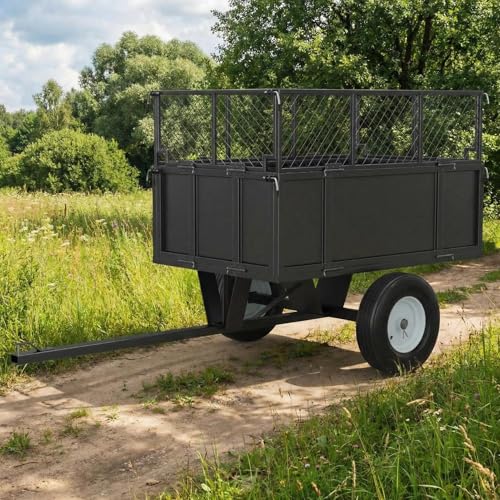
This 17 cubic foot trailer offers 750 pounds of payload and a robust steel frame with a rust-proof coating for long-term outdoor use. It includes railings on all sides and a sturdy dump mechanism for efficient unloading. It’s best for users needing a balance of size and durability for regular yard tasks, including wood, soil, and debris transport.
Caution: Quick-dump features should be operated with care to avoid tipping or losing control on uneven ground.
Brinly 10 Cu.Ft Poly Utility Cart

This model provides a compact, easy-to-maintain option with a 650-pound capacity and a 10 cubic foot bed. The poly bed resists denting and is easy to clean, while the bed’s steep 56-degree dump angle simplifies emptying. Best for gardeners and homeowners who value low maintenance and straightforward dumping on smaller loads.
Limitation: The smaller bed size may require more trips for larger yard projects.
Buying Guide: Key Considerations For Your Side By Side Dump Trailer
What load capacity do you actually need?
Consider the typical materials you haul. Lighter yard waste may be fine with 750–1000 lbs. For firewood, soil, or rock, aim for 1500–1600 lbs. Ensure your towing vehicle can safely handle the trailer’s weight in both loaded and unloaded states.
How important is bed size and versatility?
A larger bed (like 22 cu ft) reduces trips but may be harder to maneuver in tight spaces. Removable side panels or convertible beds add flexibility when transporting oversized items.
Compatibility with your vehicle
Check universal hitch compatibility to ensure the trailer fits your tractor, lawnmower, ATV, or UTV. Some models offer quick-connect designs to simplify attachment and detachment.
Dump mechanism and ease of unloading
Consider the dump angle and whether the mechanism is spring-assisted or requires manual effort. A steeper angle or quick-release design improves unloading speed and reduces physical strain.
Durability and maintenance
Steel frames offer high strength, while aluminum or reinforced poly beds resist corrosion and denting. A rust-proof coating or powder finish extends life in outdoor environments. Plan for regular inspection of welds, tires, and axles.
Removable sides vs. fixed sides
Removable sides provide versatility for flatbed hauling, while fixed sides help contain loose materials. Decide based on the typical loads you expect to carry and whether you value flexibility over containment.
FAQ
- What is the typical payload range for side by side dump trailers? Most trailers in this category range from 650 lbs to about 1600 lbs, depending on bed size and construction.
- Can these trailers be attached to a variety of vehicles? Yes, many models feature universal hitches designed to fit tractors, lawnmowers, ATVs, and UTVs.
- Are removable sides recommended? Removable sides increase versatility for flatbed loading and oversized items, but require extra setup time when in use.
- Is a steel bed better than poly for durability? Steel beds typically offer greater structural strength; poly beds resist denting and are easier to clean but may be less rigid under heavy loads.
- What maintenance is essential for long-term use? Regularly inspect tires, axles, and welds; keep hitch connections secure; clean after use to prevent rust or corrosion.
- What safety practices are important when dumping? Always dump on stable, level ground and keep bystanders clear of the dump path and release mechanism.
Add a Comment