Short path distillation heads are essential for efficiently purifying heat-sensitive or high-boiling compounds in laboratory settings. This guide highlights five top options, detailing who each product is best for, and why they stand out. Whether you are a research scientist handling delicate organics or a technician needing reliable, compact glassware, these heads offer clear advantages in separation efficiency, thermal resistance, and ease of use. The following selections emphasize borosilicate glass quality, 24/40 joints, and practical hose/thermometer connections to support precise distillation under reduced pressure.
| Product | Joint Type | Material | Best For |
|---|---|---|---|
| Stonylab Short Path Head | 24/40 | Borosilicate Glass | General lab purification, heat-sensitive compounds |
| Deschem 24/40 Short Path Head | 24/40 | Borosilicate Glass | High-purity distillation, premium setup |
| Dinglab Short Path Head | 24/40 | Borosilicate Glass | Compact distillation with three hose connections |
| Deschem 24/40 High-Efficiency Head | 24/40 | Borosilicate Glass | Optimal separation, reliable glassware |
| REACWARE SPD Head | 24/40 | Borosilicate Glass | Compact, dependable condensation path |
Stonylab Glass Short Path Distillation Head
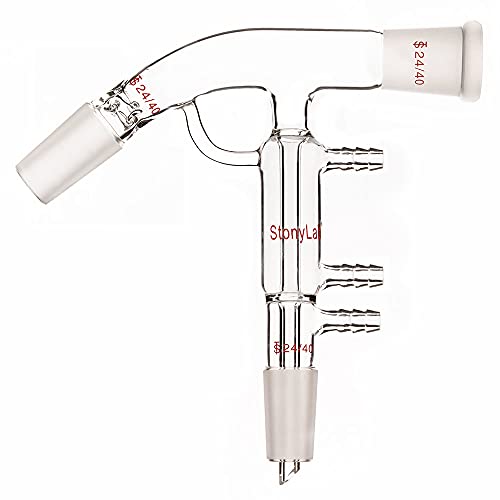
The Stonylab short path head is designed for efficient separation and purification of heat-sensitive or high-boiling compounds. It features three 10 mm outer diameter hose connectors: two for circulating fluids and one for vacuum, along with two inner joints and one outer joint (24/40). Made from borosilicate glass, this head offers high strength and impact resistance, enhancing laboratory safety. Best for researchers who need robust glassware that can withstand routine vacuum distillation without compromising joint integrity. A potential limitation is the reliance on external hoses for circulation; ensure hose compatibility with your pump system.
Deschem 24/40 Short Path Distillation Head

The Deschem 24/40 short path head is crafted from G3.3 borosilicate glass with a notably high annealing point and a low coefficient of expansion. This combination supports stable performance under temperature fluctuations during distillation. It is well-suited for laboratories prioritizing thermal reliability and minimal runaway heat concerns. Choose this if you need dependable thermal stability and a robust 24/40 joint. A minor caution: explicit product data about hose connections is limited, so verify compatibility with your vacuum and circulating lines.
Dinglab Glass Short Path Distillation Head

The Dinglab short path distillation head provides a borosilicate glass solution with three hose connections and a 24/40 joint, designed for compact distillation setups. This makes it a practical choice for smaller labs or field-testing environments where space is at a premium. It is best for users who value a straightforward, three-hose configuration over more elaborate multi-jet designs. Limitation: exact material specifications beyond borosilicate glass are not detailed in the available listing.
Deschem 24/40 Distillation Head Short Path Condenser

This Deschem model emphasizes G3.3 borosilicate glass with a 24/40 ground joint. Its design targets optimal separation and reliable performance for lab-scale distillation. It is well-suited for labs that need repeatable results when separating moderately heat-sensitive compounds. A key note: while the annealing point and expansion data suggest strong thermal resilience, always confirm compatibility with your vacuum pump and receiving flasks before integration.
REACWARE Short Path Distillation Head

The REACWARE SPD head is a compact 24/40 glass design that emphasizes a shorter distillation path for efficient vacuum distillation. This can minimize pressure drop and reduce compound losses in heat-sensitive processes. It is best for laboratories seeking a space-saving option without sacrificing performance. A limitation to watch for is the lack of detailed technical specs beyond standard borosilicate glass; verify joint fit and hose connections with your existing setup before purchasing.
Laboy Glass Short Path Head with Indentation
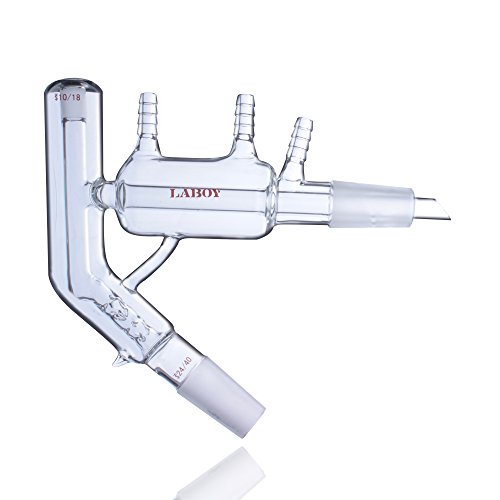
The Laboy short path head combines a compact, indent-based vacuum path with a 24/40 joint and a side 24/40 joint for distillate distribution. The top includes a 10/18 thermometer joint, supporting precise temperature monitoring. It is best for labs that require integrated thermometer capability and a three-way distribution path to manage distillates into multiple receiving flasks. Limitation: some users may prefer explicit data on hose connection types; ensure hose compatibility with your pump system and condensers.
Laboy Short Path Head with Vigreux Vacuum Apparatus

This Laboy option features an integrated Vigreux column to boost surface area and improve fractional distillation efficiency. It emphasizes a short path vacuum design ideal for purifying heat-sensitive compounds. This model is well-suited for users seeking higher separation performance without adding a lengthy distillation column. Consider compatibility with your condenser and receiving setup, as the Vigreux arrangement may influence vapor flow in compact rigs.
Nanshin Distillation Head Short Path Condenser

The Nanshin head uses G3.3 borosilicate glass with a 24/40 ground joint and a 45-degree angle condenser design. It is best for laboratories needing a standard, reliable short-path configuration with a slightly angled condenser to optimize distillate collection. A caution: the listing emphasizes general features and lacks detailed hose compatibility information, so confirm your system’s hose and receiver arrangements before purchasing.
Buying Guide
What should you consider when choosing a short path distillation head?
- Joint size and compatibility: Most entries use 24/40 joints. Ensure your receiving flasks, adapters, and condensers match the joint size for a secure seal.
- Material quality: Borosilicate glass (3.3) offers thermal resistance and durability. Look for annealing data or heat tolerance indicators to minimize thermal shock.
- Heat sensitivity and boiling point: For heat-sensitive compounds, prioritize heads with shorter distillation paths and efficient vacuum compatibility to reduce exposure time at high temperatures.
- Hose connections and vacuum integration: Check the number and sizing of hose connectors. More connections can offer versatile cooling or circulating options but require compatible pumps and tubing.
- Integrated features: Some heads include Vigreux columns or thermometer joints. These features improve separation and monitoring but may add complexity to setup.
- Size and footprint: Compact designs save bench space, which is beneficial in smaller labs or field setups.
FAQ
- What is a short path distillation head?
- Why choose a 24/40 joint?
- What materials are these heads made from?
- Are all heads suitable for high-vacuum distillation?
- Do these heads include thermometer joints?
- What should I verify before buying?
A short path distillation head is a glass component used in vacuum distillation to condense vapors after minimal travel distance, improving efficiency for heat-sensitive compounds.
The 24/40 joint is a common standard in lab glassware, ensuring compatibility with receiving flasks, condensers, and adapters across many brands.
All listed heads use borosilicate glass (often labeled as G3.3), which offers strong thermal resistance and chemical stability for organic synthesis.
Most are designed for vacuum distillation, but exact performance depends on the rest of the setup, including the condenser, receiving flasks, and pump.
Some models include thermometer joints (e.g., 10/18) at the top; others may not. Check product features to match your temperature monitoring needs.
Joint size, hose compatibility, presence of a Vigreux column or indentations, and the overall compatibility with your existing lab glassware and pumps.
Add a Comment