If you’re shopping for a sewer line cleaning machine, you want reliable power, durable cables, and easy operation. This guide highlights five strong options and explains who each is best for. The top picks balance cable strength, range, and user-friendly features to tackle 2″–6″ lines, 2″–4″ lines, and more. Useful for homeowners, small businesses, and professional plumbers alike, these machines aim to clear stubborn clogs quickly and safely. Below is a quick summary table of the selected products for easy comparison.
| Product | Cable Length / Diameter | Best For | Key Benefit |
|---|---|---|---|
| RIDGID 26998 K-400 | 75 ft • 1/2″ | Heavy-duty residential and light commercial | Reliable drum machine with solid core cable |
| VEVOR 100 ft x 1/2″ | 100 ft • 1/2″ | 2″–6″ pipes, tougher clogs | Auto feed, high-speed motor, versatile cutters |
| VEVOR 100 ft x 3/4″ | 100 ft • 3/4″ | 4″–8″ lines, harder blockages | Strong steel cable, foot switch control |
| VEVOR 100 ft x 1/2″ (3/8″ variant) | 100 ft • 3/8″ | Smaller lines, light commercial | Compact option with efficient auto-feed |
| Albott 100 ft x 1/2″ | 100 ft • 1/2″ | Home and small business use | 10 cutters, auto-feed, wide pipe range |
RIDGID 26998 K-400 Drain Cleaning Kit

The RIDGID K-400 kit is a 120-volt drum machine designed to tackle 1-1/2″ to 4″ drain blockages in tubs, showers, and sinks. It ships with a 75 ft, 1/2″ solid-core cable and a multi-tool kit for varied access. Best for homeowners who need a dependable, all-in-one solution for common residential clogs. The machine emphasizes straightforward controls and a compact profile, making it a good fit for garages or service vehicles. Limitation: the setup emphasizes 1/2″ core cable length; larger or deeply buried clogs may require longer runs or extra tools. Best for: moderate residential use and light commercial tasks where a robust, ready-to-work drum machine is preferred.
VEVOR Drain Cleaner Machine 100 ft x 1/2″

This VEVOR model uses an auto-feed system paired with a 1700 RPM high-speed motor to efficiently remove stubborn blockages. Its solid 100 ft x 1/2″ steel cable resists breakage and handles 2″–6″ pipes with curved paths. The CW/OFF/CCW controls and an air-activated foot switch provide hands-free operation and flexible clog handling. Best for: homeowners and small-pro crews clearing mixed residential lines. Caution: longer runs may require additional cutter options and careful cable management to prevent tangling.
VEVOR Drain Cleaner Machine 100 ft x 3/4″
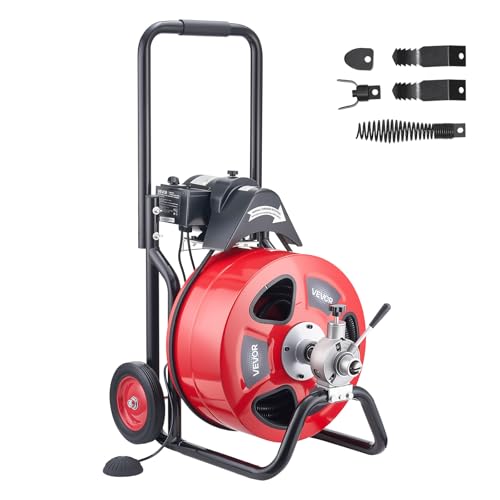
Designed for larger pipes, this 3/4″ version uses a 100 ft cable to clear 4″–8″ lines with a durable steel core. The 1700 RPM motor powers easy in/out movement, and the foot switch enables hands-free operation. Best for: kitchens, main lines, and larger commercial setups where longer cable and stiffer performance are required. Limitation: heavier and bulkier than smaller-diameter models, which may affect transportability in tight spaces.
Garvee Drain Cleaner 75 ft x 1/2″

The Garvee unit uses a 370W motor and a solid 75 ft x 1/2″ cable with interchangeable cutters. It supports 2″–4″ curved pipes and includes multiple cutters for versatility. Best for: small businesses and home users who need a robust, cost-effective tool for frequent maintenance. Limitation: not as long as some 100 ft models, which may require rethreading in longer runs or more aggressive blockages.
Albott 100 Ft x 1/2″ Electric Drain Cleaner

The Albott model offers 100 ft of anti-twist wire core cable and 10 replaceable cutters designed to clear clogs in 1″–4″ pipes. Its auto-feed and CW/CCW controls with a foot pedal support hands-free operation. Best for: facilities with varied pipe sizes and a need for multiple cutter configurations. Limitation: slightly heavier use can lead to quicker wear on cutters depending on material tackled; ensure cutter variety matches typical debris.
Buying Guide: Key Considerations For Choosing A Sewer Line Cleaning Machine
- Pipe Size And Range: Match the device’s cable diameter and length to your common pipe sizes (2″–6″ most typical). Larger diameters and longer cables are better for big main lines, while smaller models excel in residential bathrooms and kitchens.
- Cable Construction: Look for solid-core steel cables with kink- and corrosion-resistance. A durable core reduces tangling and improves longevity in curved or complex piping paths.
- Power And Speed: A higher RPM motor (around 1700 RPM as seen in several models) speeds up clog clearance but can increase cable resistance if the clog is stubborn. Consider a model with forward/reverse control for versatile clog engagement.
- Auto-Feed And Hands-Free Operation: Auto-feed systems simplify operation, especially for repetitive clearing tasks. An air-activated foot switch enables hands-free starts and stops, reducing user fatigue.
- Cutters And Accessories: More cutters increase versatility for different blockages (arrows, spade, boring bulbs, etc.). Check if the set is included or sold separately and ensure compatibility with your typical debris.
- Portability And Storage: Wheels and compact designs aid transport within a home or job site. Consider overall weight and the ease of cable winding for frequent use.
- Durability And Maintenance: Look for corrosion-resistant components and a robust cable drum. Regular maintenance of the drum and cutters extends tool life.
Frequently Asked Questions
- What size sewer line should I use a 100 ft cable for?
– A 100 ft cable is generally suitable for residential main lines and longer runs, especially 2″–6″ pipes, providing enough length to reach blockages without frequent rethreading. - Is an auto-feed feature necessary?
– Auto-feed simplifies operation, reduces manual effort, and speeds up clearing. It’s especially helpful for professional use or frequent maintenance. - Can I use these machines for toilets?
– Some models include cutters suitable for toilet lines and 2″–4″ pipes, but verify the intended application and cutter compatibility before use on sensitive fixtures. - What is the difference between 2″–4″ and 4″–8″ machines?
– The main difference is cable diameter and the pipe size they are designed to clear. Larger diameters are built for bigger pipes and tougher clogs but may be heavier and less maneuverable in tight spaces. - Are metal cables prone to kinking?
– Quality solid-core steel cables are designed to resist kinking, but improper handling, over-bending, or forcing the cable through obstacles can increase risk of tangling. Follow the manufacturer’s guidance for best results. - Which machine is best for a residential user with occasional needs?
– A mid-range model with 75–100 ft of 1/2″ or 1/4″ to 3/8″ cable, auto-feed, and multiple cutters is typically ideal for homes and light commercial use, offering balance between price and capability.
Note: This article presents objective information based on listed features and common buyer considerations. Always follow safety instructions and use personal protective equipment when operating drain cleaning equipment.
Add a Comment