Answering the search for reliable semi-automatic band saws, this guide highlights models that balance power, precision, and ease of use for metalworking shops. These machines are well-suited for fabricators, maintenance facilities, and small to mid-sized workshops that need consistent cuts with controlled feed. The top picks include hydraulic downfeed, dual-speed motors, and sturdy double-column frames for stable operation.
| Product | Best For | Key Benefit |
|---|---|---|
| KAKA TGK-16A | Industrial shops | High power and precise hydraulic control |
| KAKA TGK-14 | Medium-duty fabrication | Variable feed with robust stability |
| KAKA TBK-11 | Maintenance facilities | Three-speed cutting with solid stability |
| Baileigh BS-260SA | Small shops, light fabrication | Dual-miter capability and easy setup |
| KAKA BS-108G | Pipe and steel sections | Wide miter range and heavy-duty worm drive |
KAKA Industrial TGK-16A Metal Bandsaw
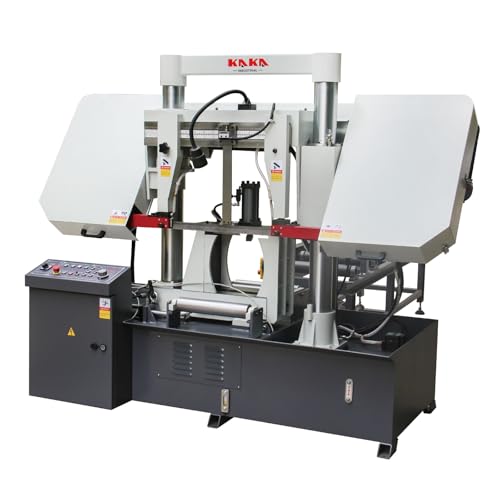
Best for heavy-duty metal fabrication with high power. This 15.7 inch capacity bandsaw uses a 3.0/4.0 kW double-speed motor (two blade speeds: 141 and 220 ft/min) to tackle metals, plastics, and composites with strong cutting power. The hydraulic control ensures smooth blade descent and consistent speed, while the double-column vertical lifting provides high stability for demanding cuts. Consider this model when you need reliable performance in busy shops and long-term durability. A potential limitation is its size and power draw, which may require proper electrical infrastructure and floor space.
- Powerful 4.0 kW dual-speed motor (141/220 ft/min)
- Precision hydraulic control for smooth operation
- Double-column structure with vertical lifting for stability
KAKA TGK-14 Metal Cutting Bandsaw
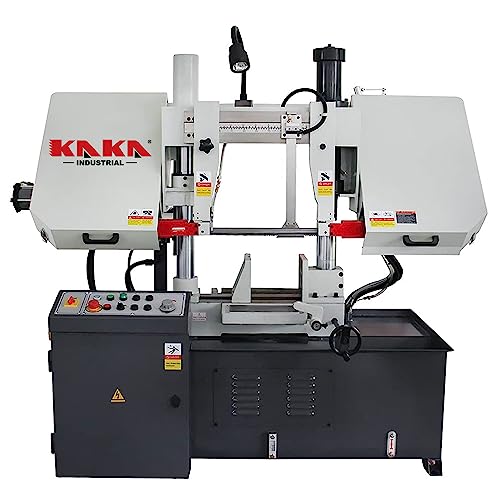
Best for versatile metals and mixed media cutting with precise feed control. The 13.8 inch capacity bandsaw uses a 2.2/2.8 kW dual-speed motor (speeds 177 and 272 ft/min) and a hydraulic control with variable feed speed. The double-column design and vertical lift deliver stable performance and accurate cuts across material types. A caution: higher speeds can speed wear on blades with premium materials, so choose blade type accordingly.
- 2.2/2.8 kW dual-speed motor
- Variable hydraulic feed for material-dependent control
- Double-column with vertical lifting for stability
KAKA TBK-11 11-Inch Band Saw

Best for compact workshops needing solid reliability with multiple speeds. This 11 inch capacity unit is powered by a 3 kW motor and offers three blade speed options (28, 45, 59 m/min). It includes a hydraulic downfeed with variable speed and a double-column frame for steady, straight cuts. Choose this if floor space is limited but you still require consistent performance for metals and composites. Limitation to watch: slightly smaller cutting capacity compared with larger models.
- 3.0 kW motor with three-speed options
- Hydraulic downfeed with variable speed
- Double-column stability for accuracy
Baileigh 9-Inch Dual-Mitering BS-260SA

Best for shops needing quick, accurate miter cuts with minimal setup. The BS-260SA supports dual-mitering at up to 60 degrees right and 45 degrees left, with a quick-release head lock for rapid angle changes. Operating on 1-1/2 HP at 220V single phase, this model focuses on ease of use and precision in mitering tasks. Caution: not ideal for very large cross-sections or heavy-duty industrial throughput due to its smaller capacity and lighter frame.
- Dual-miter head for wide angle range
- Quick-release head lock for fast setup
- 1-1/2 HP, 220V 1Ph operation
KAKA BS-108G 10-Inch Band Saw

Best for pipe and rectangular stock with a sturdy worm gear drive. The BS-108G offers extended 45°/60°/90° miter range and a heavy-duty worm gear that supports long operation life while maintaining clean cuts. It features dual coolant and automatic shutoff for safety and efficiency. Use this model for fabrications involving steel, aluminum, and pipe fittings. Limitation: larger cross-sections may require more space and power availability.
- Wide miter range: 0–60° with stops at 45° and 90°
- Worm gear drive for durability
- Dual coolant and auto-shutoff for safety
Buying Guide
What should I look for in a semi-automatic band saw?
Key factors include cutting capacity, motor power, speed range, and hydraulic control. A larger capacity enables bigger stock cuts, while higher power supports tougher materials. Hydraulic feed provides smooth, consistent descent and reduces blade wear. Double-column frames improve stability and reduce vibration for straighter cuts.
Hydraulic downfeed vs manual feed
Hydraulic downfeed allows controlled, programmable cutting pressure, reducing operator fatigue and improving repeatability. Manual feed can be simpler and cost less but may require more operator control to avoid blade deflection and uneven cuts. For high-volume shops, hydraulic systems generally deliver better productivity.
Single-phase vs three-phase power and voltage
Many hobby and light-industrial bandsaws run on 115V or 230V, with some models offering dual-voltage capability. Check available electrical service in your shop. Higher voltage options typically support heavier loads and longer blade life with stable performance.
Cutting capacity and stock types
Consider the largest cross-section you plan to cut, including pipes and rectangular stock. Some models emphasize pipe cuts with extended miter ranges, while others excel at rectangular profiles. Ensure the machine’s capacity aligns with your typical work.
Maintenance considerations
Look for dampened blade guides, effective coolant systems, and accessible blade changes. Regular coolant maintenance reduces blade heat and extends blade life. Auto shutoff features can enhance safety and reduce idle energy waste in continuous operations.
Safety and efficiency tips
- Always use the correct blade type for material and cut geometry.
- Keep guides and bearings properly adjusted to minimize blade drift.
- Utilize the quick-clamp and proper workholding to secure stock during cuts.
Frequently Asked Questions
- What makes a semi-automatic band saw different from a manual one?
– Semi-automatic models include hydraulic or mechanical feed control and often automatic end-of-cut shutoff, improving consistency and reducing operator workload. - Can these machines handle stainless steel?
– Some models are designed for tougher materials; check motor power, blade speed, and coolant capability when cutting stainless steel. - Is a higher blade speed always better?
– Not always. Faster speeds suit softer materials; harder metals may require slower speeds and coarser blades to reduce heat and wear. - What should I consider when choosing a capacity?
– Compare your largest stock dimensions to the machine’s cutting capacity and ensure clearance for the bow and clamps. - Do these machines require special electrical infrastructure?
– Some models need 230V or dual-voltage systems; verify available service and circuit requirements before purchase.
Add a Comment