Answering the shopper’s question: these self-priming irrigation pumps are designed to draw water from ponds, tanks, or shallow wells and deliver it to sprinklers, irrigation systems, or water transfer tasks. This guide highlights top options, who they’re best for, and practical buying considerations. Ideal buyers include small farm operators, homeowners with shallow wells, and gardeners needing dependable irrigation or seasonal dewatering. Below is a quick comparison table of five strong choices.
| Product | Power | Voltage | Best For |
|---|---|---|---|
| Goulds GT15 IRRI-Gator Self-Priming | 1.5 HP | 115/230 | Small farms and residential irrigation with reliable priming |
| WASSERMANN Centrifugal Pump | 1.5 HP | 115V/230V | Multi-purpose lawn sprinklers and light agricultural use |
| czobloik GT15 Self-Priming | 1.5 HP | Single Phase | Gardens, orchards, and livestock watering channels |
| Flotec FP5172-08 Self Priming | 1-1/2 HP | — | Residential sprinkler setups and larger garden systems |
| GOULDS GT20 IRRI-Gator Self-Priming | 2 HP | 230V | More demanding irrigation and water transfer tasks |
Goulds GT15 IRRI-Gator Self-Priming

The Goulds GT15 IRRI-Gator is a self-priming centrifugal pump with a 1.5 HP motor, designed for easy maintenance and serviceability. It features a fully serviceable design and an FDA-compliant impeller for compatible water handling. Best for small irrigation jobs or home-use water transfer where simple maintenance is valued.
Who it’s best for: homeowners and small farms needing dependable priming and straightforward service. Why selected: a classic, widely supported option with a strong service footprint and practical priming design. Caution: ensure compatibility with existing piping and check for suitable voltage configuration.
WASSERMANN Centrifugal Pump 1.5 HP
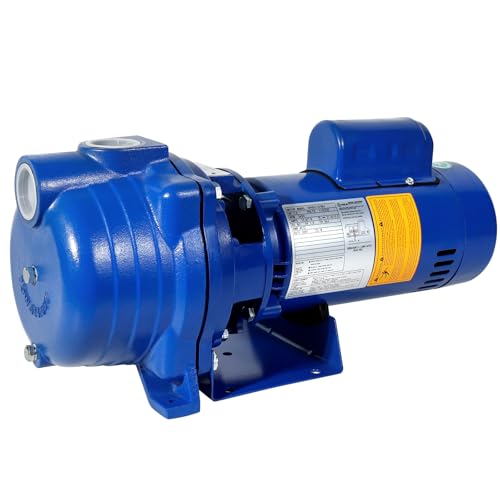
This WASSERMANN pump delivers up to 66 GPM with a maximum head around 126 feet. It supports 115V/230V dual voltage, making installation simple for different power setups. Built with cast iron, it emphasizes durability for ongoing irrigation and water transfer tasks.
Who it’s best for: households or light commercial yards requiring strong flow with flexible voltage. Why selected: robust performance in a dual-voltage package, plus durable construction. Caution: cast-iron bodies may require corrosion considerations in aggressive water environments.
czobloik GT15 Self-Priming
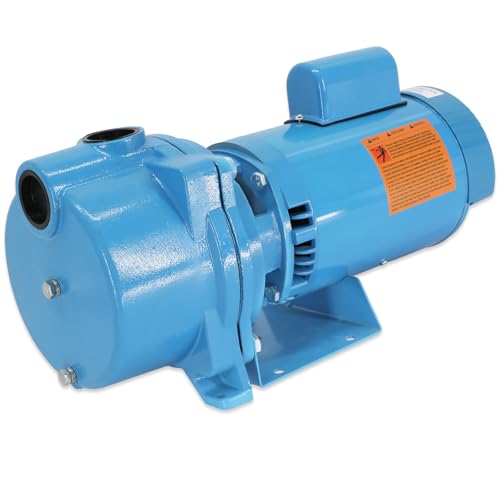
The czobloik GT15 Self-Priming pump uses a 1.5 HP single-phase motor with a cast-iron housing, designed for steady irrigation and water transfer. It is described as easy to connect using standard inlet and outlet pipes, making it versatile for small farms, gardens, or livestock watering systems.
Who it’s best for: users who want straightforward installation and a durable cast-iron build. Why selected: practical GT15 configuration with universal piping compatibility. Caution: verify availability of matching voltage and motor specs for your system.
Flotec FP5172-08 Self Priming

The Flotec FP5172-08 is a self-priming high-capacity 1-1/2 HP sprinkler pump. It is presented as a practical option for residential irrigation and larger garden systems. The listing notes manufacturing in Mexico, which can be a factor for some procurement considerations.
Who it’s best for: homeowners needing a higher-capacity pump for bigger sprinkler setups. Why selected: a recognized residential-grade option with more capacity than smaller 1.0 HP models. Caution: confirm availability of parts and service in your region.
GOULDS GT20 IRRI-Gator Self-Priming

The GT20 is a higher-power option with a 2 HP motor and 230-volt operation. It features built-in overload protection and standard 1-1/2″ NPT connections. Suitable for lawn sprinkling, irrigation, HVAC systems, and water transfer where increased flow is required.
Who it’s best for: buyers needing more capacity for larger irrigation zones or more demanding water transfer. Why selected: higher horsepower and robust construction make it a better fit for heavier workloads. Caution: ensure electrical supply matches 230V requirements and that the pump size aligns with your piping.
Buying Guide: Self-Priming Irrigation Pumps
What to consider when choosing a self-priming irrigation pump:
- Flow rate vs. head: Higher GPM is useful for sprinklers, but check the maximum head to ensure it reaches your farthest points.
- Voltage options: Dual-voltage models offer flexibility. Confirm your site power supply before purchase.
- Material and durability: Cast iron housings are tough but may require protection against corrosion in certain water sources.
- Priming mechanism: Self-priming design reduces manual effort. Look for easy serviceability and maintenance access.
- Intended use: For irrigation, water transfer, or dewatering, match the pump’s horsepower and flow to the task scale.
- Installation considerations: Inlet/outlet sizing (NPT connections) and compatibility with existing piping.
- Warranty and support: Consider brands with accessible parts and service networks for long-term reliability.
Frequently Asked Questions
- What is self-priming and why is it important for irrigation pumps?
Self-priming means the pump can evacuate air and draw water from a source without manual prime, improving reliability for irrigation and water transfer.
- Can these pumps work with a shallow well?
Yes, many self-priming pumps are designed to lift water from shallow wells up to tens of feet, depending on model and head.
- What maintenance is required for cast-iron pumps?
Regular inspection of seals and gaskets, checking for corrosion, and ensuring proper lubrication of moving parts as specified by the manufacturer.
- Should I choose 115V or 230V models?
Choose based on available electrical supply and total load requirements. Dual-voltage models offer flexibility across installations.
- Is a higher horsepower pump always better for irrigation?
Not always. A higher HP pump provides more flow and pressure, but it also consumes more power and may be unnecessary for small irrigation zones.
- What is the recommended maximum suction lift?
Consult the product specs; typical self-priming pumps support suction lifts ranging from about 20 to 25 feet depending on design and friction losses.
Add a Comment