The right second stage propane regulator ensures steady, safe delivery of propane to appliances after the first stage reduces tank pressure. Below are five top-rated options, each with distinct inlet/outlet configurations and adjustable output ranges. This guide highlights what to consider when selecting a regulator, including compatibility with first-stage regulators, connection sizes, and operating pressures.
| Product | Brand | Output | Inlet | Notes |
|---|---|---|---|---|
| Marshall 1652-CFF | MEGR-1652-CFF | 11″ WC | 1/2″ x 3/4″ | Backmount, 9–13″ WC adjustable |
| Marshall 1622-BCF | MEGR-1622-BCF | 11″ WC | 1/2″ x 1/2″ | Straight through, 9–13″ WC adjustable |
| Emerson-Fisher R622-DFF | Emerson-Fisher LP-Gas Equipment | 9–13″ WC | 3/4″ x 3/4″ | High-visibility end connections |
| Marshall 1642-DFF | MEGR-1642-DFF | 11″ WC | 3/4″ Side Output | Side outlet, 9–13″ WC adjustable |
| Emerson-Fisher R632A-CFF | Emerson-Fisher LP-Gas Equipment | 9–13″ WC | 1/4″ x 3/4″ | Integral two-stage option |
Marshall 1652-CFF Second Stage Propane Regulator

The Marshall 1652-CFF delivers an 11″ water column output with a 1/2″ input and 3/4″ output, designed for backmount installation. It requires a 10 PSI first-stage input and is adjustable from 9″ to 13″ water column. This configuration makes it suitable for propane systems where space constraints favor a backmount setup and where a moderate 10 PSI upstream pressure is standard.
Marshall 1622-BCF Second Stage Propane Regulator

This model offers an 11″ water column output with a 1/2″ input and 1/2″ output, featuring a straight-through design for easier piping. Like other good second-stage regulators, it operates with a 10 PSI first-stage input and provides an adjustable 9–13″ water column output, making it a versatile option for compact propane systems seeking simple alignment with existing first-stage equipment.
Emerson-Fisher LP-Gas Equipment R622-DFF
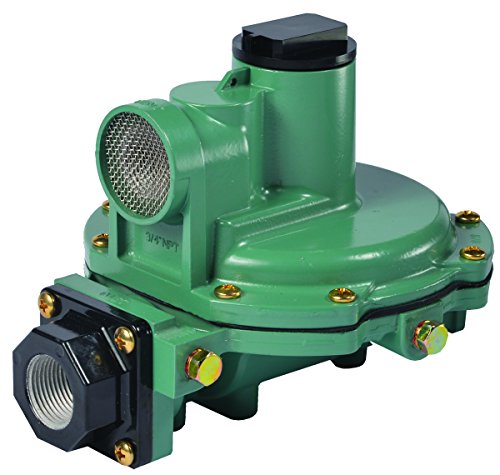
Emerson-Fisher’s R622-DFF is a 2nd stage regulator offering 9–13″ WC output with a 3/4″ x 3/4″ FNPT inlet/outlet. It supports up to 10 psi inlet pressure and a higher emergency inlet of 50 psi, providing robust compatibility for systems with fluctuating tank pressures. This unit emphasizes durable connections and dependable regulation across typical LP-gas appliances in residential applications.
Marshall 1642-DFF Generator Propane Regulator

The Marshall 1642-DFF is a generator-optimized 11″ WC regulator with a 3/4″ side output. It requires a 10 PSI first-stage input and provides an adjustable 9–13″ water column output, suitable for gensets and auxiliary propane setups where a side outlet facilitates routed connections to external equipment.
Emerson-Fisher R622-CFF 2nd Stage Regulator
The R622-CFF model is a 1/2″ x 3/4″ FNPT inlet/outlet regulator with a 9–13″ water column adjustment. It supports up to 10 psi inlet pressure and 50 psi emergency inlet pressure, delivering reliable regulation for varied LP-gas appliances while maintaining compact size for tighter installations.
Emerson-Fisher R632A-CFF Integral 2-Stage Regulator

The R632A-CFF provides an integral two-stage solution with a 1/4″ x 3/4″ FNPT inlet/outlet. It supports a broad maximum inlet pressure of 250 psig and regulates to 9–13″ WC. This option is suited for setups requiring a compact two-stage configuration and precise downstream regulation for multiple appliances.
Buying Guide
Key considerations when selecting a second stage propane regulator include compatibility with the first stage, inlet and outlet connection sizes, and the operating pressure range. If your system uses a 10 PSI first-stage regulator, ensure the second stage can be fed with sufficient upstream pressure and can deliver a steady 9–13″ WC range. Inlet/outlet configurations matter for pipe routing and space constraints: backmount, straight-through, or side-output designs each influence installation. Durability and weather resistance matter for outdoor use, so review material construction and mounting options. For multi-appliance setups, consider regulators with flexible outlet styles and, if needed, integral two-stage options for tighter control. Finally, verify that the regulator’s emergency inlet pressure rating aligns with your safety requirements and tank specifications to prevent overpressure scenarios.
If you prioritise ease of installation, choose models with straightforward inlet/outlet sizes and clear adjustment ranges. For reliability in fluctuating ambient conditions, look for regulators with robust seals and corrosion-resistant materials. When in doubt, match the regulator’s specifications to your existing first-stage unit and the specific appliances it serves, ensuring a cohesive and compliant LP-gas system.
Add a Comment