Looking for a second-hand laser engraving machine that still delivers solid performance? This guide highlights five suitable options, focusing on machines that balance price, safety, and capability for hobbyists, crafters, and small-batch makers. Each entry explains who it’s best for, why it stands out, and one practical limitation to consider when buying used. The top picks aim to help you compare features quickly and decide which model fits your projects, from wood signs to coated metals.
Buyer snapshot table (selected products):
| Product | Best for | Key advantage |
|---|---|---|
| BlazeX M3 10W | Beginners and hobbyists | Ultra-precision and all-in-one starter kit |
| Twotrees TTS-55 Pro | DIY enthusiasts and small shops | Strong power with air assist support |
| ACMER S1 (6000mW) | Detailed engraving on many materials | Free AcmerTool software included |
| Algolaser 10W | Users needing an easy start with a touchscreen | 3.5″ smart touchscreen and integrated OS |
| Woxcker L2 Flex 5W | Safe enclosure-focused beginners | 360° enclosure and high precision |
BlazeX M3 10W Laser Engraver Machine
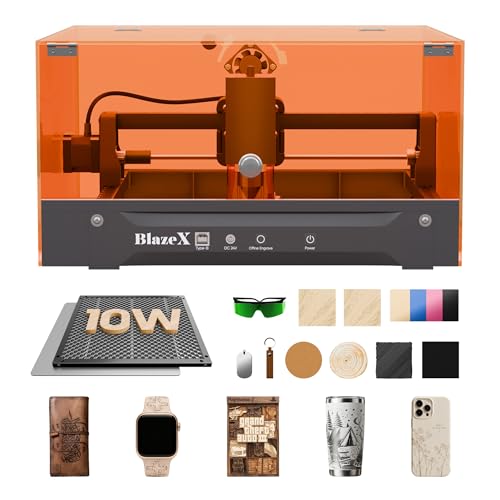
The BlazeX M3 10W is designed for desktop DIYers and small-batch makers who need fine detail. It offers 0.01mm engraving precision on a wide range of materials, including wood, leather, glass, and coated metal. This model combines engraving and cutting capabilities, making it a versatile starting point for personalization projects, jewelry, and small runs. The included enclosure and honeycomb bed support safer operation and cleaner results. Best for beginners who want a ready-to-use bundle with starter materials.
Who it’s best for: beginners and hobbyists seeking an all-in-one kit that reduces setup steps. Why selected: its ultra-fine precision and comprehensive starter kit simplify first projects and learning. Limitation: as a compact system, very thick or highly reflective metals may require additional setup or care to optimize results.
Twotrees TTS-55 Pro Laser Engraver

The TTS-55 Pro offers upgraded power (5500 mW) and air-assisted cutting with a dedicated nozzle and safety features. This makes it well-suited for hobbyists who want deeper cuts and cleaner engravings on wood, leather, acrylic, and metals. Its short focal length (23mm) and LD+FAC+C-Lens compression technology help achieve sharp details. Best for: users needing stronger cutting performance in a compact 300×300 mm work area. Caution: ensure proper air assist integration for maximum results and safety.
ACMER S1 Laser Engraver (6000mW)

The ACMER S1 with 6000 mW delivers high-precision engraving and cutting, supporting a wide material range. It ships with AcmerTool software, easing setup for users who prefer a dedicated workflow and offering compatibility with other popular tools. Best for: makers who want a fast, precise machine with an included software ecosystem. Better for: users who value software support and straightforward operation. Limitation: higher power devices may require careful laser safety practices and setup accuracy.
AlgoLaser 10W Laser Engraver

The AlgoLaser 10W features a 3.5-inch touchscreen with AlgoOS, designed to simplify operation for beginners and casual users. With a 10W laser and a 3.5″ interface, it supports quick previews and direct engraving; it’s compatible with wood, coated metal, leather, acrylic, glass, and more. Best for: buyers who want an integrated, software-driven experience with minimal setup. Caution: the built-in system may limit advanced users who prefer external software controls.
Woxcker L2 Flex 5W Enclosed Laser Engraver

The Woxcker L2 Flex combines a 360° enclosure with a 5W laser for safer operation and precise engraving. It targets beginners with strong safety features and good material compatibility, including wood, acrylic, leather, glass, and coated metals. Best for: beginners who want a safe, contained workspace. Limitation: the enclosure may add size and weight, which could impact placement in tight workspaces.
Buying Guide: Key Considerations for Second-Hand Laser Engraving Machines
- Intended use: Identify your main materials (wood, acrylic, leather, metal). Some models excel at cutting, others at detailed engraving.
- Power and precision: Higher wattage improves cutting depth; tighter engraving accuracy matters for fine details.
- Safety features: Enclosures, interlocks, and proper ventilation reduce risk. A closed design helps with fumes and dust control.
- Software compatibility: Look for models that come with or support familiar software, including free options, to minimize setup friction.
- Work area and clearance: Confirm the bed size fits your typical projects and that the machine can accommodate thicker materials if needed.
- Upgrade paths: Some machines support air assist, upgraded lenses, or external software; consider future-proofing.
- Maintenance and parts: Availability of spare parts, nozzles, lenses, and fans matters for long-term use, especially with second-hand units.
What to inspect before buying used
- Check the laser module for wear, focusing, and visible damage.
- Inspect the rails for smooth movement and signs of wear or binding.
- Test the safety interlocks, enclosure seals, and power supply stability.
- Ask for operating history, maintenance records, and any recent replacements.
- Confirm software is accessible and compatible with your computer or tablet.
Usage scenarios and recommendations
- Start small with BlazeX M3 for beginner-friendly projects that require high detail and a complete kit.
- Choose Twotrees TTS-55 Pro if you expect deeper cuts and higher precision on a moderate work area.
- ACMER S1 suits users who prioritize software flexibility and fast, detailed engraving across multiple materials.
- Algolaser 10W is ideal for those who want an intuitive touchscreen workflow and quick-start capability.
- Woxcker L2 Flex is a solid safety-first option for households or small workshops that emphasize enclosure safety.
FAQ
- Is a second-hand laser engraver reliable for beginners? Yes, with proper inspection, a complete kit, and safety features, a used entry-level model can be suitable for beginners.
- What safety features matter most? An enclosure, interlock, proper ventilation, and eye protection are essential.
- Can I engrave metal with these machines? Some can engrave coated metal and non-ferrous alloys; always verify material compatibility from the product features.
- Do these units require external software? Many come with bundled software or support for popular tools, but check compatibility with your preferred workflow.
- Is a higher wattage always better for cutting? Higher wattage improves cutting depth and speed on thicker materials, but it can increase safety considerations and cost.
- Should I buy new or used? Used units advertise value for money but require careful inspection of the laser, electronics, and mechanical components; weigh this against new warranties and support.
Add a Comment