Direct answer: Round-hole perforated sheets are versatile for ventilation, filtration, decoration, and structural lightweighting. The best options for home workshops are corrosion-resistant stainless steel and lightweight aluminum, while heavy-duty stainless steel suits outdoor or food-safe environments. The following picks span aluminum and stainless steel with varying hole sizes and sheet dimensions to fit different projects and budgets.
Who this is for:
– Home DIYers and hobbyists seeking lightweight, corrosion-resistant sheets for decor, grills, or vent covers.
– Makers and builders needing durable, rust-resistant panels for outdoor installations.
– Small businesses or contractors requiring versatile metal mesh for screens, barriers, and filtration.
Below is a quick overview of five suitable choices, highlighting who benefits most and why they were selected.
| Product | Material | Hole Size | Sheet Size | |
|---|---|---|---|---|
| Online Metals 3003 Aluminum Perforated Sheet | Aluminum, H14 | 0.25″ (6.35 mm) | 36″ x 36″ | Lightweight, corrosion-resistant panels for indoor use and decorative applications |
| FengYoo Perforated Stainless Sheet 11.8″ x 5.9″ | 304 Stainless Steel | 0.06″ (~1.5 mm) | 11.8″ x 5.9″ | Small, precise holes for airflow with outdoor durability |
| FengYoo 36″ x 18″ Round Holes 1/2″ Perforated Sheet | 304 Stainless Steel | 0.5″ (12 mm) | 36″ x 18″ | Decorative, grill, and screen applications with high opening rate |
| PATIKIL 11.8″ x 5.9″ Perforated Sheet 0.3″ Hole | 304 Stainless Steel | 0.3″ (8 mm) | 11.8″ x 5.9″ | Compact vent screens and ventilation grills with good corrosion resistance |
| PATIKIL 15.7″ x 7.9″ Perforated Sheet 0.06″ Hole | 304 Stainless Steel | 0.06″ (1.5 mm) | 15.7″ x 7.9″ | Moderate-size panels for airflow, filtration, and decorative panels |
Online Metals 3003 Aluminum Perforated Sheet

Material: 3003 Aluminum, H14 temper. Hole size: 0.25″ (6.35 mm). Thickness: 0.063″ (14 gauge). Dimensions: 36″ x 36″. Open area: 40%. Stagger: 0.375″.
Best for: Lightweight indoor panels where corrosion resistance and formability are important. This is a good choice for decorative panels, interior vent covers, and lightweight dividers in workshops or studios.
Why selected: Combines high workability with good corrosion resistance and a large 40% open area for airflow. The staggered hole pattern helps balance strength and openness. Caution: Aluminum, while rust-resistant, is softer than stainless steel and may scratch more easily in high-traffic installations.
FengYoo Perforated Metal Sheets—304 Stainless, 11.8 x 5.9

Material: 304 stainless steel. Hole diameter: 0.06″ (about 1.5 mm). Hole center spacing: 3 mm. Dimensions: 11.8″ x 5.9″. Finish: Polished surface. Open pattern: Displaced triangular, fully perforated.
Best for: Small panels where precise airflow and corrosion resistance are required, such as cabinetry grills, decorative screens, or vent covers in humid environments.
Why selected: Stainless steel resists rust, making it suitable for kitchens, outdoor fixtures, or garage vents. Limitation: The small hole size may restrict airflow for high-volume ventilation compared to larger-hole options.
FengYoo 36″ x 18″ Perforated Sheet 1/2″ Holes

Material: 304 stainless steel. Hole diameter: 1/2″ (12 mm). Hole spacing: 4 mm, staggered arrangement. Opening rate: 51%. Size: 36″ x 18″. Finish: Polished, may require removing a protective film.
Best for: Decorative panels, grill covers, and speaker grilles where a higher opening percentage improves airflow and visibility.
Why selected: Large holes provide substantial airflow while maintaining structural integrity. Limitation: Edge sharpness can occur if not handled carefully during cutting or shaping.
PATIKIL 11.8″ x 5.9″ 0.3″ Hole Perforated Sheet

Material: 304 stainless steel. Hole diameter: 0.3″ (8 mm). Hole spacing: 14 mm. Thickness: 0.8 mm (20 GA). Size: 11.8″ x 5.9″. Finish: Polished surface.
Best for: Ventilation grills and decorative screens where moderate hole size supports airflow and visual openness.
Why selected: Combines good rust resistance with a modest hole size for balanced airflow. Limitation: Smaller sheets may require joining for larger installations.
PATIKIL 15.7″ x 7.9″ Perforated Sheet 0.06″ Holes
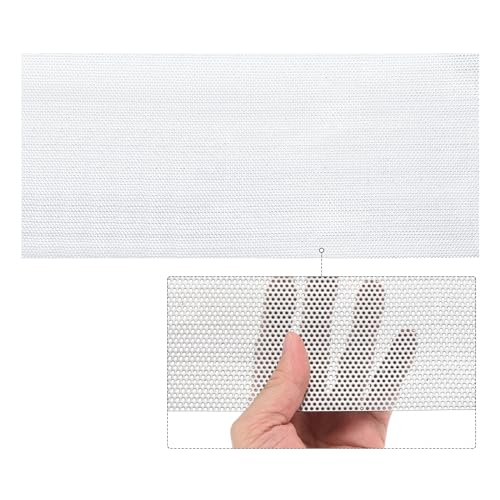
Material: 304 stainless steel. Hole diameter: 0.06″ (1.5 mm). Hole spacing: 3 mm. Size: 15.7″ x 7.9″. Thickness: 1 mm (19 GA). Finish: Polished surface.
Best for: Larger panels where fine perforation is needed for filtration, aesthetics, or light diffusion.
Why selected: Offers a balance of strength and airflow with corrosion resistance suitable for indoor/outdoor use. Limitation: Very fine holes may clog with dust in dusty environments; periodic cleaning recommended.
Buying Guide
Key considerations when choosing round-hole perforated sheets:
- Material choice: Stainless steel (304) provides corrosion resistance for outdoor or high-humidity settings. Aluminum offers lighter weight and good corrosion resistance for indoor use. Steel options are stronger but heavier and may require coatings for outdoor exposure.
- Hole size and opening percentage: Larger holes increase airflow but reduce surface area; smaller holes improve filtration but can restrict airflow. Select based on ventilation needs and decorative goals.
- Sheet dimensions: Match sheet size to your project. For large panels, consider full-size sheets or plan for joining multiple sheets with seams that minimize visual disruption.
- Edge handling and fabrication: Expect sharp edges on cut pieces. Use appropriate protective measures and finishing steps when cutting or mounting.
- Durability and cleaning: Stainless steel resists rust, but regular cleaning helps maintain appearance in damp environments. Aluminum is easier to machine but can scratch more easily.
- Finish and appearance: A polished stainless surface looks decorative and modern; matte or unpolished finishes can hide fingerprints and scratches in high-traffic areas.
Frequently Asked Questions
- What is round-hole perforated sheet best used for?
– Ventilation, filtration, decorative panels, screens, and lightweight structural elements. - Is stainless steel better than aluminum for outdoor projects?
– Yes, stainless steel resists rust more effectively in outdoor or humid conditions; aluminum is lighter and easier to work with indoors. - How do I choose hole size?
– Choose larger holes for higher airflow and visibility; smaller holes for stronger filtration and reduced visual openness. - Can these sheets be cut or formed at home?
– Yes, but use proper tools and safety practices. Some finishes may require post-cut edge treatment. - Are there safety concerns with sharp edges?
– Yes. Handle with care; wear gloves and seal or deburr edges as needed after cutting. - What maintenance do they require?
– Stainless steel sheets require occasional cleaning to prevent staining; aluminum may need gentle cleaning to avoid surface scratches.
Add a Comment