If you’re optimizing a reverse osmosis (RO) setup, a reliable storage tank is essential for steady, on-demand filtered water. This guide highlights five well-rounded options, each best for different households and RO systems. From compact 4-gallon tanks to larger 11- and 14-gallon models, you’ll find choices suited for under-sink installations, space-conscious kitchens, and long-term durability. Use this overview to pick a tank that matches your system’s capacity needs and your installation constraints.
| Product | Capacity | Best For | Notes |
|---|---|---|---|
| APEC Water Tank-4 | 4 gallons stored, ~3.2 gallons usable | Small under-sink RO systems, tight spaces | Pre-pressurized; durable bladder |
| TankRo RO132-TNK | 4 gallons stored, ~3.2 gallons usable | Compact setups seeking steel construction | Deep-drawn steel domes, compact under-sink fit |
| iSpring T32M | 4 gallons stored, ~3.2 gallons usable | Premium materials, NSF/ANSI readiness | Food-grade diaphragm, post-cure procedures |
| APEC TANK-14 | 14 gallons stored, ~10.7 gallons usable | Higher daily water demand | Pre-pressurized, high-capacity bladder |
| tankRo 6 Gallon Tank | 6 gallons stored | Mid-size installations needing more volume | Includes free 1/4″ ball valve |
APEC Water Systems Tank-4 4 Gallon Tank

Best for small under-sink RO systems and compact kitchens. This pre-pressurized tank holds up to 3.2 gallons of usable water and is designed for vertical or horizontal discharge with a stand. The food-grade bladder and certification emphasize safety and durability. Choose this if you need a compact, reliable option that integrates smoothly into space-constrained RO setups.
Best for: small households or apartments with limited cabinet space. Limitation: the 4-gallon size may require more frequent refills for higher daily usage.
TankRo RO132-TNK 4 Gallon Tank

Best for compact RO setups requiring durable steel construction. This 4-gallon tank stores up to 3.2 gallons of water and is designed to fit under most sinks. Its deep-drawn steel domes and precise welding contribute to long-term stability in a residential RO system. Choose this if you want a robust, space-efficient option.
Best for: installations needing rigid steel durability. Caution: slightly heavier than plastic competitors, which may affect mounting in very tight spaces.
iSpring T32M Pressurized Tank
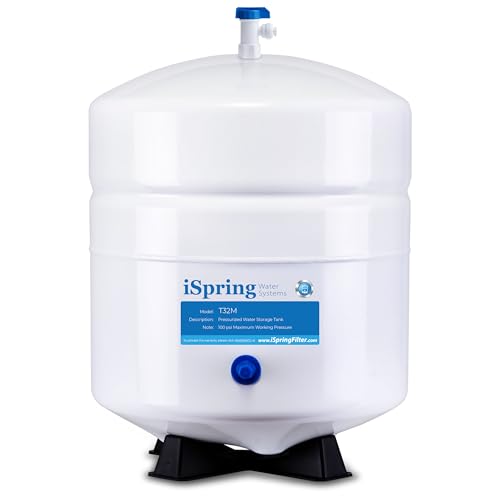
Best for premium RO systems that emphasize water quality and tested reliability. The 4-gallon tank holds about 3.2 gallons and uses a food-grade butyl diaphragm with post-cure treatment for tasteless, odorless water. It is NSF/ANSI tested and includes a 1/4″ tank valve. Consider this if you value proven materials and third-party testing.
Best for: households prioritizing material quality and regulatory standards. Limitation: premium build may come at a higher upfront cost relative to basic tanks.
APEC TANK-14 14 Gallon Tank

Best for high-demand households or RO systems with large storage needs. The 14-gallon pre-pressurized tank stores up to about 10.7 gallons and supports vertical or horizontal discharge with a stand. A high-grade bladder reinforces safety and durability for continuous use. Choose this when daily filtered-water demand is substantial.
Best for: homes with multi-person use, offices, or guests requiring steady water flow. Limitation: larger footprint may not suit very tight cabinetry.
tankRO – 6 Gallon RO Tank

Best for mid-size RO setups that need extra storage without stepping up to 11 gallons. The 6-gallon tank includes a free 1/4″ ball valve for easy installation, and a 100% food-grade build with quick-connect options. This is a solid middle-ground choice when you want more capacity than 4 gallons but less than larger models.
Better for: households balancing space with higher daily usage. Caution: slightly heavier than small plastic models, so plan for secure mounting if under-cabinet space is limited.
iSpring T11M 11 Gallon Tank
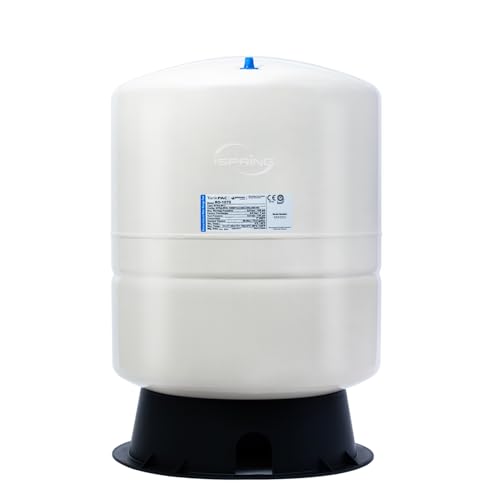
Best for households with higher daily water needs and a desire for a larger buffer. This 11-gallon tank stores up to about 8.2 gallons, designed to work with RO systems or other filtration setups. It uses FDA-grade liner, high-grade diaphragm, and stainless steel connections for safety and reliability. Choose this if you want a robust, high-capacity storage solution.
Best for: larger families or homes with frequent peak water use. Limitation: larger footprint may limit placement options in compact kitchens.
Neo-Pure Storage Tank – 3.2 Gallon

Best for under-sink RO systems needing an economical, space-saving option. The 3.2-gallon nominal capacity delivers about 2.0–2.3 usable gallons depending on system pressure. Powder-coated steel offers moisture and corrosion protection, maintaining storage integrity over time.
Better for: smaller kitchens or apartments where every inch counts. Limitation: lower usable capacity than larger tanks may require more frequent cycling.
Neo-Pure 4.5 Gallon Tank

Best for users who want a combination of durability and a mid-size footprint. This white powder-coated steel tank features a 1/4″ connection, high-quality liner, and a robust chlorobutyl diaphragm. It is designed to resist moisture and corrosion while delivering reliable water storage for home filtration systems.
Better for: mid-sized RO installations seeking a balance between capacity and cabinet fit. Limitation: heavier and bulkier than 3–4 gallon tanks for very tight spaces.
Buying Guide: Key Considerations For Choosing An RO Storage Tank
What capacity do you need? Tanks range from about 3.2 gallons usable up to 10.7 gallons usable. Consider daily water usage for your household and the storage buffer you prefer during peak demand.
Material matters. Tanks use plastic bladders or diaphragms inside steel shells. Plastic tanks are lighter and often cheaper; steel tanks offer durability and corrosion resistance. NSF/ANSI testing is a helpful signal for safety and quality.
Size and installation. Under-sink spaces vary. Measure cabinet depth and height to ensure the tank fits with valves and tubing. Some tanks are designed for vertical or horizontal discharge; confirm compatibility with your existing RO setup.
Valve and fittings. A included ball valve simplifies installation. Check valve thread size (commonly 1/4″) and compatibility with your RO system’s tubing.
Maintenance and longevity. Look for durable diaphragms (chlorobutyl) and liners, as well as a known warranty period. Regular checking of connections helps prevent leaks and pressure loss.
Frequently Asked Questions
- What is the difference between 3.2 and 4 gallons usable capacity? Usable capacity is the water you can draw from the tank, typically slightly less than the total stored volume due to air pressure and system design.
- Do tanks require professional installation? Many RO tanks are compatible with standard under-sink hardware and can be installed by a handy homeowner, but professional service is advised for complex upgrades or if piping needs modification.
- Why is a pre-pressurized tank recommended? Pre-pressurized tanks maintain consistent water flow, reduce pump cycling, and help prevent waterlogging in the bladder or diaphragm.
- Are steel tanks better than plastic ones? Steel tanks offer better durability and corrosion resistance, but are heavier. Plastic tanks are lighter and often less expensive but may be less durable in some environments.
- What should I check before buying? Confirm capacity needs, space constraints, valve sizes, and compatibility with your RO system’s tubing and fittings.
Add a Comment