Best refrigerated air dryer systems deliver dry, oil-free air for tools, CNC machines, and industrial setups. This guide highlights five solid options that balance capacity, reliability, and ease of use. The top picks are suited for workshops, garages, and small-to-large industrial environments, where moisture and oil can affect performance. Read on to find the right fit for your compressor size and airflow needs.
| Product | Best For | Approximate Capacity |
|---|---|---|
| HPDAVV 35 CFM Refrigerated Air Dryer | Mid-size workshop or garage with 7.5–10 HP compressors | 35 CFM |
| VEVOR 85 CFM Refrigerated Air Dryer | Industrial applications with 15–20 HP compressors | 85 CFM |
| Schulz 35 CFM Refrigerated Air Dryer (Stand Alone) | Standalone dry air in smaller systems | 35 CFM |
| HPDAVV 70 CFM Heavy Duty Refrigerated Air Dryer | Challenging environments for 15–20 HP rotary screw compressors | 70 CFM |
| VEVOR 125 CFM Refrigerated Air Dryer | Large industrial setups with 20–30 HP compressors | 125 CFM |
HPDAVV 35 CFM Refrigerated Air Dryer
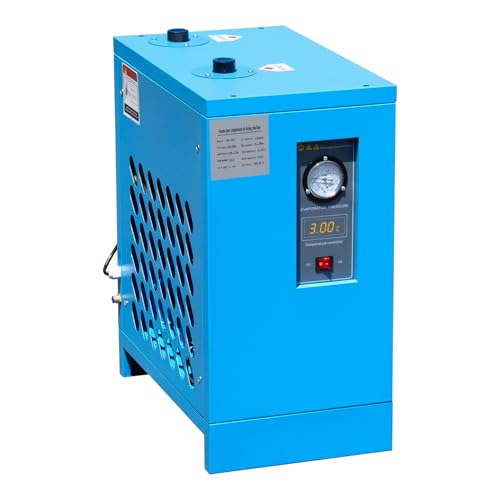
Features: Designed for 7.5–10 HP compressors, this industrial-grade dryer removes moisture, oil aerosols, and contaminants from compressed air, ensuring clean, dry airflow for pneumatic tools, spray painting, and CNC machines. Uses an energy-efficient R134a cooling system (0.58 KW) to maintain stable temperatures and prevent moisture buildup in busy workshops or garages. Delivers 35 CFM of dry air for reliable moisture control in automotive, manufacturing, and DIY settings.
Best for: Small to mid-sized workshops needing dependable moisture control for a range of pneumatic tasks. Limitations: May be less ideal for extremely high-demand production lines without parallel drying capacity.
VEVOR 85 CFM Refrigerated Air Dryer

Features: Designed for 15–20 HP compressors with a 110–120V, 60Hz supply. Handles up to 85 CFM and uses R134a refrigerant with a color control panel and automatic drainage. Dew point ranges between 35.6–50°F, suitable for industrial moisture removal and oil/impurity reduction. The unit emphasizes efficient heat exchange and rapid moisture condensation for reliable moisture removal in larger facilities.
Best for: Industrial environments requiring higher airflow and automatic drainage. Limitation: Higher initial footprint and power needs compared to smaller units.
Schulz 35 CFM Refrigerated Air Dryer (Stand Alone)

Features: New 35 CFM refrigerated dryer with industrial water separator and oil coalescing filter. This stand-alone unit excludes piping. Dew point around 41°F, 200 PSI max inlet. For best results, ensure a pre-filter is used before the dryer to remove water and oil upstream. Suitable for setups where a complete kit is preferred for moisture and oil-free air.
Best for: Stand-alone installations requiring integrated filtration. Limitation: Requires pre-filtering for warranty and optimal performance.
HPDAVV 70 CFM Heavy Duty Refrigerated Air Dryer

Features: High-capacity unit designed for 15–20 HP rotary screw compressors, using a robust R134a refrigeration system (0.75 KW). Handles up to 70 CFM with heavy-duty construction and a 1″ NPT port for easy integration. Built with corrosion-resistant materials for long-term durability in factories and CNC environments.
Best for: Industrial settings needing durable, high-capacity drying. Limitation: Higher power requirements and larger footprint than compact models.
VEVOR 125 CFM Refrigerated Air Dryer
Features: 110–120V, 60Hz, 125 CFM flow rate for 20–30 HP compressors. Dew point 35.6–50°F, with RC 1″ connection and automatic drainage. A refrigeration compressor and large evaporator promote rapid moisture removal, delivering reliable, energy-efficient drying for large-scale industrial applications.
Best for: Large facilities and heavy production lines needing substantial moisture control. Limitation: More complex installation and higher energy use than smaller units.
Buying Guide: Key Considerations For Refrigerated Air Dryers
- Airflow requirements: Match CFM capacity to your compressor output and peak demands. Oversizing is safer, but may cost more upfront.
- Dew point targets: Lower dew points indicate drier air. Consider dew-point specifications based on downstream tools and processes.
- Voltage and power: Ensure the unit matches available electrical service (115V vs 230V) and does not overextend circuit capacity.
- Filtration integration: Some models require separate pre-filters or water separators; others include complete kits. Plan for upstream filtration.
- Connections and installation: Check inlet/outlet sizes (NPT/RC) and required piping; confirm space for mounting and maintenance access.
- Maintenance needs: Look for automatic drainage and accessible service ports to reduce downtime and complexity.
- Environment and durability: Choose models with corrosion-resistant construction for workshops and factories.
Frequently Asked Questions
- What is a refrigerated air dryer? A refrigerated air dryer cools compressed air to condense and remove moisture, oil, and contaminants before use in tools and equipment.
- Why choose a higher CFM dryer? Higher CFM handles more air flow and peak demand, reducing moisture buildup in larger systems.
- Do I need an automatic drain? Automatic drainage helps prevent moisture buildup and reduces manual maintenance in busy environments.
- What is a typical dew point for industrial dryers? Many industrial dryers target dew points around 35–50°F, which is suitable for common pneumatic tools and CNC applications.
- Is pre-filtering required? Some units require pre-filters to protect the dryer and maintain warranty coverage; always follow manufacturer guidelines.
Add a Comment