When you need reliable backup power without noise or emissions, a quiet natural gas generator is the right choice. This guide highlights five top options that balance low noise, clean power, and multiple fuel compatibility. Each model is suitable for different homes or usage scenarios, from whole-house backup to RV use. The following products are presented with practical, buyer-focused notes to help you decide which works best for you.
| Product | Fuel Options | Peak Watts | Run Watts | Best For |
|---|---|---|---|---|
| Westinghouse iGen12000TFc | Gas/Propane/Natural Gas | 12,000 | 9,000 | Whole-home backup for larger houses |
| Westinghouse iGen8200TFc | Gas/Propane/Natural Gas | 8,200 | 6,600 | Main backup for mid-size homes |
| Gidrox 11,000W Tri-Fuel | Gas/Propane/Natural Gas | 11,000 | 7,000+* | Extended outages, RV, or jobsite backup |
| Westinghouse 14,500 Peak | Gas/Propane/Natural Gas | 14,500 | 11,500 | Larger homes or multi-appliance support |
| WEN TF1300iX | Gas/Propane/Natural Gas | 13,000 | 10,500 | Transfer switch setups and emergencies |
Westinghouse iGen12000TFc Tri-Fuel Portable Inverter Generator

The Westinghouse iGen12000TFc is a compact, tri-fuel inverter designed for whole-home backup. It supports gas, propane, and natural gas with a 50A outlet for high-demand loads. Best for: households needing substantial backup power with sensitive electronics protected by low total harmonic distortion (THD ≤ 3%). The unit runs up to 19 hours at 25% load on a large 7.9-gallon tank. A CO sensor and low-oil shutdown add safety. Recommendation note: choose this if you require robust output with flexibility across fuel sources. Limitation: higher initial cost compared to single-fuel models.
Westinghouse iGen8200TFc Tri-Fuel Portable Inverter Generator

The iGen8200TFc offers inverter benefits with home backup power, built-in transfer-switch readiness, and a 50A outlet. It delivers 6,600 running watts on gasoline and similar performance on propane and natural gas. Best for: smaller homes or apartments needing reliable back-up with quieter operation (about 60 dBA at 25% load). The product is designed to reduce fuel use through inverter speed control. Caution: ensure your transfer switch compatibility and exhaust area meet local regulations.
Gidrox 11,000W Tri-Fuel Inverter Generator

The Gidrox tri-fuel inverter delivers 11,000W peak power with pure sine wave output under 3% THD, making it safe for sensitive electronics. It includes an 8.7-gallon tank for extended runtimes and a CO sensor for continuous monitoring. Best for: users needing long runtime and multi-fuel flexibility for RVs or home backup. Choose this if you want quick fuel-switching with an included NG/LPG hose kit. Limitation: noise level sits in the mid-60 dB range; consider a sheltered location for very quiet operation.
Westinghouse 14,500 Peak Watt Tri-Fuel Generator
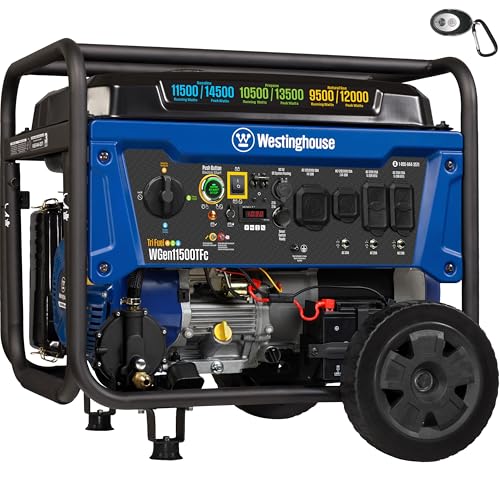
This model provides 11,500 running watts on gasoline and up to 14,500 peak watts, with multiple outlets including L14-30R and RV-ready receptacles. It’s designed for larger homes or properties with higher power needs. Best for: households that require substantial power with robust transfer-switch capabilities. Caution: larger footprint and heavier weight; ensure you have suitable space in a garage or shed.
WEN 13,000-Watt Tri-Fuel Inverter Generator

The WEN TF1300iX allows switching between gasoline, propane, and natural gas with a 13,000 surge and 10,500 running watts. It is bonded-neutral for clean transfer switch applications and includes a CO watchdog for safety. Best for: users needing reliable transfer-switch-ready power with mobile flexibility. Limitation: as with many tri-fuel units, the weight and size may require dedicated storage and handling.
Generac 12,500 Starting Watt Tri-Fuel Portable Generator
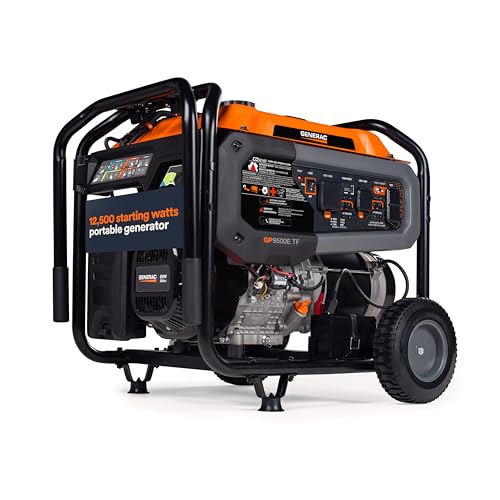
The Generac GP9500/GP8000E series combines electric start and a tri-fuel design with a rugged protection shell. It’s positioned for home backup, job sites, or RV use with extended runtime and a 50-state compliant framework. Best for: users who value easy start and robust outdoor performance. Caution: Generac’s design emphasizes durability, which may sacrifice portability compared to smaller inverter models.
Buying Guide
Key considerations for choosing a quiet natural gas generator:
- Fuel flexibility vs. simplicity: Do you need tri-fuel versatility or a single-fuel model that’s lighter and simpler to operate?
- Power needs: List essential loads (refrigerator, sump pump, HVAC, lighting). Match peak and running watts to ensure continuous operation during outages.
- Noise and emissions: Look for inverter technology with low THD and dBA ratings. Consider enclosure design and exhaust routing for neighbor-friendly operation.
- Fuel availability and cost: Natural gas provides constant supply in many urban areas but requires proper connection and pressure checks; propane and gasoline offer portability but require refueling planning.
- Transfer switch compatibility: Ensure the generator supports your transfer switch or interlock kit so you can safely connect to home circuits during outages.
- Run time and tank size: Larger tanks extend runtime but add weight and space requirements. Consider the typical outage duration in your region.
- Maintenance and safety features: Look for CO sensors, low oil shutdown, and automatic shutdown for elevated CO levels. Regular maintenance schedules help preserve reliability.
Frequently Asked Questions
- What does THD mean and why is it important?
THD stands for total harmonic distortion. A lower THD (≤ 3%) indicates cleaner power safe for sensitive electronics like computers and medical devices.
- Is a tri-fuel generator worth it for home backup?
Tri-fuel offers fuel flexibility during outages when one fuel source is unavailable. It is beneficial for users needing versatile power in diverse situations.
- How loud are these generators?
Most inverter models target around 60–65 dBA at quarter load, which is quieter than many traditional open-frame units. Real-world noise varies by enclosure, load, and distance.
- Do I need a transfer switch with a tri-fuel inverter?
For whole-home backup, a transfer switch or interlock kit is highly recommended to safely isolate from utility power during outages.
- What maintenance helps extend run time?
Regular oil checks, air filter cleaning/replacement, spark plug maintenance, and battery checks for electric start models contribute to reliability.
- Which model is best for a large home?
That depends on your total load. Models like the 14,500 peak watt tri-fuel are well-suited for larger homes with multiple simultaneous loads, while 8,200–12,000 watt units fit mid-size homes with essential backups.
Add a Comment