When selecting an explosion-proof pressure transmitter, durability, accuracy, and suitability for hazardous locations matter most. This guide highlights five top options designed for harsh industrial settings, helping buyers choose by application, material, and performance. The recommended models cover a range of pressures, construction materials, and digital calibration features, making it easier to identify the right transmitter for gases, liquids, and challenging process media. Each product is explained with who it’s best for and practical considerations to avoid surprises on the job.
Buyer notes: Each top pick is suited to specific scenarios—whether you need extreme ruggedness, high accuracy, or compatibility with diverse media. Use the Buying Guide and FAQs to compare key factors such as pressure range, materials, calibration method, and hazardous-location certifications.
Product Comparison Snapshot
| Product | Pressure Range | Best For | Material | Key Benefit |
|---|---|---|---|---|
| Explosion-Proof Pressure Transmitter, Vikye | 0~1.6 MPa | Harsh environments requiring full digital calibration | Stainless steel / die-cast aluminum | Full digital calibration with low drift |
| Explosion-Proof Pressure Transmitter, NOSHOK 1 | 0–5000 psig | Hazardous locations with high-pressure needs | 316 stainless steel / Elgiloy | No internal O-rings or seals |
| WinSMART LXP Explosion-Proof | -14.5 to 1000 PSI | Liquids, gases and multiple media | Stainless steel | High-precision microprocessor-based |
| Explosion-Proof Pressure Transmitter, NOSHOK 2 | 0–1000 psi | General hazardous-location monitoring | 316 stainless steel | No O-rings or seals |
| NOSHOK Explosion-Proof 0–300 psi | 0–300 psi | Smaller-scale hazardous applications | 316 stainless steel | Durable, stable sensor |
Explosion-Proof Pressure Transmitter by Vikye

The Vikye model is built with premium stainless steel and die-cast aluminum, delivering rugged performance for harsh environments. It features full digital calibration and eliminates movable lower-temperature drift, reducing temperature-related measurement shifts. Best for plants or facilities where durable housing and stable digital calibration are priorities. A potential limitation is that the data sheet emphasizes core calibration features, so users should verify maximum operating temperatures for their specific process.
Who this is best for: Maintenance teams needing a robust, heat-tolerant transmitter with straightforward digital calibration for long-term stability in hazardous zones.
NOSHOK Explosion-Proof Transmitter (0–5000 psig)
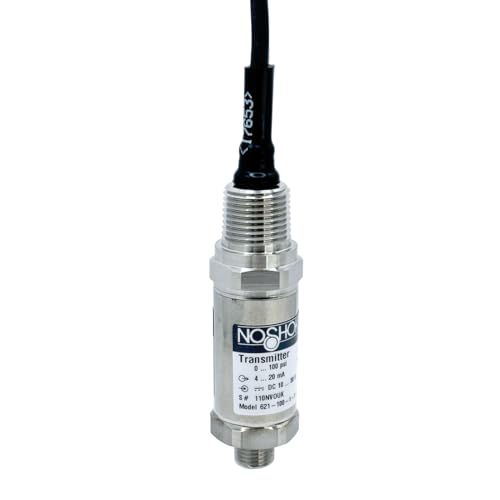
This NOSHOK transmitter targets hazardous locations with a wide high-pressure range. It uses welded 316 stainless steel and Elgiloy construction with no internal O-rings or seals, contributing to reliability in dirty or corrosive environments. Best for petrochemical, oil and gas, or refinery settings where higher pressures must be monitored with minimal maintenance. Limitation: the emphasis on rugged materials may come at a higher upfront cost compared to lower-range models.
Who this is best for: Operations needing high-pressure capability and robust build quality in explosive atmospheres.
WinSMART LXP Explosion-Proof Transmitter

The WinSMART LXP is a smart, microprocessor-based transmitter offering 0.1% to 0.5% accuracy, suitable for petrochemical plants, pipelines, and green energy projects. Its all-stainless-steel construction and welded seal enhance durability in hazardous environments. The device is designed to meet industry standards for tough applications and provides precise monitoring of liquids, gases, and other process media. Caution: Verify compatibility with your specific process media and ensure the 6-foot cable length fits your installation.
Who this is best for: Facilities requiring high-precision monitoring across multiple media with a rugged, compliant package.
NOSHOK Explosion-Proof 0–1000 psi
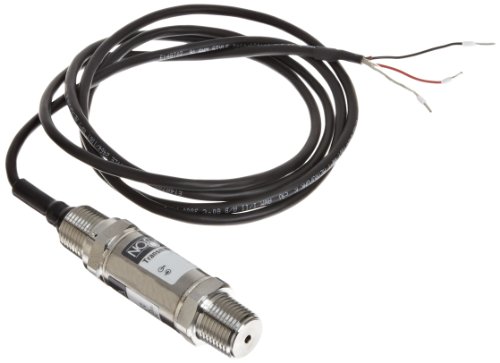
This NOSHOK model is designed for hazardous locations with a broad 0–1000 psi range. It uses advanced sensor technology with a welded 316 stainless steel body and Elgiloy construction, and it features no internal O-rings, gaskets, or seals to reduce leak risks. It’s well-suited for standard hazardous-location monitoring where both reliability and accuracy matter. Limitation: The range is modest compared to the 0–5000 psi option, so select based on operational needs.
Who this is best for: Sites needing a reliable, compact transmitter for medium-range pressures in dangerous areas.
NOSHOK Explosion-Proof 0–300 psi
This NOSHOK unit covers a smaller pressure window (0–300 psi) with the same emphasis on hazardous-location performance and durable construction. It uses advanced sensor technology to maximize stability and reliability in challenging conditions. Best for scaled-down processes or pilot plants where tight control in hazardous zones is essential. Caution: Consider whether the 0–1,000+ psi options might better fit your production scale.
Who this is best for: Small-to-medium processes requiring stable, accurate monitoring at lower pressure ranges in hazardous areas.
Buying Guide: Key Considerations For Explosion-Proof Pressure Transmitters
- Pressure range compatibility: Match the transmitter range to your process. Over- or under-range devices can compromise accuracy and safety.
- Materials and construction: Stainless steel housings plus corrosion-resistant alloys (like Elgiloy) improve durability in aggressive environments.
- Calibration method: Digital calibration reduces drift and simplifies maintenance, but verify calibration stability over time and temperature.
- Hazardous-location certifications: Ensure models meet the specific standards for your facility (e.g., cCSAus/NACE for sour gas environments).
- Media compatibility: Consider whether the sensor supports liquids, gases, or mixed media and ensure chemical compatibility.
- Electrical output and wiring: Common outputs are 4–20 mA with a 2-wire or 3-wire configuration; verify wiring length and conduit connections.
- Thermal performance: Temperature drift impacts accuracy; look for devices with low temperature drift specifications and robust thermal design.
- Maintenance and seals: Transmitters without internal O-rings or seals reduce leak risk but confirm long-term reliability in your application.
Practical comparison questions
- Should I choose a 0–5000 psi model or a smaller range for gas pipelines?
- Is welded stainless steel sufficient, or is Elgiloy required for sour gas environments?
- Do I need digital calibration to minimize drift across shifts and temperatures?
- What installation constraints exist for 6 ft cable lengths and conduit fittings?
Frequently Asked Questions
- What is an explosion-proof pressure transmitter? A device designed to operate safely in hazardous locations by containing any ignition sources within a rugged enclosure.
- What does BFSL accuracy mean? It stands for Banked Fill Scale Linearity, indicating the linearity tolerance of the transmitter’s output.
- Which material is best for corrosive environments? 316 stainless steel and Elgiloy offer strong corrosion resistance; choose based on process chemistry.
- Can these transmitters monitor multiple media? Some models are designed for liquids and gases; verify media compatibility in the datasheet.
- How important is digital calibration? Digital calibration reduces drift and improves repeatability in challenging temperatures and pressures.
- Do these units require special mounting? Most use standard NPT connections; confirm thread size and conduit requirements for your panel or enclosure.
Add a Comment