All buyers seeking reliable pressure reducing valves (PRVs) can compare leading models to protect plumbing, conserve water, and maintain steady downstream pressure. The top picks below are best for different setups: residential homes, small businesses, or tight spaces. Each product section explains who benefits most, plus practical limits to consider before buying. A quick product table is provided to guide initial comparisons.
| Product | Best For |
|---|---|
| Watts LF25AUB-Z3 | Residential or light commercial, standard 3/4″ line |
| Zurn Wilkins 34-NR3XLDU | Space-constrained installations, compact design |
| Cash Acme EB45 Double Union | Direct access to adjusting screw, durable inline use |
| Zurn Wilkins 1-NR3XLDU | 1″ pipe runs, easy repairs, flexible tailpieces |
| QKJCE Upgraded 1″ Brass PRV | Residential and small commercial with bronze body |
Watts LF25AUB-Z3 Pressure Reducing Valve

Best for homes and light commercial setups needing dependable downstream pressure 25–75 psi, with a standard setting around 50 psi. The valve uses lead-free copper-silicon alloy, a stainless steel strainer, and a corrosion-resistant adjusting cage. The high-temperature diaphragm and replaceable seat module aid long-term reliability. Choose this if you want a traditional inline PRV with a strong focus on corrosion resistance and ease of maintenance.
Who it’s for: homeowners, small offices, and remodel projects seeking a proven, durable PRV with replaceable components. Caution: performance depends on accurate installation and upstream supply pressure staying within range.
Zurn Wilkins 34-NR3XLDU 3/4″ NR3XL PRV

Best for tight installs and compact spaces. This valve features a short lay length and a cartridge-loaded design that simplifies maintenance. Tailpiece options include threaded, PEX, copper sweat, and CPVC, supporting flexible plumbing configurations. Choose this if space is limited or you value easy field service and quick repairs.
Who it’s for: contractors and do-it-yourselfers working in confined areas. Limitation: availability of compatible tailpieces may influence installation choices in some projects.
Cash Acme EB45 Double Union PRV
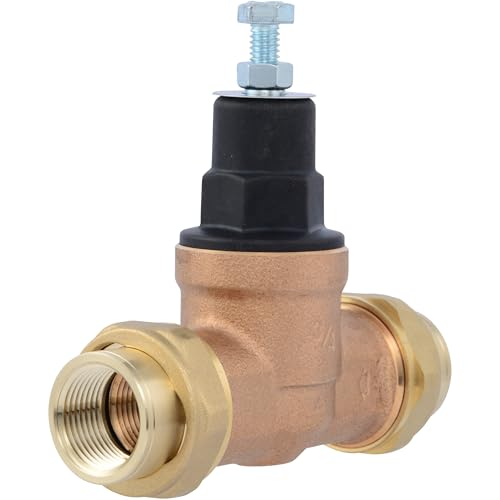
The EB45 line offers direct access to the pressure adjusting screw via a half cartridge design, combining high-end valve performance with a cost-effective regulator. It regulates downstream pressure for commercial and residential use. Materially, it uses brass, stainless steel, and durable polymers to resist corrosion and meet potable water standards (NSF/ANSI 372). Best for users who want tamper resistance and straightforward adjustment while maintaining robust construction.
Who it’s for: facilities managers and plumbers needing reliable tamper-resistant operation. Caution: ensure the double union configuration aligns with existing piping to maximize serviceability.
Zurn Wilkins 1-NR3XLDU 1″ PRV

Best for full 1″ pipe runs and straightforward maintenance with cartridge-loaded design. This unit supports easy installation in potable water lines and provides flexible tailpiece options including threaded, PEX, copper sweat, and CPVC. Choose this if you need a reliable 1″ valve with adaptable installation paths and accessible future servicing.
Who it’s for: larger residential or light commercial systems with 1″ piping. Limitation: larger footprint may not fit into very tight spaces.
QKJCE 1″ Brass PRV with Double Union

Best for residential systems requiring a durable bronze body and a stainless steel strainer. The unit emphasizes wide application and water conservation by reducing pressure to safer levels. It features a double union design with a stainless steel screen to prevent debris entry. This model is suitable for homes and small facilities seeking a robust, corrosion-resistant regulator.
Who it’s for: homeowners and small businesses prioritizing corrosion resistance and straightforward maintenance. Caution: verify the exact downstream pressure target to ensure compatibility with sensitive plumbing components.
Buying Guide: Key Considerations for PRVs
- Pressure range and setting: Confirm the incoming and desired downstream pressure range (typical 25–75 psi) and whether the regulator has adjustable settings accessible after installation.
- Connection type and size: Match pipe diameter (3/4″, 1″) and union vs. FNPT connections to existing plumbing.
- Materials and compatibility: Lead-free alloys, brass or bronze bodies, and stainless screens support corrosion resistance and potable water safety.
- Maintenance access: Models with cartridge-loaded designs or direct-access screws simplify servicing and recalibration.
- Tamper resistance and safety: Some designs include tamper-resistant features to prevent unauthorized adjustments.
- Space considerations: Short lay length and compact designs are advantageous in restricted spaces.
- Certifications and standards: NSF/ANSI 372 compliance ensures suitability for drinking water systems.
FAQ
- What is a pressure reducing valve (PRV) used for?
Answer: A PRV lowers incoming water pressure to a safer, more stable downstream level to protect plumbing and reduce water waste. - What pipe sizes do these PRVs cover?
Answer: The listed options cover 3/4″ and 1″ sizes, with both FNPT and double-union configurations depending on the model. - Which PRV is best for tight spaces?
Answer: The Zurn Wilkins 34-NR3XLDU offers a short lay length ideal for compact installations. - Do PRVs require professional installation?
Answer: While many setups are manageable with basic plumbing skills, professional installation ensures proper sealing and pressure settings, especially for larger systems. - Can PRVs be adjusted after installation?
Answer: Yes, several models provide accessible adjustment screws or cartridges, but follow manufacturer guidance to avoid over-pressurizing downstream pipes. - Are these PRVs compliant with drinking water standards?
Answer: Many models use materials and designs compliant with NSF/ANSI 372 for potable water applications.
Add a Comment