If you’re shopping for a pressure blow off valve, you want reliable, easy-to-install devices that protect compressors, tanks, and lines from overpressure. This guide highlights five top options suited for different needs—whether you’re a DIY hobbyist, a professional, or managing a workspace with multiple air tools. Each product is evaluated for best use case, installation practicality, and potential limitations so you can choose with confidence.
Summary of chosen products:
| Product | Best For | Key Strength | Ideal Use |
|---|---|---|---|
| HONSNKS 2 Pcs 1/4″ NPT 175 PSI | Small compressors | Corrosion-resistant brass body and preset 175 PSI | Home shop air systems |
| Milton S-1090-200 200 PSI | Higher pop-off pressure | Bubble tight to 10% of set pressure | Medium-duty work setups |
| Milton S-1090-150 150 PSI | Lower-pressure needs | Lower pop-off with reliable 150 PSI | Lighting tools, smaller tanks |
| New 1/4″ NPT 100 PSI ALL Tool Depot | Budget and general use | Brass body, stainless spring, 100 PSI preset | General air jobs |
| New 1/4″ ASME Brass 175 PSI conrader | US-made reliability | Stamped “UV” & “NB” with 175 PSI | Industrial or frequent-use systems |
HONSNKS Pressure Relief Valves, 2 Pack

Best for: Small air compressors in hobbyist shops. These brass safety valves are designed to release excess pressure automatically and close at the preset level, protecting equipment and reducing risk of overpressure. The brass body offers corrosion resistance and high-temperature tolerance, suitable for discharging air, water, or oil from compressors. The preset relief at 175 PSI and a 1/4″ NPT male thread fit compact systems with up to 67 SCFM flow. The main limitation is the fixed pressure setting; for different applications you’d need a valve with another preset.
Milton S-1090-200 200 PSI Pop Off

Best for: Mid-range systems needing higher pressure relief. This Milton valve features a 1/4″ MNPT and a pop-off at 200 PSI with bubble-tight sealing near the set point. It’s positioned for reliable protection in shop compressors where higher cut-off pressure is beneficial. A potential limitation is the fixed 200 PSI setting; not ideal if you require a lower or different relief threshold.
Milton S-1090-150 150 PSI Pop Off

Best for: Lower-pressure environments and smaller tanks. The S-1090-150 provides a 150 PSI pop-off with bubble-tight performance within ~10% of the set pressure. It’s well-suited for light-duty or portable compressors where a moderate relief level keeps components safe without overshooting. A limitation is the fixed 150 PSI threshold, which may not cover higher-demand tasks.
New 1/2″ NPT 200 PSI Relief Valve (Ei)

Best for: Heavier-duty or larger tanks needing robust relief at higher pressures. This 1/2″ NPT valve is designed for 200 PSI max and high CFM applications. It’s noted as a general “Pop Off” or “Blow Off” valve used in American-made systems. The larger thread provides a stronger seal and broader compatibility, but it may be overkill for small portable compressors where a 1/4″ valve is sufficient.
Vin Beauty 2 Pcs 1/4″ NPT Check Valves

Best for: Systems needing reliable one-way flow control and pressure relief via check valves. These 1/4″ NPT valves are made from high-quality copper for durability and provide easy installation on compressors. They’re not traditional blow-off valves but can be paired with relief devices in complex lines. Use this option when you want a simple, robust check mechanism alongside a relief device. A limitation is that they do not directly regulate relief pressure, instead controlling directional flow.
ALL Tool Depot 1/4″ NPT 100 PSI Relief Valve

Best for: Budget-friendly applications requiring a basic relief at 100 PSI. This brass and stainless-steel valve provides corrosion resistance and a leak-proof O-ring seal within ±10 percent of relief pressure. It’s suitable for lower-temperature environments up to 250 degrees F. Choose this when cost is a major factor and the system operates at modest pressures. A limitation is the lower preset pressure, which may not protect higher-demand equipment.
Conrader 1/4″ ASME Brass Safety Valve, 175 PSI
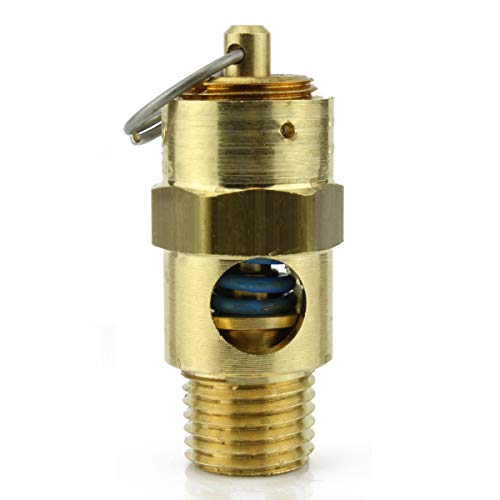
Best for: American-made reliability with an industrial edge. The Conrader valve is a 175 PSI safety relief valve with a 1/4″ male NPT connection. It is clearly labeled with UV and NB symbols indicating compliance with recognized standards. This makes it a solid choice for workshop or small shop systems. A potential limitation is the fixed relief setting; ensure 175 PSI matches your system’s needs.
Buying Guide: Key Purchase Considerations
- Relief pressure range: Match the set point to your system’s maximum safe operating pressure. Consider whether you need a fixed setting or a valve with adjustable limits.
- Thread size and compatibility: Most air systems use 1/4″ NPT or 1/2″ NPT connections. Verify thread type and flow requirements before purchasing.
- Material and durability: Brass bodies resist corrosion and heat; stainless components help in high-temperature environments. For harsh environments, select corrosion-resistant options.
- Flow capacity: Ensure the valve can release air quickly enough for your tank or line volume. Higher CFM ratings are beneficial for large tanks or high-demand tools.
- Installation considerations: Some valves include O-rings or seals for leak-proof operation. Check if you need additional fittings or adaptors.
- Certifications and origin: For critical or frequent-use setups, US-made or ASME-certified valves may offer added peace of mind.
FAQ
- What is a pressure relief valve used for in air compressors?
It protects the system by releasing air when pressure exceeds a preset limit, preventing tank or line damage.
- How do I choose between 150 PSI and 200 PSI relief valves?
Choose based on your system’s maximum operating pressure and safety margin. Higher presets suit larger tanks or higher-demand tools; lower presets suit smaller setups.
- Are brass relief valves better than steel?
Brass offers good corrosion resistance and durability for most air systems, making it a common choice for compressor tanks.
- Can I install a relief valve myself?
Yes, if you are comfortable with basic plumbing fittings and ensure proper thread engagement and sealing. Always depressurize the system before starting.
- What does “bubble tight to 10%” mean?
It indicates the valve seals with very little leak until the set pressure is reached, providing reliable performance.
- Should I buy more than one valve for a single system?
Multiple valves may be used for complex layouts or separate tanks, but each should be correctly rated for its specific section to avoid over-relief.
Add a Comment