Answering your search for a reliable portable multi gas monitor that covers H2S, CO, O2, and LEL, these models are chosen for their stay-in-sight alarms, rugged build, and clear data features. Ideal for industrial workers, first responders, home maintenance, and DIY projects, each option offers a distinct strength—battery life, sensor longevity, or data export. Read on to compare five solid choices and find the best fit for your safety needs.
| Product | Key Benefit | Best For |
|---|---|---|
| TopTes Guard-101 | Fast 0.5s response, triple alarms, long battery life | General industrial use, long shifts |
| Forsensal 4 Gas Detector With Pump | Pump suction and straight-line diffusion, calibration kit | Hard-to-reach gas pockets, field calibration |
| TopTes Guard-863Pro | Upgraded O2 sensor with long life, color TFT display | Difficult lighting environments, data tracking |
| BW Technologies MCXL-XWHM-Y-NA MCX | Lightweight, easy one-button operation | Training, quick surveys, portable use |
| FORENSICS DETECTORS FD 4 Gas Monitor | Factory-calibrated, nano sensors, adjustable alarms | Budget-friendly, DIY or light-industrial use |
TopTes Guard-101 Gas Detector
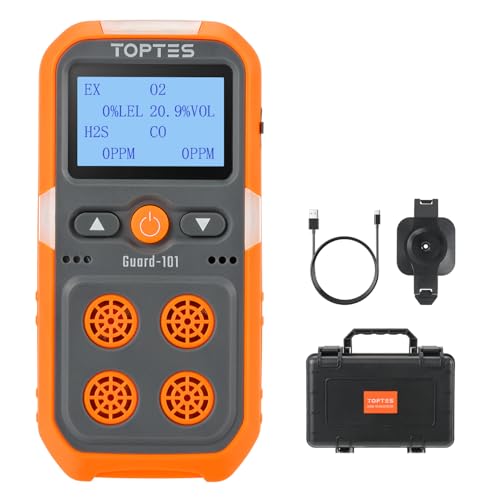
The TopTes Guard-101 provides four-gas detection for H2S, CO, LEL, and O2 with a fast 0.5-second response. It features triple alarms (LED, vibration, sound) and stores alarm data for review. Its 14-hour battery life supports longer monitoring periods. The unit is built with waterproof, dustproof, and explosion-proof ABS plastic and includes a back clip for portable wear. Password protection helps prevent accidental operation, starting with an initial code of 69. This model is best for general industrial and maintenance tasks where quick alerts and data logging matter.
Best for: workers needing a compact, all-in-one detector with straightforward data access and long battery life. Caution: the device relies on battery power; extended operations may require spares or charging intervals.
Gas Detector With Pump, 4 Gas Monitor

This model offers a 4-gas readout including CO, O2, H2S, and EX with a built-in pump for improved sample collection. It ships with a Calibration Certificate and a 3000mAh battery rated for longer standby and active use. The large display supports easy interpretation of gas concentrations, and the menu includes channel and calibration options. It can switch from pump suction to natural diffusion with a few screws. Best for: professionals needing precise sampling in confined or dirty environments. Caution: may be bulkier than pump-less units.
TopTes Guard-863Pro 4 Gas Monitor

The Guard-863Pro integrates a TFT color display with an upgraded O2 sensor boasting a five-year lifespan, improving long-term reliability. It maintains a fast 0.5-second response and a continuous triple alarm system (sound, light, vibration) to keep users notified until gas levels normalize. Data export via USB supports efficient record-keeping. Best for: environments with variable lighting and a need for durable, long-life sensors. Caution: higher upfront cost may be a consideration for some buyers.
BW Technologies MCXL-XWHM-Y-NA GasAlertMicroClip XL

The MCX series offers a lightweight, 4-gas detector covering H2S, O2, CO, and LEL with a simple one-button interface. It is well-suited for quick surveys and wear-and-go use in survey or training settings. Best for: budget-conscious users needing a compact, easy-to-use detector. Caution: may lack some advanced data features found in higher-end models.
4 Gas Monitor | Mini & Small
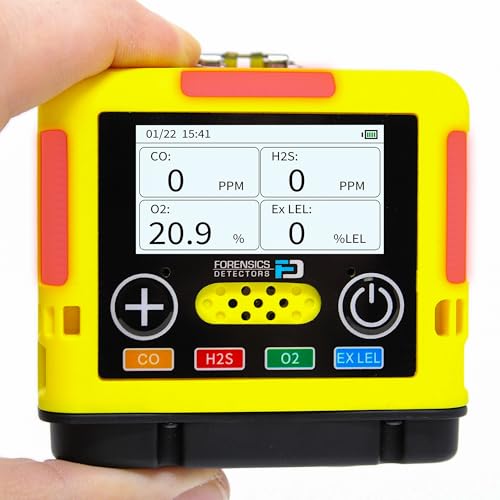
FORENSICS DETECTORS FD provides a compact 4-gas readout with O2, CO, H2S, and LEL detection. It comes factory-calibrated and includes alarms (audio, visual, vibration). The nano-sensor technology aims for high fidelity and quick response, with support for zero and span calibration. Best for: individuals who want a small, calibrated unit at a reasonable price. Caution: ensure you have ongoing calibration plans to maintain accuracy over time.
Buying Guide
What matters most when choosing a portable multi gas monitor?
- Gas coverage: Ensure the device measures H2S, CO, O2, and LEL; some models add extra gases or sensors.
- Alarms: Look for multi-mode alarms (audible, visual, vibration) and data logging capabilities.
- Battery life: Longer runs reduce downtime; consider field charging options or swappable batteries.
- Sensor lifespan: Some devices use sensors with extended lifespans; this influences total cost of ownership.
- Durability: Waterproof, dustproof, and explosion-proof ratings help in harsh environments.
- Data management: USB or Bluetooth data export helps with record-keeping and compliance.
- Calibration logistics: Factory calibration vs. field calibration, and included calibration kits.
- Portability: Weight, size, and a back clip influence comfort for all-day wear.
Which features justify a higher price?
Models with upgraded sensors, longer-lasting O2 sensors, TFT color displays, USB data export, and pump options generally justify higher prices due to improved accuracy, maintenance, and traceability.
What is essential for basic safety needs?
For basic safety, prioritize four-gas detection, triple alarms, compact design, and reliable battery life. A factory calibration or package with calibration access is beneficial for ongoing accuracy.
What situations favor a pump-equipped detector?
Pump-equipped monitors are advantageous when samples are drawn from hard-to-reach areas. This design supports more consistent readings in confined spaces.
How to maintain accuracy over time?
Regular calibration according to manufacturer guidelines, documented alarm histories, and sensor replacement schedules help keep readings trustworthy in dynamic work environments.
FAQ
- What gases do portable multi gas monitors typically detect?
Most cover H2S, CO, O2, and LEL, with some models adding other gases.
- How long do these detectors last on a single charge?
Battery life ranges from about 8 to 18 hours depending on model and alarm usage.
- Can alarms be silenced for quiet environments?
Many models offer adjustable alarms, including mute or threshold settings in calibration mode.
- Is calibration required?
Yes, regular calibration ensures accuracy; some units ship with calibration certificates or easy field calibration options.
- Are pump-based detectors worth it?
In cramped or dusty environments, pumps improve sample delivery and response accuracy.
- How should I store a gas detector when not in use?
Store in a cool, dry place, away from direct sunlight, and follow the manufacturer’s storage guidelines to preserve sensor life.
Add a Comment