For professionals and DIYers seeking fast, non-damaging rust, paint, and coating removal, portable laser cleaners offer precision without abrasives. This article highlights five highly capable models, comparing power, portability, and features to help you choose a system that fits your workflow. Each product section links to its Amazon page for easy browsing and purchase.
Summary of Selected Products
| Product | Brand | Key Power | Typical Use |
|---|---|---|---|
| LYXC 300W Air-cooled Laser Cleaning Machine | LYXC | 300 W | Rust, paint, coatings removal; lightweight |
| ZAC LGC-200 Portable Laser Cleaner | ZAC | 200 W | Trolley-style, handheld rust removal |
| Ironsten 2000W Laser Rust Remover | Ironsten | 2000 W | Large-area rust and coating cleaning |
| HERO LASER 700W Portable Cleaner | hero laser | 700 W | Welding, rust removal, cleaning on the go |
| WTTTOOLS 2000 W Laser Cleaning Machine | WTTTOOLS | 2000 W | High-capacity industrial rust and coating removal |
LYXC 300W Air-Cooled Laser Cleaner

The LYXC unit is a compact, air-cooled laser cleaning system designed for rust, oil, resin, and coating removal. It operates with a Class 2 output and 300 W optical power, delivering precise surface cleaning without substrate damage. With a small footprint and a 5 m cable, it suits shop floors and field service where space matters. Key specs include a pulse width of 20-500 ns and a broad modulation range, enabling versatile cleaning modes across various materials and finishes.
Features emphasize simple structure and low maintenance, making it suitable for long-term operation in environments requiring stable performance. Its lightweight design reduces handling fatigue, while the absence of consumables lowers ongoing costs. The system targets high cleanliness for painted surfaces, coatings, and contaminants without compromising substrate integrity.
ZAC LGC-200 Portable Laser Cleaner
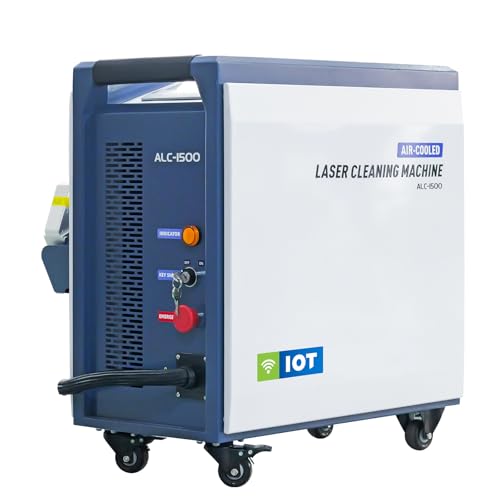
The ZAC LGC-200 is a handheld, trolley-style laser cleaning solution designed for rust, paint, oil, and coatings. Its 200 W output and 5 m delivery cable enable flexible operation across larger parts. The device emphasizes easy portability and maintenance-friendly design, with a compact chassis that supports on-site cleaning. It is suitable for shops that require agile, non-contact rust removal with minimal substrate impact and quick material turnaround.
Technical details highlight continuous and pulsed modes, a CE-certified build, and a focus on high cleanliness. The unit supports rapid cleaning with an ergonomic handheld head and a compact footprint, making it well suited for metal fabrication, maintenance, and restoration tasks where precision matters.
Ironsten 2000W Laser Rust Remover

The Ironsten 2000W laser rust remover targets heavy-duty cleaning tasks, offering a high-power continuous wave fiber laser and a wide cleaning width. A built-in, independent chiller supports continuous operation with strong cooling, allowing extended uptime for large-area rust and coating removal. The system provides non-contact cleaning with minimal substrate risk, suited for industrial environments and parts with significant corrosion or heavy coatings.
Important features include a large cleaning width (up to 200 mm) and a focus on long-term reliability. Real-time cooling and robust design help minimize downtime, while real-time monitoring and high beam quality support thorough cleaning of metal surfaces without substrate damage or secondary pollution.
HERO LASER 700W Portable Cleaner

The HERO LASER T1 offers 700 W optical power in a compact, air-cooled package. It supports multiple functions—welding, cutting, rust removal, cleaning, and even underwater welding—making it a versatile choice for mixed-metal work. The device emphasizes portability with a light overall footprint and a user-friendly interface, including a mobile app for monitoring and control. The ergonomic design helps operators manage heat and performance while maintaining safety standards associated with Class II devices.
Performance notes point to reduced energy consumption and a favorable balance between power and mobility. For teams needing a single machine capable of rust removal alongside other metalworking tasks, this system offers an integrated approach with remote operation and on-the-go adaptability.
WTTTOOLS 2000 W Laser Cleaning Machine

The WTTTOOLS 2000 W system is designed for high-volume rust and coating removal with a focus on industrial-scale maintenance. It features a robust water cooling loop, a long cable, and a wide cleaning footprint to maximize cleaning coverage. The unit supports non-contact cleaning with safe operation practices, aided by a user-friendly interface and detailed English-language guidance. This model is suited for large workshops, manufacturing floors, and outdoor projects requiring extended cleaning sessions and strong material compatibility.
Key advantages include dual cooling capability, sustained high power for prolonged cleaning, and a design that minimizes the risk of substrate damage. For operators prioritizing production throughput, this machine offers scalability and dependable performance under demanding conditions.
Buying Guide: Key Considerations for Portable Laser Rust Removal
- Power and cleaning width: Higher wattage enables faster cleaning and deeper penetration, but may increase weight and cost. Compare cleaning widths to match part size and coating thickness.
- Cooling method: Air-cooled units are lighter and simpler but may require more ambient heat management. Water-cooled systems offer extended uptime and stable performance for continuous use, though they add complexity.
- Pulse and continuous modes: Pulsed operation reduces heat impact on substrates; continuous modes can speed up large-area cleaning. Look for flexible modulation frequencies and pulse widths.
- Portability and form factor: Evaluate whether a handheld, trolley, or compact cabinet design best fits your workspace. Weight and cable length influence ease of use in field scenarios.
- Wavelength and material compatibility: Most rust and coating removal uses near-infrared wavelengths (around 1064–1080 nm). Confirm compatibility with your metals to avoid substrate damage.
- Safety and compliance: Laser class, protective features, and interlocks affect operator safety and regulatory adherence. Ensure appropriate PPE and training are available.
- Maintenance and consumables: Consider whether the system requires consumables, routine alignment, or specialized maintenance that could raise operating costs.
- Remote monitoring and control: Some models offer smart remote diagnostics and mobile app control, which can reduce downtime and streamline workflow management.
- System footprint and installation: Check dimensions, required cooling, and electrical requirements (voltage, phase, and power draw) to ensure compatibility with your shop.
- Support and warranties: Favor vendors with solid customer support, clear warranty terms, and accessible replacement parts to minimize downtime.
Add a Comment