If you’re searching for a portable dust collector, you’re looking for compact power, easy mobility, and reliable dust control. This guide highlights five versatile options suited for different needs—from woodworking jobsites to nail hobby setups. Each pick is explained with who it’s best for, plus practical pros and limitations to help you decide quickly.
Quick buyer table
| Product | Best For | Key Benefit | Limitations |
|---|---|---|---|
| WEN DC3401 | Small shop, light debris | Compact with 4″ port | Smaller bag capacity |
| WEN DC3474 | Mid-sized shop, wall-mount option | Higher motor option, wall mount | Bulkier than DC3401 |
| PSI DC3XX | Portable air handling on move | 850 CFM, flexible setup | Requires assembly to optimum plug |
| Oneida Kit | Professional or highly dusty spaces | High-efficiency cyclone | Higher price, more components |
| POWERTEC DC1081 | Budget-friendly, basic dust control | 800 CFM with micron bag | Limited onboard features |
WEN DC3401 5.7-Amp Dust Collector
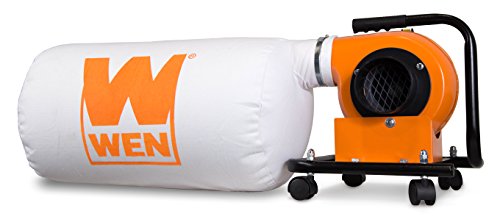
The WEN DC3401 is a compact dust collector designed for small shops and light woodworking tasks. It uses a 5.7-amp brushed motor and a 6-inch impeller to move up to 660 CFM, with a 4-inch dust port that connects to common tools. It also includes an onboard carrying handle for easy storage and transport. Best for hobbyists or DIY woodworkers who need a portable, budget-friendly option with simple setup.
Who it’s best for: a small shop owner or student needing a lightweight, mobile unit for occasional dust collection. Why selected: balance of portability, adequate airflow, and simple operation in tight spaces. Caution: smaller bag capacity can require more frequent emptying with heavy use.
WEN DC3474 7.4-Amp Induction Dust Collector

The DC3474 bumps up to a 7.4-amp induction motor with a 9-inch impeller, delivering up to 600 CFM. It features a 4-inch dust port and a wall-mount option for easy shop access. This model suits mid-sized shops needing more airflow without sacrificing a wall-mount solution. Best for: those who want stronger suction and the option to mount for convenience. Limitation: heavier unit than DC3401, which may affect mobility.
PSI Woodworking DC3XX Portable Dust Collector
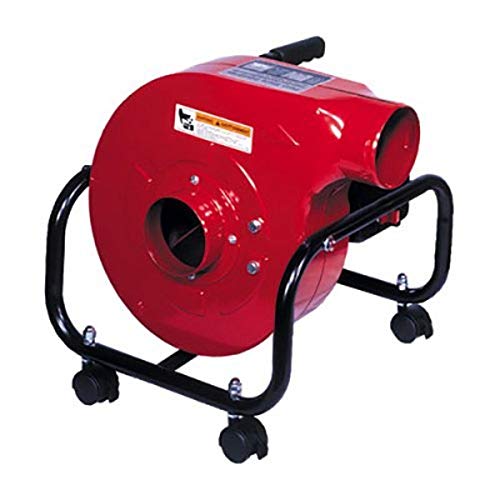
The PSI DC3XX uses a 1.5 HP motor and an 850 CFM air flow, with a 4″ inlet/outlet and a portable 46-pound package. It ships pre-wired for 110V, with an option to convert to 220V. This model is best for users needing higher intake while staying portable. Choose this if you want robust airflow in a mobile unit. Caution: set up and electrical configuration may require careful handling during installation.
Oneida Air Systems Dust Collector Kit
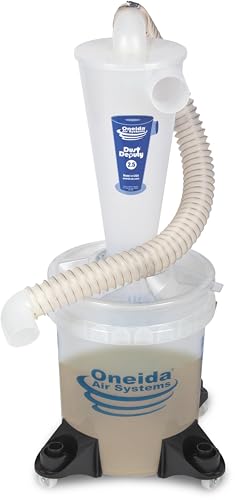
This kit combines a cyclone separator with a 5-gallon bucket and includes a full accessory package. It uses centrifugal force to capture and remove up to 99 percent of dust before it reaches the vacuum, offering improved efficiency and reduced clogging. Best for: workshops that generate fine dust and need cleaner air before filtration. Limitation: more components mean more setup and higher initial cost.
POWERTEC 1 HP Dust Collector with 1-Micron Bags

The POWERTEC DC1081 provides a portable 1 HP dust collection system with a sturdy base and 800 CFM. It includes a 1-micron filtration bag and quick-release clamps for convenient bag changes. Best for: budget-minded garages or classrooms needing reliable dust control without complex features. Limitation: fewer advanced features compared to higher-end models.
Buying Guide
How much airflow do you need? Look for CFM ratings that match your tools and typical debris load. For smaller projects, 600–800 CFM is usually sufficient; larger projects may benefit from 800–1200 CFM units.
Portability vs. permanence: Choose a model with wheels and a handle for mobility, or a wall-mount option if space is tight. Consider weight and whether you’ll frequently move the unit.
Filtration and dust management: 1-micron bags or finer filtration reduce fine dust exposure. Cyclone separators can improve efficiency by removing dust before filtration.
Ease of setup and maintenance: Look for pre-wired configurations, simple hose connections, and easy-access bags or filters for quick changes. A model with easy assembly speeds up routine maintenance.
Compatibility: Check inlet/outlet sizes (commonly 4 inches) to ensure compatibility with your existing tools and hoses. A consistent port size reduces the need for adapters.
Frequently Asked Questions
- What should I consider when choosing between 4″ and 6″ dust ports? Answer: 4″ ports work well for small tools; 6″ ports move more air and suit larger tools and setups with multiple hoses connected.
- Is a wall-mount dust collector worth it? Answer: Yes, when floor space is limited and you want easy access; it consolidates space and keeps the floor clear.
- Do cyclone separators improve performance? Answer: Yes, they reduce the workload on filters by capturing most dust early, improving filter life and suction consistency.
- Are portable dust collectors suitable for nails or beauty work? Answer: Some compact models are designed for nail dust; check airflow and filtration details to match the task.
- What maintenance is required? Answer: Regularly empty collection bags or bins, clean filters, and inspect hoses for blockages to maintain suction.
- Can I convert a 110V unit to 220V? Answer: Some units offer conversion, but consult the manual and an electrician for safe installation.
Add a Comment